H Type Primary Ceramic Belt Cleaner Supplier
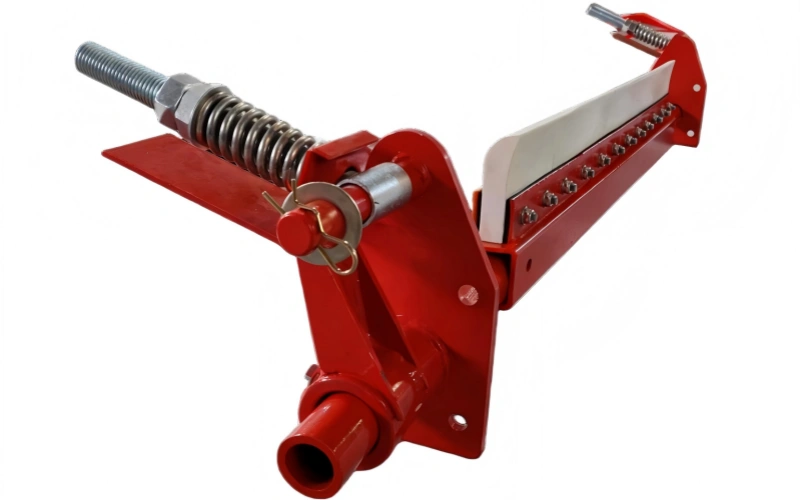
The H Type Primary Ceramic Belt Cleaner removes residual material from the conveyor belt at the head pulley. Its wear-resistant ceramic blades and adjustable tension system ensure stable contact with the belt for reliable primary cleaning.
- Wear-resistant ceramic blade segments
- H-type primary cleaner structure
- Dual-side tensioning mechanism
- Adjustable blade contact angle
- Suitable for abrasive bulk materials

H Type Primary Ceramic Belt Cleaner Overview
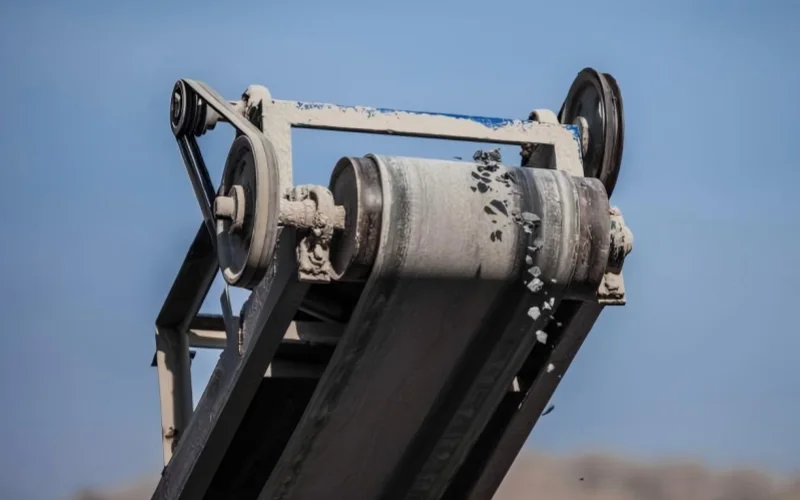
The H Type Primary Ceramic Belt Cleaner is used in conveyor systems to remove residual material from the belt surface at the head pulley after material discharge. Positioned in the head section of the conveyor, it performs the first stage of belt cleaning by removing the majority of carryback directly after the material leaves the belt.
Effective primary belt cleaning helps prevent material from being carried back along the return side of the conveyor, reducing material buildup, protecting conveyor components, and supporting stable operation of bulk material handling systems. The H Type Primary Ceramic Belt Cleaner is widely used in industries such as mining, cement, steel, power generation, and aggregate processing.
Why Carryback Still Happens in Many Conveyor Systems
Even though many conveyor systems are equipped with belt cleaners, carryback is still a common problem, especially when handling abrasive or sticky bulk materials.
In demanding operating environments, conventional scraper blades may not maintain effective cleaning contact with the belt, allowing residual material to remain on the belt surface after discharge.

Common Reasons for Persistent Carryback
Rapid Blade Wear in Abrasive Conditions
In industries such as mining, cement, and aggregate processing, materials like iron ore, clinker, and crushed stone can quickly wear conventional scraper blades, reducing their ability to maintain consistent cleaning performance over time.
Inconsistent Contact with the Belt Surface
If the cleaner cannot maintain stable and continuous pressure against the conveyor belt, parts of the belt surface may remain uncleaned, allowing residual material to stay attached and travel along the return side.
Adhesion of Sticky or Moist Materials
Wet or adhesive bulk materials can strongly stick to the conveyor belt surface after discharge, making them difficult to remove with standard scraper blades and increasing the likelihood of material carryback.
High-Speed Conveyor Operating Conditions
In conveyor systems operating at higher belt speeds, worn scraper blades or insufficient contact pressure may significantly reduce cleaning efficiency, allowing more material to remain on the belt surface.
Key Features of H Type Primary Ceramic Belt Cleaner
The H Type Primary Ceramic Belt Cleaner is designed to provide reliable primary belt cleaning in demanding bulk material handling environments. Its ceramic scraping elements and adaptable cleaning configuration help remove residual material effectively at the head pulley.

Ceramic Scraping Edge
The H Type Primary Ceramic Belt Cleaner uses ceramic blade segments that provide a harder scraping edge compared with conventional polyurethane blades. This allows the cleaner to remove strongly adhered materials from the belt surface more effectively at the head pulley.

Heavy Carryback Removal
The ceramic scraping surface is suitable for conveyor systems where large amounts of residual material remain on the belt after discharge. It helps remove heavy carryback in demanding bulk material handling environments.
Stable Edge Performance
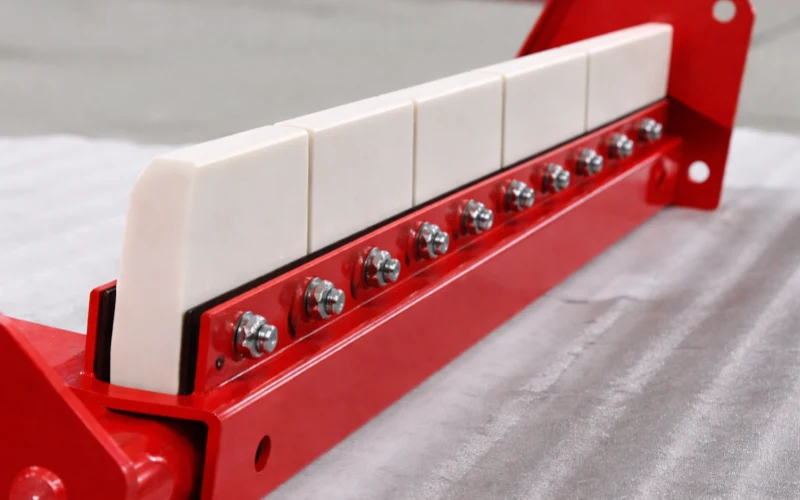
Ceramic blades maintain their scraping edge more effectively when handling abrasive materials such as ore, clinker, or crushed aggregates. This helps maintain consistent cleaning performance in demanding conveyor applications.
Segmented Blade Design
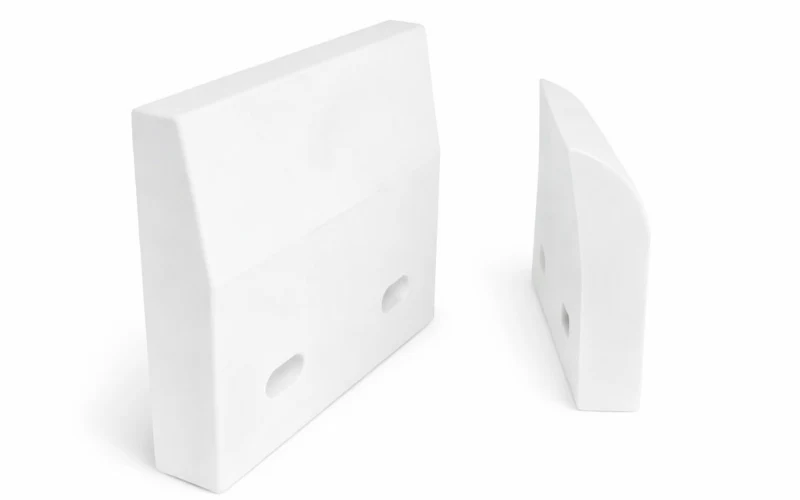
The blade assembly is composed of multiple ceramic segments that allow the cleaner to adapt to slight irregularities on the belt surface. This segmented design improves contact across the belt width and supports consistent cleaning performance.
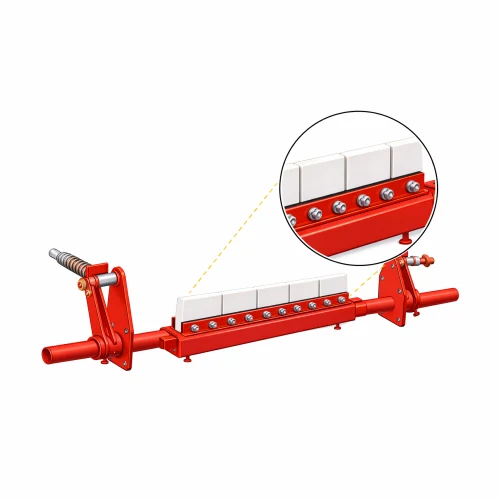
H Type Primary Ceramic Belt Cleaner Structural Design

Ceramic Blade Assembly
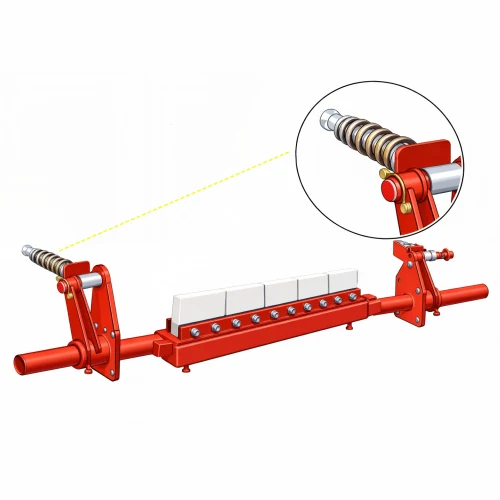
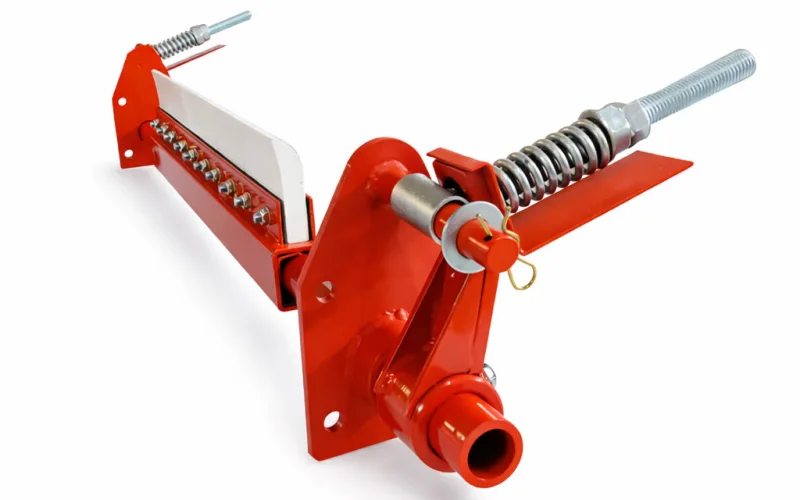
The H Type Primary Ceramic Belt Cleaner uses ceramic blade segments mounted along a blade holder to form the primary scraping surface. The ceramic segments create a hard and durable scraping edge that removes residual material from the conveyor belt as it passes over the head pulley.
Compared with conventional scraper materials, ceramic blade segments maintain a more stable scraping edge when handling abrasive bulk materials. This allows the cleaner to maintain consistent primary cleaning performance in conveyor systems where materials such as ore, clinker, or crushed aggregates are transported.
The segmented blade design also allows the blade assembly to maintain better contact with the belt surface across the belt width, supporting more uniform cleaning during conveyor operation.

Support Beam
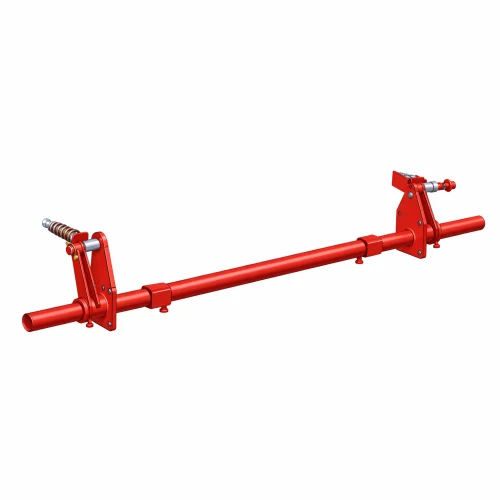
The blade assembly is mounted on a support beam that spans across the conveyor structure. This beam acts as the main load-bearing component of the cleaner and supports the blade assembly during operation.
The support beam keeps the blade assembly aligned with the conveyor belt and distributes the cleaning forces generated during belt operation. A stable beam structure helps maintain proper blade positioning and ensures that the cleaner remains correctly aligned with the belt throughout continuous operation.
By providing a rigid structural base for the cleaner, the support beam helps maintain reliable cleaning performance even in heavy-duty conveyor systems handling large volumes of bulk material.

Dual-Side Tension Mechanism
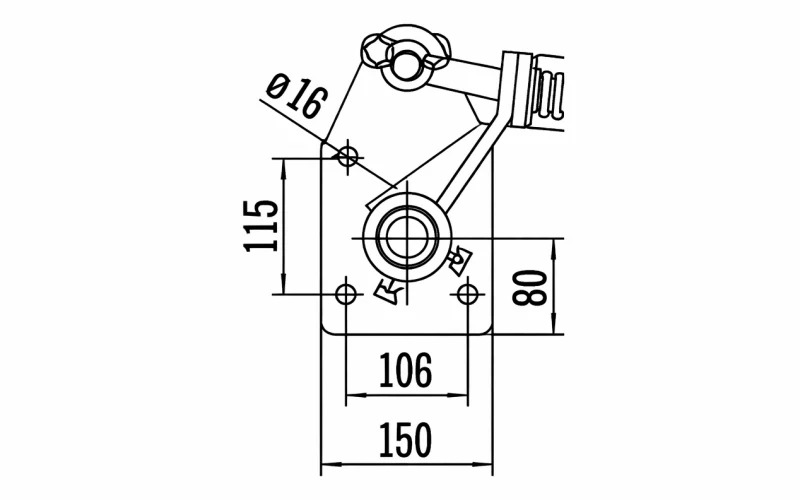
The H Type Primary Ceramic Belt Cleaner is equipped with tension mechanisms installed on both sides of the support beam. These mechanisms apply adjustable pressure to the blade assembly and maintain stable contact between the ceramic blades and the conveyor belt.
By adjusting the tension mechanism, operators can control the cleaning pressure applied to the belt surface. The tension adjustment also allows the cleaning angle and blade contact position to be adjusted to match different conveyor configurations and belt conditions.
This adjustable tension system allows the cleaner to maintain effective blade contact over time and helps ensure stable primary cleaning performance in demanding conveyor applications.
H Type Primary Ceramic Belt Cleaner Technical Specifications
The H Type Primary Ceramic Belt Cleaner is designed to match different conveyor belt widths commonly used in bulk material handling systems. The cleaner size is selected according to the belt width to ensure proper coverage and effective primary cleaning performance.
Specification Table
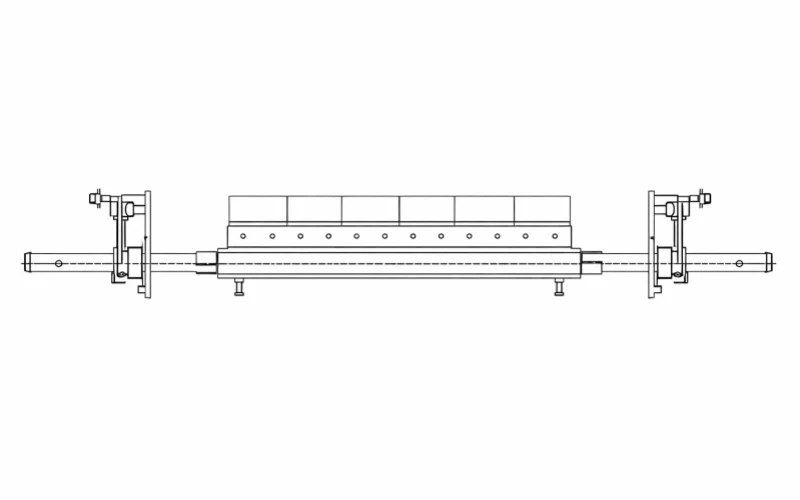
| Belt Width (mm) | L (mm) | B (mm) |
|---|---|---|
| 500 | 1450 | 450 |
| 650 | 1600 | 600 |
| 800 | 1750 | 750 |
| 1000 | 1900 | 900 |
| 1200 | 2200 | 1050 |
| 1400 | 2350 | 1350 |
| 1600 | 2500 | 1500 |
| 1800 | 2800 | 1650 |
| 2000 | 2950 | 1800 |
| 2200 | 3100 | 1950 |
Product Structure Diagram


Additional Notes
- Applicable for conveyor belt widths from 500 mm to 2200 mm
- Dimensions can be adjusted according to specific conveyor configurations
H Type Primary Ceramic Belt Cleaner Applications
The H Type Primary Ceramic Belt Cleaner is designed for conveyor systems handling highly abrasive or heavy bulk materials. It is commonly used in industries where conventional scraper blades wear quickly or struggle to remove strongly adhered material from the belt surface.

Iron Ore Conveying Systems

Cement Clinker Transport Conveyors
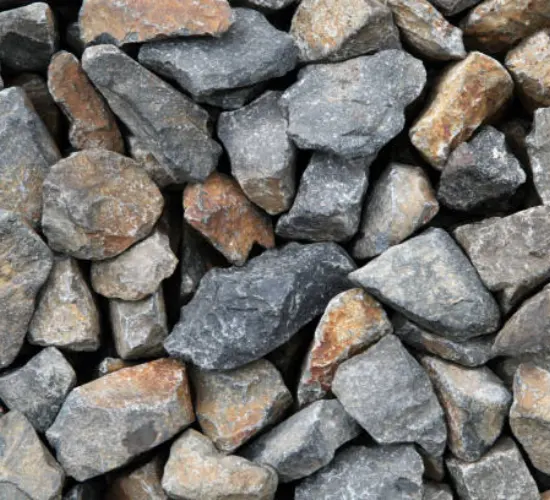
Crushed Limestone Conveyors

Coal Handling Conveyors
H Type Primary Ceramic Belt Cleaner Advantage
Maintain Effective Primary Cleaning
The H Type Primary Ceramic Belt Cleaner helps remove the majority of residual material from the belt surface at the head pulley. Effective primary cleaning reduces the amount of material carried back along the return side of the conveyor.
Reduce Conveyor Maintenance Work
By removing residual material from the belt surface, the cleaner helps reduce material buildup under the conveyor and on return idlers. This helps decrease manual cleaning work and simplifies routine conveyor maintenance.
Improve Conveyor System Cleanliness
Reducing carryback helps keep the conveyor structure, surrounding equipment, and working environment cleaner. Cleaner conveyor systems also help improve operational efficiency in bulk material handling facilities.
Support Stable Conveyor Operation
Maintaining proper belt cleaning helps prevent material accumulation that may affect conveyor components. This contributes to more stable conveyor operation during continuous material transport.
H Type Primary Ceramic Belt Cleaner Quality Control
Ceramic Blade Segment Consistency
Ceramic blade segments are installed in matched sets to maintain consistent scraping edge alignment across the belt width. Blade segments are arranged and fitted to ensure uniform contact along the blade holder.
Blade Holder Machining Accuracy
Blade holders are processed using machining operations to maintain dimensional consistency along the blade mounting surface. This ensures that ceramic blade segments are installed in a straight scraping line.
Support Beam Straightness
The support beam is fabricated using welding fixtures that maintain beam alignment during fabrication. After welding, the beam alignment is checked to ensure that the blade assembly remains straight across the working width.
Symmetrical Tension Adjustment
The dual-side tension mechanism allows operators to adjust pressure on both sides of the cleaner. During assembly, the adjustment on both sides is balanced to maintain consistent blade contact with the conveyor belt.
Frequently Asked Questions
-- H Type Primary Ceramic Belt Cleaner
The H Type Primary Ceramic Belt Cleaner uses a dual-side tension mechanism installed on both sides of the support beam. During installation or maintenance, the adjustment on both sides can be balanced so that pressure is applied evenly across the blade assembly. Balanced tension helps maintain consistent contact between the ceramic blade segments and the conveyor belt surface, preventing uneven wear or localized cleaning gaps along the belt width.
Segmented ceramic blades allow the blade assembly to adapt more effectively to slight irregularities in the conveyor belt surface. Individual blade segments can maintain contact even if the belt surface is not perfectly uniform across its width. This segmented configuration helps maintain a consistent scraping edge and improves overall cleaning effectiveness when removing residual material from the belt surface.
The support beam acts as the main structural component that holds the blade assembly across the conveyor width. Proper beam straightness ensures that the ceramic blade segments form a continuous and aligned scraping edge. If the beam is not straight, the blade assembly may lose uniform contact with the belt surface, which can reduce cleaning efficiency or cause uneven blade wear.
The size of the H Type Primary Ceramic Belt Cleaner is selected according to the conveyor belt width. The blade assembly must span the working width of the belt to ensure that residual material can be removed across the entire belt surface. Selecting the correct cleaner size ensures that the ceramic blade segments maintain proper contact along the full belt width during operation.
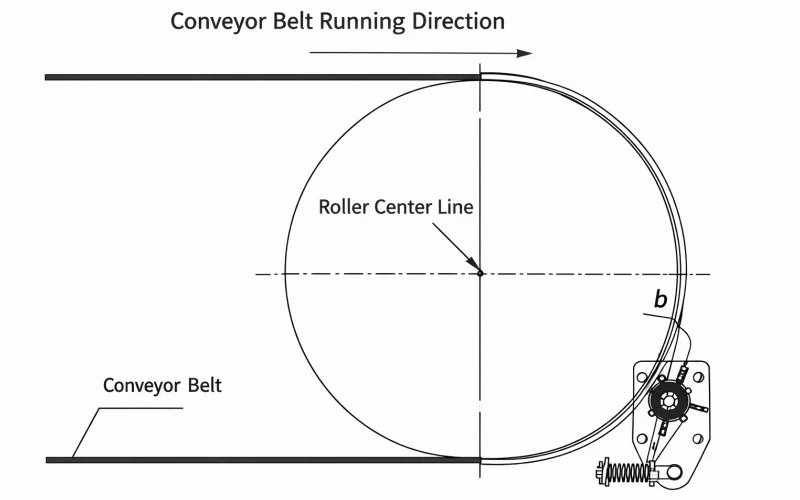
The H Type Primary Ceramic Belt Cleaner is typically installed at the head pulley, slightly below the centerline of the pulley after material discharge. In this position, the belt surface is still supported by the pulley while the cleaner removes residual material. Installing the cleaner at this location allows the blade assembly to perform effective primary cleaning before the belt enters the return side.
Get a Quote for H Type Primary Ceramic Belt Cleaner
Submit your belt width and application details to receive the recommended H Type Primary Ceramic Belt Cleaner quotation.