2. Industry Position and Competitive Foundation of the Chinese Market
2.1 China’s Market Position in the Conveyor Roller Manufacturers Sector
When you are screening Conveyor Roller Manufacturers, China is very difficult to ignore. The reason is not just price, but the depth of its industrial manufacturing base. The World Bank’s Manufacturing, value added (current US$) indicator shows that China’s manufacturing value-added data has been continuously updated through 2024, which in itself indicates that China remains one of the most important participants in the global manufacturing system. In the context of conveyor roller sourcing, the most direct implication of this manufacturing base is this: the supply chain is more complete, supporting resources are more concentrated, and factories are better positioned to build stable mass-delivery capacity.(data source:world bank)
For buyers, this kind of “market position” is not an abstract concept, but a very practical sourcing experience. When you look for conveyor rollers manufacturers in china, you usually do not have only one or two suppliers to choose from. Instead, you can compare suppliers across different price levels, different production capacities, and different depths of supporting capabilities. And precisely because there are enough options, what truly creates differentiation is often not who speaks better, but who can actually keep specifications, lead times, and consistency stable.
2.2 The Main Application Industries for Conveyor roller
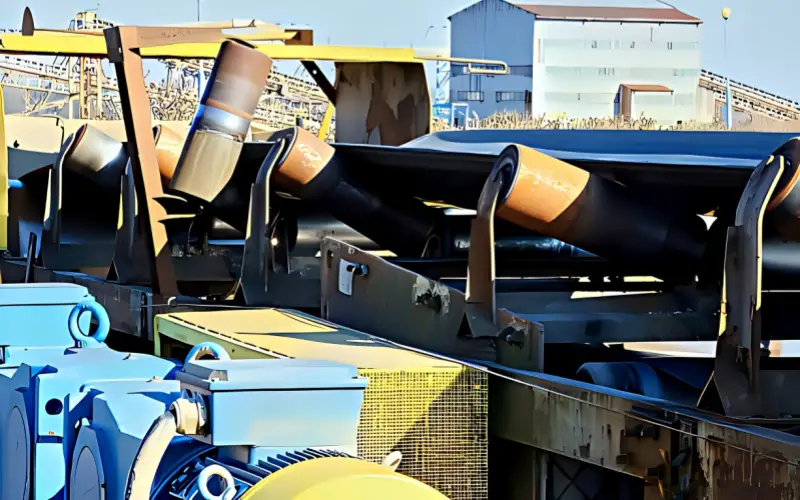
Conveyor Roller Manufacturers do not serve just one single industry. On its official pages, Metso directly places conveyors in typical scenarios such as mining, aggregates, and industrial operation. BEUMER also extends bulk material conveying on its official conveyor technology pages to applications such as long-distance bulk material transport, hot material handling, and alternative fuel processing. In other words, these products are naturally used in industrial environments that are heavy-duty, continuously operating, and intensive in bulk material handling.
To make the sourcing scenarios more practical, you will often encounter roller demand in projects such as mining, quarry, cement, ports, power plants, and aggregates processing. BEUMER’s official materials clearly mention that belt conveyors are used for bulk materials, covering mining, cement, ports, and processing industries. Metso also clearly emphasizes the critical role of conveyors in the mining and aggregates sectors. For buyers, this shows that rollers are not “peripheral parts,” but rather fundamental components that operate at high frequency, are consumed over the long term, and directly affect system stability in these industries.
2.3 The Main Export Markets for China’s conveyor roller
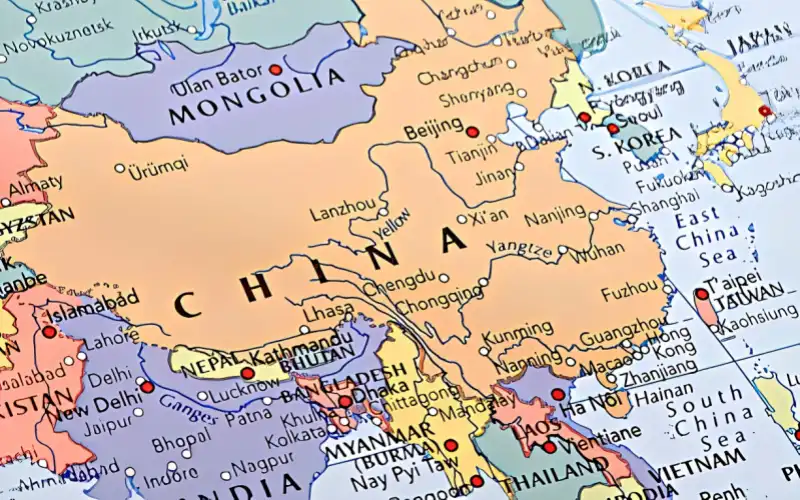
This section needs to be stated carefully first: public trade databases usually find it difficult to isolate the very narrow product line of conveyor roller on its own, so it is more appropriate to cite the broader trade flow of conveyor-related parts rather than present the data as if it were “all rollers.” The World Bank WITS uses HS 843139, which corresponds to parts of lifting, handling, loading or unloading machinery. This code does not include only rollers, but it does effectively reflect the broader export distribution of conveyor- and handling-machinery-related components.
Based on this set of 2024 data, China’s total exports under HS 843139 were about US$1.364 billion, with an export volume of about 322.447 million kilograms. Leading destinations included the United States (US$160.08 million), Guinea (US$105.79 million), Russian Federation (US$103.30 million), Indonesia (US$83.09 million), and Australia (US$66.04 million). At the very least, this data supports a solid conclusion: exports of conveyor-related mechanical components do indeed flow widely to North America, Africa, Southeast Asia, Oceania, and markets with active resource development and industrial construction.(data source:world bank)
If you broaden the perspective a little further, this distribution also helps explain why many buyers continue to pay attention to Conveyor rollers China. That is because it serves not just one regional market, but multiple regions with long-standing demand in mining, ports, building materials, power generation, and bulk material handling. However, when writing this into the main text, it is better to keep the wording at the level of conveyor-related parts export flow or industrial handling parts trade pattern, rather than directly presenting this set of data as roller-specific statistics. That is more professional and better able to withstand verification.
2.4 The Core Competitive Advantages of Chinese Manufacturers
The real competitiveness of Chinese suppliers does not come from one single point, but from several links working together. The first is the depth of the manufacturing base. At a minimum, the World Bank data shows that China still maintained a very strong manufacturing scale through 2024, and this is directly reflected in the density and maturity of its industrial parts supply chain. The second is the maturity of export support capabilities. WITS data for 2024 shows that China’s exports in the HS 843139 category had already reached US$1.364 billion. This is not the scale of “occasional orders,” but a clear demonstration of the ability to supply the global market on a sustained basis.
Returning to the sourcing level you actually care about, the advantages of Chinese Conveyor Roller Manufacturers are usually reflected in four very practical areas: concentrated supply chains, more stable bulk delivery, more flexible specification adjustments, and greater familiarity with export procedures. Especially when dealing with multi-specification orders, project-based procurement, and ongoing replenishment, these advantages are often more valuable than simply pushing down the quoted price. In the end, what you are usually comparing is not who is slightly cheaper, but who can deliver the product, the timing, and the coordination together.
If this section needs to be compressed into one sentence, it is this: the reason China continues to attract overseas buyers is not just cost, but the fact that along the Conveyor Roller Manufacturers chain, it has already made manufacturing, supporting resources, export operations, and delivery coordination more mature and more integrated.
3. Factors to Consider When Choosing Conveyor Roller Manufacturers
3.1 Product Stability Will Make the Difference Much More Obvious Later
At the quotation stage, the difference usually shows up only in price. Once the product is actually put into operation, the real gap begins to appear gradually. When product stability is not good enough, the first signs are often a series of frustrating small problems: poor rotation, increasing abnormal noise, greater localized vibration, or even individual rollers stopping altogether. These issues tend to build up over time.
For you, the trouble is usually not as simple as “one roller failed.” What really becomes a headache is that on-site maintenance may become more frequent, spare parts planning may start to turn reactive, and most troublesome of all, belt wear may increase.
3.2 Whether It Fits the Working Conditions Is Not Something You Want to Discover After Installation
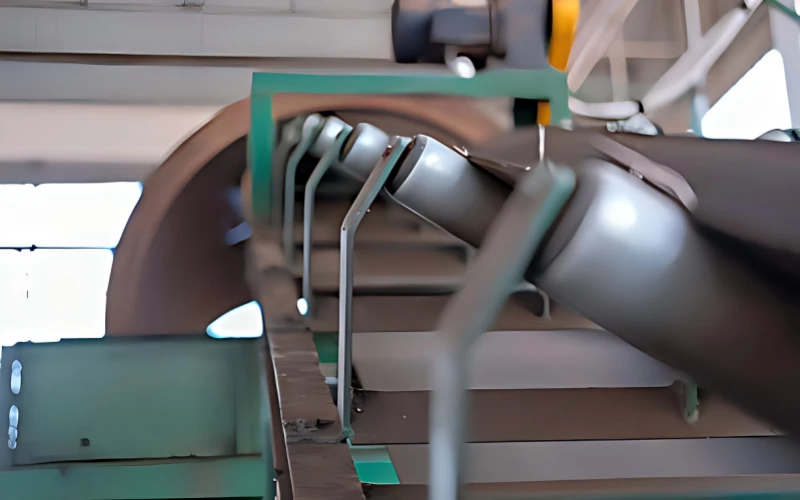
Many problems are not because the product is “unusable,” but because once it is placed into a specific operating environment, its performance is not as stable as expected. Mining, ports, cement plants, and power plants are all different by nature. Some have heavy dust, some involve strong impact, some are humid, and some require long continuous operating hours. The parameters may look similar in the early stage, but the actual performance later can be very different.
That is also why the same batch of Conveyor Rollers can receive completely different feedback in different projects. Not every issue will show up immediately, but as long as the working-condition match is not right, or the product has sealing issues, the impact will gradually show up in operating performance. What you are really concerned about may be whether it can survive long term in your actual site environment.
3.3 They May Look Similar, but Their Actual Performance May Not Be Similar at All
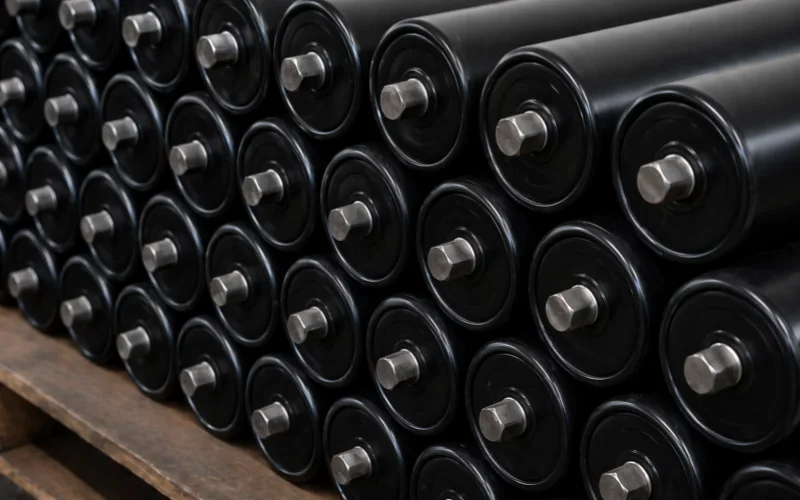
Products like rollers have one very practical characteristic: looking similar does not mean performing similarly. When many products are placed together, the real differences often come out only after they have been running for a period of time. Rotational condition, operating smoothness, and consistency in details are usually not things that can be fully judged just by visual inspection.
So in my view, one of the biggest risks in procurement is not that the quotation is a little higher, but that everything looks “more or less the same” at the beginning, only to find out later that they are fundamentally different. Once the product enters the mass-use stage, that difference will be magnified significantly. This is also the conclusion we summarized after speaking with many customers, especially some who work on tender-based projects.
3.4 A Low Quote Is Easy to Notice, but Long-Term Cost Is Often the Most Overlooked
Anyone in procurement knows that price must be considered, whether because of your KPI or the project budget. But if you look only at price, you often end up in a passive position later. That is because what truly separates conveyor rollers manufacturers in china is not just the unit price, but the overall cost of use afterward, even if that may sound a little abstract. Put simply, something may be cheaper upfront, but if replacement becomes more frequent later, maintenance frequency goes up, and on-site coordination becomes more difficult, then both the visible cost and the hidden cost on paper can become disastrous.
In many cases, a low price does not necessarily mean poor quality. It is simply a different consideration, and the real issue is whether it creates risk by pushing the cost further down the line. What you save today may only be a number on the quotation sheet. What actually determines the procurement outcome is whether later operation runs smoothly, whether replenishment remains stable, and whether the use process stays manageable. For long-term projects, this difference is usually much more real than the small price gap at the beginning.
5.Top 10 Conveyor Roller Manufacturers in China
5.1 Overview of the Top 10
This list is not ranked by brand exposure. Instead, it goes back as much as possible to a more practical comparison logic: focus, completeness, manufacturing capability, industry relevance, and transparency. That is why in Part 5, each Conveyor Roller Manufacturers entry will be presented through these five dimensions, so that you can compare them side by side more directly.
5.2 Top 10 List
5.2.1 IDLERON
- Focus
IDLERON’s product direction is relatively concentrated. Its core offerings revolve around conveyor rollers, idler sets, pulleys, belt cleaners, rubber lagging,and related conveyor components, rather than extending the product line into too many unrelated industrial roller categories. From a procurement perspective, this kind of focus usually means it has a more direct understanding of the belt conveyor system. - Completeness
In addition to conveyor rollers, IDLERON also covers idler sets, pulleys, belt cleaners, impact beds,and other conveyor accessories. This type of product structure is more suitable for project-based procurement, because many supporting requirements can be handled within the same supplier system rather than being split among multiple suppliers. - Manufacturing Capability
According to the information you provided, IDLERON is supported by a 30,000-square-meter production base, more than 150 production staff, an annual roller output of up to 600,000 pieces, 8 professional technical engineers, and 20 laboratory personnel. This type of information can directly support a buyer’s assessment of its strength in bulk delivery, continuous supply, and basic testing capability. - Industry Relevance
IDLERON’s brand background and product layout are clearly oriented toward heavy-duty bulk material conveying applications. Backed by Tiantie Industrial’s conveyor belt industry foundation, its approach is not to sell rollers in isolation, but to build supporting solutions around the bulk material handling supply chain. This is more attractive for projects in mining, quarry, cement, ports, and power plants. - Transparency
The information IDLERON provides publicly is relatively specific. It does not simply make broad statements about good quality, but also discloses production capacity, the number of engineers, laboratory staffing, and its control over radial runout. This level of transparency is more helpful for buyers who are screening conveyor rollers manufacturers in china, because many judgments can be made in advance instead of relying entirely on follow-up questions later.
- Focus
5.2.2 RKM (huizhou) Conveyor Systems Co., Ltd
- Focus
RKM’s product direction is relatively clear. It has long centered on conveyor rollers, idlers,and related conveying accessories. Its website categorizes the product lineup directly into Heavy Industry Idler, Light Industrial Drum,and Conveying Accessories, which shows that it is not a supplier built around completely miscellaneous items. Its main line still remains focused on conveyor parts. - Completeness
From its product structure, RKM does not only produce a single type of roller. It also covers heavy-duty idlers, light industrial drums,and conveying accessories, which means it has stronger supporting completeness than manufacturers focused on just one product category. For buyers who need to compare rollers, core accessories, and some extended product options at the same time, this level of completeness is valuable. - Manufacturing Capability
RKM’s manufacturing foundation is presented with relatively specific public information. Its website states that the company was established in 2006, has a registered capital of RMB 20 million, and operates on a 20,000-square-meter site, including about 10,000 square meters of production area. It also emphasizes 20 years conveyor equipment experience. Information like this can at least support a buyer’s preliminary assessment of its factory scale and sustained manufacturing capability. - Industry Relevance
RKM’s application industries are relatively broad. Its website specifically lists scenarios such as Mine, Power generation, Cement, Logistics,and Manufacture, and also states that belt conveyors and accessories have been widely used in domestic and overseas industries such as mining, thermal power generation, coal mines, ports, metallurgy, and cement manufacturing. This industry coverage indicates that it is not limited to light-duty conditions or a single use case, but has a relatively stable connection to bulk material handling applications. - Transparency
RKM’s level of information transparency is above average. It discloses its year of establishment, registered capital, site area, production area, application industries, and contact information. Its website news content also mentions details such as non-contact labyrinth sealsand dust-proof and waterproof structures for idlers. Although deeper testing data is not presented in full, it is still much easier to evaluate than pages that only talk about “high quality.”
- Focus
5.2.3 Hunan Chenggang Conveyor Technology Co., Ltd.

- Focus
Hunan Chenggang’s product direction is relatively concentrated. Its public materials directly position it as a conveyor idler & pulley manufacturers enterprise, with core products centered on conveyor idlers, rollers, cleaners, buffer beds,and pulleys. This level of focus makes it a better fit for this list than companies that “make a little bit of every kind of industrial part.” - Completeness
From its product structure, Hunan Chenggang is not limited to just the roller itself within the Conveyor Roller Manufacturers category. It also covers rollers, idlers, pulleys, cleaners,and impact beds, which are common conveyor system components. For project-based procurement, this kind of completeness is more practical, because many supporting requirements can be handled within the same company at the same time. - Manufacturing Capability
Its manufacturing capability is one of the easier strengths to describe. Public pages state that its production facilities are equipped with relatively complete equipment, with an annual production capacity of about 1 million units. Its product pages also state Production Capacity: 1000000PCS/Year. In addition, the pages provide lead time information, with samples taking about 2–3 days and bulk orders about 15–30 days. At a minimum, this allows buyers to form a preliminary judgment about its ability to handle batch orders. - Industry Relevance
Hunan Chenggang’s product descriptions and model information are clearly oriented toward bulk material handling applications. Public product pages state that its rollers/idlers are suitable for belt conveyors, support ISO/DIN standards, commonly cover diameters from 60–219 mm, and can reach lengths of up to 3500 mm. The company also highlights configurations such as labyrinth sealsand double sealed bearings, which are more typical of heavy-duty conveying environments. From the perspective of industry relevance, its connection to heavy-duty bulk material handling projects is relatively clear. - Transparency
If you compare the five criteria from Part 4 side by side, one of Hunan Chenggang’s clearest advantages is transparency. It publicly provides information on product size ranges, material details, shaft materials, tube materials, sealing structures, annual production capacity, lead times, certifications, and patent quantities. It even states that under normal working conditions, its rollers can usually reach about 50,000 hours of service life. This kind of information does not mean buyers no longer need to verify details, but it is at least far more useful for evaluation than simply stating “high quality.”
- Focus
5.2.4 Hebei Juxin Conveyor Engineering

- Focus
Hebei Juxin Conveyor Engineering has a very clear main line. It has long focused on belt conveyors, idlers, pulleys, and conveyor parts in both product supply and engineering support. Its website directly positions the company as a manufacturer related to bulk material handling solutions, which shows that this is not a temporary mix of products, but a business that has remained on the conveyor system track for the long term. - Completeness
This company shows relatively strong completeness. Public pages indicate that it does not only produce idler rollers, but also covers belt conveyors, pulleys, and conveyor parts, while also listing a dedicated idlers product page. For project-based procurement, this kind of structure is easier to use for integrated supporting demand than suppliers that only sell a single type of roller. - Manufacturing Capability
Based on public information, Juxin’s manufacturing capability appears to be at an above-average level. Its website states that the company was founded in 1994, that its products have been exported to more than 60 countries, and that it has 5 overseas sales branches. Its LinkedIn page shows a company size of about 201–500 employees. At a minimum, this supports the judgment that it is not a small temporary seller. However, compared with some manufacturers that disclose annual capacity, factory area, and testing teams in much greater detail, its publicly available quantitative factory information is not yet among the strongest. - Industry Relevance
Juxin’s industry relevance is fairly prominent. Its website and product pages clearly point to bulk material handling, and its product content is obviously aimed at mining, bulk conveying,and engineering-based projects. For buyers of heavy-duty conveying lines, this degree of industry fit is a plus, because it looks more like a company serving real projects rather than simply selling standard parts. - Transparency
Its level of transparency is at a stage where it is sufficient for initial screening, but not especially deep. Public pages provide the founding year, number of export countries, product categories, contact information, and some scale-related information, along with relatively clear product displays. However, if you want to make a deeper judgment about hard factory strength — such as the number of production lines, annual output, testing items, and quality control procedures — the website still does not provide enough detail, so further verification would still be necessary.
- Focus
5.2.5 Baoke Machinery
- Focus
Baoke Machinery’s core direction is relatively concentrated. Its public materials have long centered on conveyor rollers as the main product line, without extending the lineup into too many unrelated categories. Its website directly states that it is a professional conveyor roller manufacturer, which is important when screening companies for this list, because it at least shows that the company did not enter this niche segment only temporarily. - Completeness
In terms of completeness, Baoke follows more of a roller-centered route rather than the model of a very broad, all-in-one supporting supplier. Its public pages still focus mainly on the conveyor roller product itself, along with some related conveying equipment. This type of structure is attractive to buyers who mainly want the roller itself to be done well and in greater detail. However, if you place more value on comparing multiple supporting components for a full line in one place, its completeness is not as strong as some of the earlier companies. - Manufacturing Capability
Baoke’s manufacturing strength is more of a process-upgrade-oriented story than a scale-oriented one. Public materials mention that it has a cooperative background involving Japanese technology and has introduced related manufacturing skills to improve roller quality. Although this type of information is not as direct as factory area or annual capacity, it at least indicates that its manufacturing side is not staying at the level of low-threshold replication, but is actively strengthening its process capability. - Industry Relevance
From the application perspective, Baoke still belongs to the category of conveyor system-related suppliers, but it appears more focused on competing through the performance of the roller itself rather than strongly emphasizing mining engineering or bulk project narratives. Public materials and trade show information mention keywords such as silent idlers and custom conveying solutions, which suggests that within the industry it leans more toward product performance and user experience. - Transparency
Baoke’s transparency is at a medium level. From its public materials, you can see its product direction, company positioning, part of its cooperation background, and trade show exposure. However, if you want to further evaluate production capacity, testing procedures, quality control points, and factory depth, the website still does not provide enough detail. So it is more suitable to place in the category of companies that have highlights and are worth reviewing, rather than one that can be quickly defined based entirely on public evidence.
- Focus
5.2.6 Qingdao Xin Aneng Conveying Machinery Co., Ltd.

- Focus
Xin Aneng has a relatively clear main line and has long focused on conveyor equipment and accessories. Its homepage directly groups its products into categories such as custom conveyor rollers, idler rollers, pulleys,and conveyor belts, which shows that although it does not produce only a single type of roller, it has not moved away from the main line of belt conveyor components. - Completeness
This company’s completeness is one of its more obvious strengths. In addition to custom conveyor rollers, it also covers idler rollers, pulleys, conveyor belts,and other product categories. For buyers who want to compare rollers, pulleys, and other basic supporting components together, this type of structure is more convenient and better suited to one-stop inquiries. - Manufacturing Capability
Xin Aneng’s publicly available manufacturing information is relatively specific. Its website states that the company was established in 1990, and its product pages mention that its custom conveyor rollers guarantee 30,000 hrs in normal working conditions. It also emphasizes control over raw materials, factory management, production equipment,and testing equipment. Although the public pages do not provide especially detailed figures for production capacity or factory area, they at least show that its manufacturing side is not built only on general claims. - Industry Relevance
From the way its products are presented, Xin Aneng appears more like a typical conveyor system supporting supplierthan a seller of only one single product. It is suitable for procurement scenarios where buyers want to compare Conveyor Roller Manufacturers, pulleys, and belts together. In terms of industry relevance, it does not emphasize mining or port narratives as heavily as some manufacturers that are strongly positioned around heavy-duty project applications, but its connection to bulk material handling support is still clear. - Transparency
Xin Aneng’s level of transparency is above average. From its website, you can obtain the founding year, product categories, some performance-related descriptions, and its general manufacturing management direction. This already provides much more information than pages that only show product photos and a single phrase like “high quality.” However, if you want to judge testing items, quality procedures, and more detailed factory capability, further follow-up would still be necessary.
- Focus
5.2.7 Joyroll

- Focus
Joyroll’s product direction is relatively concentrated. It has long centered on conveyor rollers, conveyor idlers, brackets,and drums / pulleys, and its main line has consistently remained within belt conveyor parts. For this Top 10 list, that level of focus is well established, because it is not the kind of supplier that forces many unrelated industrial products into the same catalog. - Completeness
From its product structure, Joyroll also shows good completeness. In addition to conveyor rollersand conveyor idlers, it also covers common supporting components such as bracketsand drums. This kind of product framework is more buyer-friendly for project-based procurement, especially when you do not want to compare only a single roller, but would rather review more conveyor components together. - Manufacturing Capability
Joyroll’s manufacturing capability is one of the easier strengths to describe. Public information shows that the company was established in 2008, has a factory area of about 33,000 square meters, and operates an automatic conveyor idler roller production line. At a minimum, this indicates that it has a real foundation for scaled manufacturing and batch production, rather than being only a light-asset export window. - Industry Relevance
Joyroll’s industry relevance leans more toward export-oriented bulk material handling support. It does not place especially heavy emphasis on one single industry, but based on its product line and public materials, it is still clearly serving belt conveyor-related projects. For overseas buyers, the advantage of this industry positioning is that it appears more familiar with how international markets express their needs, rather than focusing only on local standard parts. - Transparency
Joyroll’s transparency is at an above-average level. Public materials show its founding year, factory area, automated production line, and information such as ISO9001and CE. These details are enough to support an initial round of evaluation. However, if you want to further compare testing items, quality control details,and service-life verification methods, you would still need to ask more follow-up questions.
- Focus
5.2.8 GCS

- Focus
GCS still has a relatively clear main line. Its public information has long centered on conveyor rollers, frames,and related conveyor components, without obviously moving away from the main track of conveyor system support. It is not the kind of company that mixes all kinds of industrial products together, so it makes sense to include it in this Conveyor Roller Manufacturerslist. - Completeness
GCS’s completeness is one of its more obvious strengths. Its website publicly shows custom rollers and standard rollers, while also extending into supporting content related to crushing, screening, cleaning,and transportation. For buyers who are not just purchasing a single roller, but instead view conveyor components as part of a broader system purchase, this kind of completeness has greater reference value. - Manufacturing Capability
Based on its public pages, GCS’s manufacturing capability falls into the category of having a real foundation, but not disclosing a particularly large amount of quantified information. It is able to show a relatively complete product system and a stable business structure, and it also mentions its supply capability for both custom and standard rollers, which indicates that it is not simply operating as a display website. However, compared with manufacturers that publish very detailed information on factory area, production capacity, and testing teams, GCS does not disclose as much verifiable quantitative information on the manufacturing side. - Industry Relevance
GCS is better understood as a system-oriented conveyor component supplier rather than a single heavy-duty roller manufacturer. It is connected with applications such as bulk material handling, crushing, screening, and transportation, so its industry relevance is clearly established. Its presentation, however, leans more toward integrated support than toward emphasizing one particular heavy-duty industry label. For buyers making system-based purchases, this kind of industry positioning can actually be valuable. - Transparency
GCS’s transparency is at a medium level. From its website, you can obtain its product range, business direction, and some brand background information, which is enough to support a first round of comparison. However, if you want to further confirm factory scale, testing capability, quality procedures, and more detailed manufacturing information, the public pages do not yet go particularly deep. So it is more suitable to place it on the candidate list first, and then continue verifying details during the inquiry stage.
- Focus
5.2.9 Yuanping Xingsheng Machinery Manufacturing

- Focus
Yuanping Xingsheng’s business direction is well aligned with conveyor system components. Its website and product pages have long centered on products such as conveyor idlers, rollers, conveyor idler frames, rubber-coated pulleys,and belt conveyors, so it is reasonable to include it in this Conveyor Roller Manufacturers list. However, compared with some of the earlier companies that are more purely focused on roller / idler manufacturing, its business coverage is slightly broader. - Completeness
This company shows strong completeness. Its public pages list multiple categories, including Buffer Idlers, Ceramic Idlers, Conveyor Idler Frames, Iron Idlers, Steel Idlers, Stainless Steel Idlers, Rubber-coated Pulleys,and Ceramic Rubber-coated Pulleys, which indicates that it does not only make a single roller specification, but has already formed a relatively complete supporting product structure. For buyers who want to compare idlers, frames,and pulleys together, this is a clear advantage. - Manufacturing Capability
Yuanping Xingsheng’s manufacturing strength is more scale-oriented. Its Made-in-China page states that the company was established in 2004, was reorganized from Jinfeng Cement Equipment Factory, and operates three production areas. Its product pages also mention that it has one TKAS idler production line and three semi-automatic production lines. Another product page states Production Capacity: 1000000 pieces/year. Taken together, this information at least supports the view that it has relatively strong manufacturing capacity and is not just a light-asset trading window. - Industry Relevance
Its industry positioning is clearly oriented toward heavy industry and bulk material conveying. Multiple product descriptions directly mention coal mining, heavy-duty conveyor, and industrial material transport conveying systems, which shows that it is not serving light-duty logistics roller applications, but is much closer to mining and heavy-duty conveying use cases. For buyers involved in coal mining, bulk handling, or heavy industrial projects, this degree of industry fit is relatively clear. - Transparency
Yuanping Xingsheng’s transparency ranks at an above-average level within this list. Its public pages provide the company address, product categories, some production line information, founding year, management system certifications, and production-capacity data on certain product pages. For example, its Made-in-China page states Business Type: Manufacturer/Factory and lists management system certifications such as ISO 9001, ISO 14001,and ISO 50001. However, if you want to make a deeper judgment about testing procedures and quality control details, further verification would still be needed.
- Focus
5.2.10 TongXiang / TX Roller

- Focus
TX Roller has a relatively stable main line. Its official website clearly states that it mainly manufactures Conveyor Roller & Idler, Conveyor Frame & Station, Pulley, Impact Bar/Bed, and related components. This product structure shows that it has long remained on the track of belt conveyor components without any obvious deviation. - Completeness
In terms of completeness, TX Roller does not only produce a single type of roller. It simultaneously covers rollers, idlers, frames, stations, pulleys,and impact beds, which makes it more buyer-friendly for those who want to compare multiple categories of conveyor components together. This type of product framework also makes it a suitable stable option for the latter part of this Top 10 list. - Manufacturing Capability
TX Roller has a certain manufacturing foundation. Its official website states that the company has 38 years of experience in production and mentions that it has specialized production equipmentand testing machines. Its Made-in-China page states that the company was founded in 2004, mainly produces rollers, pulleys, and roller frames, and serves bulk material handling industries. Taken together, these two sets of information at least support the judgment that it is not a light-asset seller. - Industry Relevance
TX Roller’s connection to heavy-duty bulk material handling applications is clear. Its official homepage directly states that its products help plants, mines,and facilities improve efficiency, safety, and productivity, while its Made-in-China page also notes that its products are widely used in bulk material handling industries. This indicates that it is not following the route of light-duty logistics rollers, but is much closer to mining, bulk conveying, and industrial conveying applications. - Transparency
TX Roller’s transparency is at a medium-to-above-average level. Its website publicly provides its main product categories and some information on manufacturing and testing capability. Its Made-in-China page supplements this with the founded year, and its website news page also mentions that in May 2022 it acquired most of the assets of Hebei Taixi Conveying Machinery. However, if you want to further verify production capacity, testing procedures, and more detailed quality control points, the public information is still not especially deep, and follow-up inquiries would still be necessary.
- Focus
6. Extended Analysis of the Supply Chain and Procurement
6.1 Raw Materials
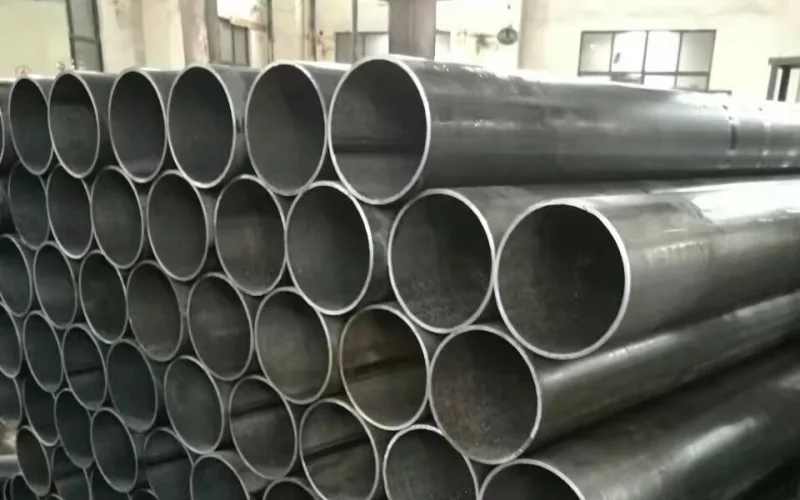
When you evaluate Conveyor Roller Manufacturers, what you really need to guard against is not whether the supplier can make the sample, but whether the products remain consistent after batch production begins. For products like roller, problems often start to diverge from upstream materials such as tube, shaft, bearing, and seal, rather than suddenly appearing only at the finished-product stage. SKF’s public materials mention that in its catalog calculations, the L10 life ratio of bearings in clean environments versus heavily contaminated environments can be as high as 500 times; it also lists contamination factor separately, which shows that the contamination level directly affects bearing rating life. Applied to procurement, this point is very straightforward: even if both are called roller, if the upstream material system and cleanliness control are not stable, the later service-life performance may be completely different.
You should first send over the original proposal, drawings, working conditions, dimensions, and application scenario, and then see whether the supplier can execute according to the original plan, which points can be followed directly, which points need substitution, and which points will affect lead time, cost, or service life. What is really worth comparing here is not who speaks better, but who gives more specific responses on material substitution, bearing configuration, sealing structure, and batch consistency.
6.2 Production Scheduling
Many procurement gaps are created when changes happen. Samples, dimensional changes, multiple specifications running in parallel, and suddenly compressed lead times — these are the situations most likely to expose a supplier’s real capability. What you ultimately see is not “whether this company can make it,” but “whether this company can still keep it stable after changes are made.” ISO’s official explanation of ISO 9001:2015 is very clear: the core of this standard is to help organizations consistently provide products and services and continually improve processes. So a truly mature supplier will not just reply with fast delivery, but will break down your original plan and explain which specifications can be scheduled directly, and which will affect tooling, production rhythm, and lead time.
Whether the supplier can quickly judge feasibility, clearly explain the risk points in advance, and distinguish between “can do” and “can do steadily” — all of these are more valuable than a simple “no problem.” In Part 5 above, the real advantage of those companies with stronger manufacturing capability is exactly here.
6.3 Delivery
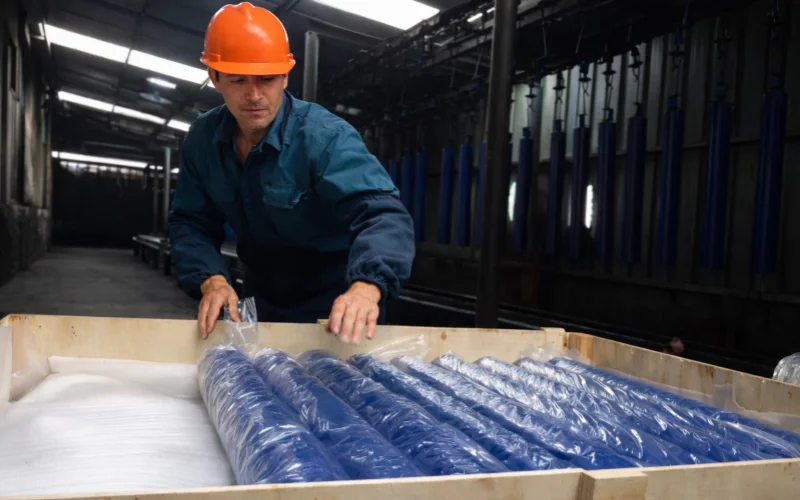
Many orders are ultimately lost not because of the product, but because of shipment. Unstable packaging, non-compliant wooden cases, chaotic container loading, and incomplete documentation may not look like “quality issues,” but once the project reaches the delivery stage, they can still slow everything down. IPPC’s ISPM 15 clearly sets out phytosanitary requirements for wood packaging materials in international trade, covering wooden pallets, wooden cases, dunnage, and related materials; USDA also clearly requires that wood packaging materials entering the United States must be debarked, treated, and marked with ISPM 15. This means that for export buyers, it is not enough for the supplier to simply produce the goods — the packaging method itself is also part of delivery capability.
Taking it one step further, a truly mature export supplier usually does not just say “we can ship,” but also explains the scope of responsibility clearly. So when comparing Conveyor rollers China suppliers, what you really need to look at in the later stage is not “whether they can ship,” but “whether they have truly become experienced in handling shipment.” Packaging, container type, marking, documentation, and delivery terms — once these downstream actions become unstable, the earlier price advantage can be consumed very quickly.
6.4 Coordination
In long-term cooperation, what buyers ultimately compare is usually not which supplier is strongest at one single point, but whether the entire chain runs smoothly. Raw materials, production scheduling, inspection, packaging, and shipment — if you have to keep chasing every stage repeatedly, then even if the order is finally completed, the experience will not feel easy. This is also why some conveyor idler manufacturers may not offer the lowest quotation, yet are more likely to remain in the final selection: because they can absorb your original plan, absorb the changes, and also absorb the delivery requirements.