IDLERON Secondary Conveyor Belt Cleaner for Maximum Carryback Reduction

Engineered by IDLERON to improve belt cleaning efficiency, eliminate residual material, and reduce maintenance costs in demanding industrial conveyor systems.

IDLERON Secondary Conveyor Belt Cleaner Types

IDLERON offers a complete range of secondary conveyor belt cleaners designed to match different material types, operating conditions, and maintenance requirements.Select the right type based on your application needs to achieve optimal cleaning performance and longer service life.

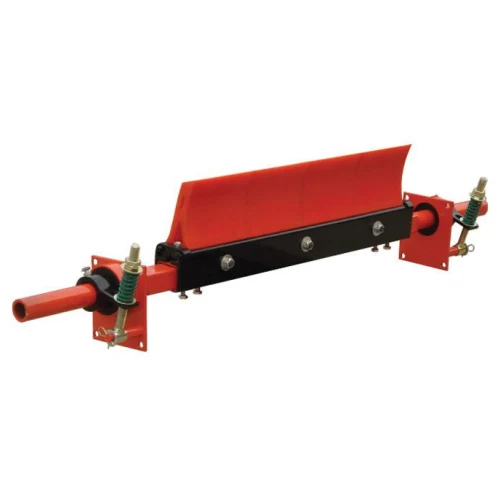
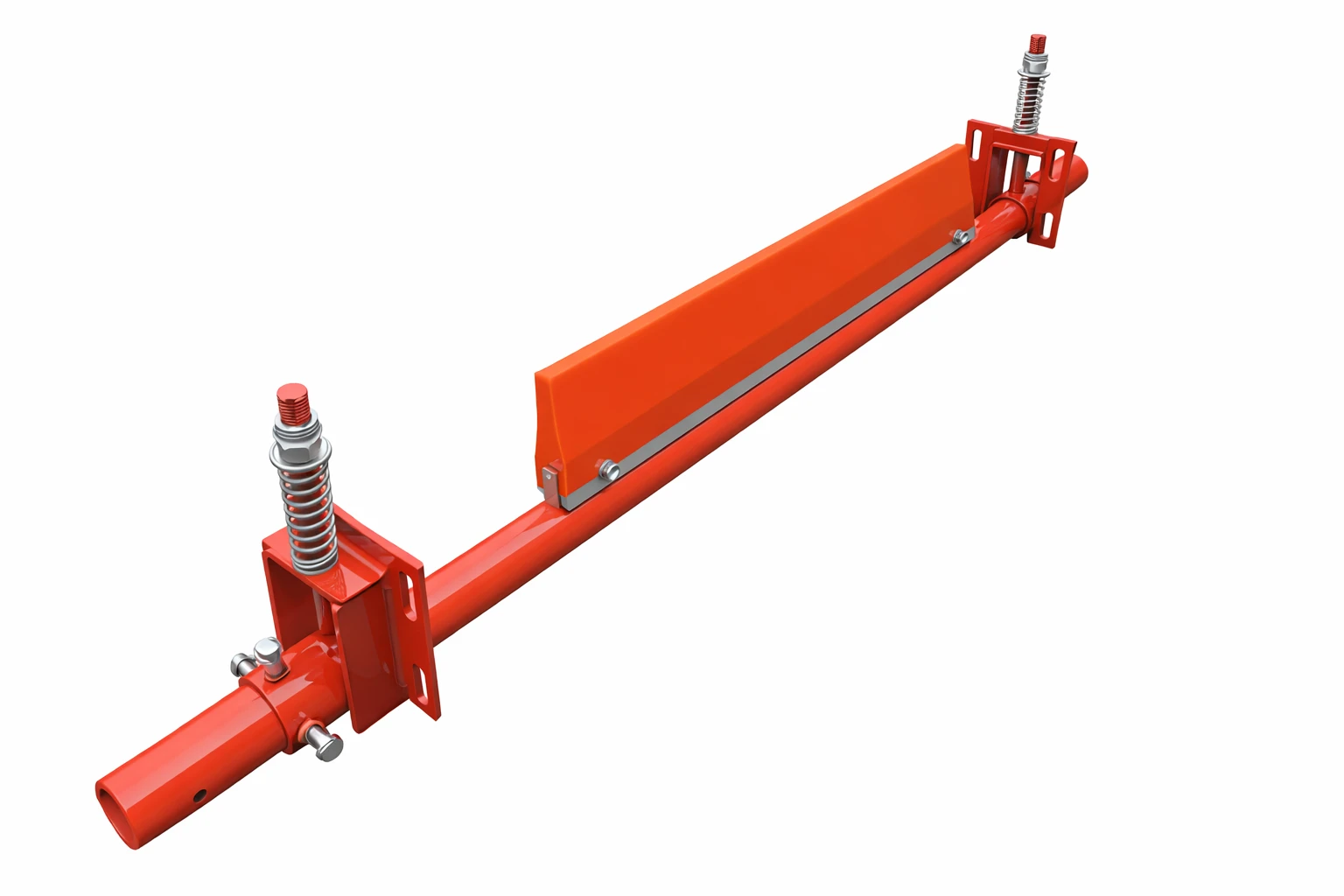
Secondary Polyurethane Belt Cleaner

Secondary Polyurethane Belt Cleaner

Designed for general-purpose applications where material is moderately abrasive or slightly sticky. Flexible polyurethane blades provide consistent contact with the belt surface while minimizing belt wear. A cost-effective solution for improving cleaning efficiency in standard conveyor systems.
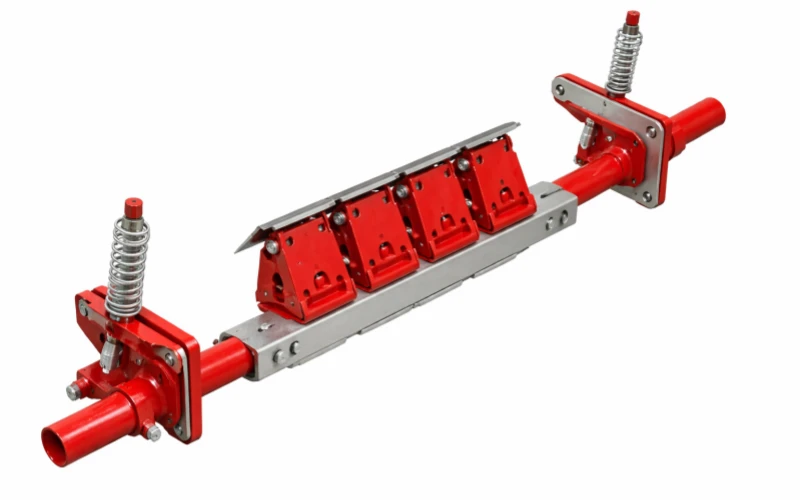
H-Type Spring-Tensioned Alloy Belt Cleaner

H-Type Spring-Tensioned Alloy Belt Cleaner

Equipped with a spring tensioning system that automatically maintains proper blade pressure. Compensates for blade wear to ensure continuous cleaning efficiency without frequent adjustment. Reduces maintenance effort while improving long-term operational stability.
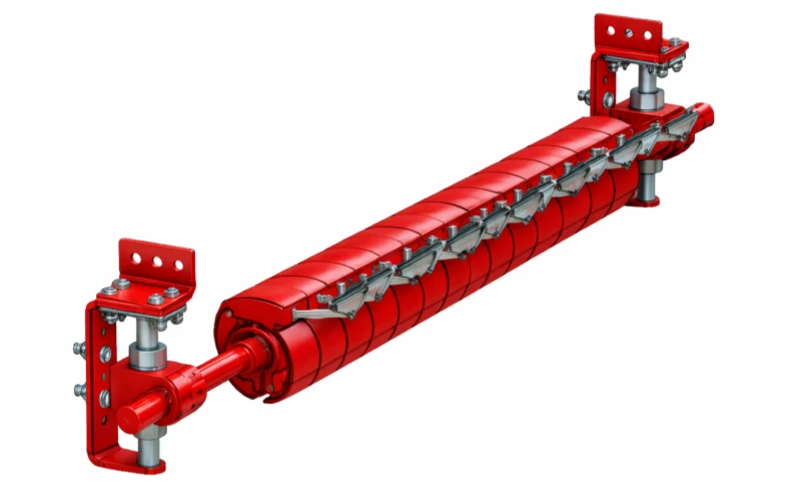
Secondary Tungsten Carbide Scraper Belt Cleaner

Secondary Tungsten Carbide Scraper Belt Cleaner

Built for highly abrasive materials requiring maximum wear resistance. Tungsten carbide blades provide exceptional durability and maintain sharp scraping edges over time. Ideal for mining, cement, and other heavy-duty applications with severe wear conditions.
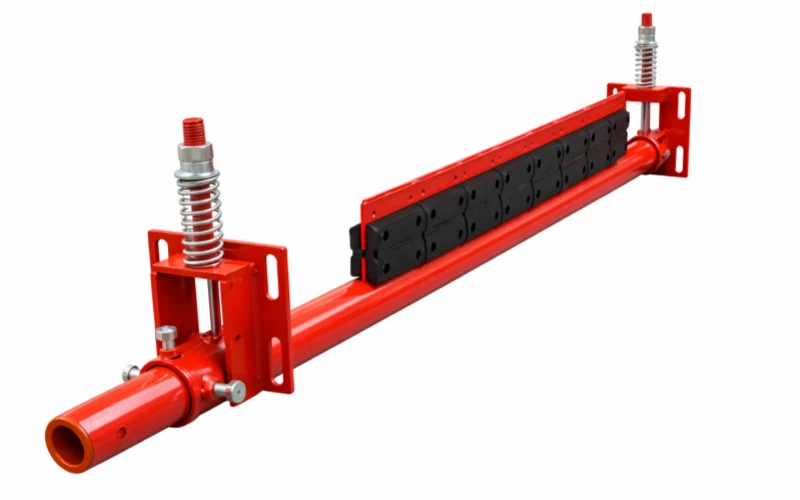
Secondary Alloy Blade Belt Cleaner

Secondary Alloy Blade Belt Cleaner

Engineered for higher wear resistance in demanding conveying conditions. Alloy blades deliver stronger scraping force to remove compacted fines and residual material. Suitable for operations requiring improved durability and reduced blade replacement frequency.
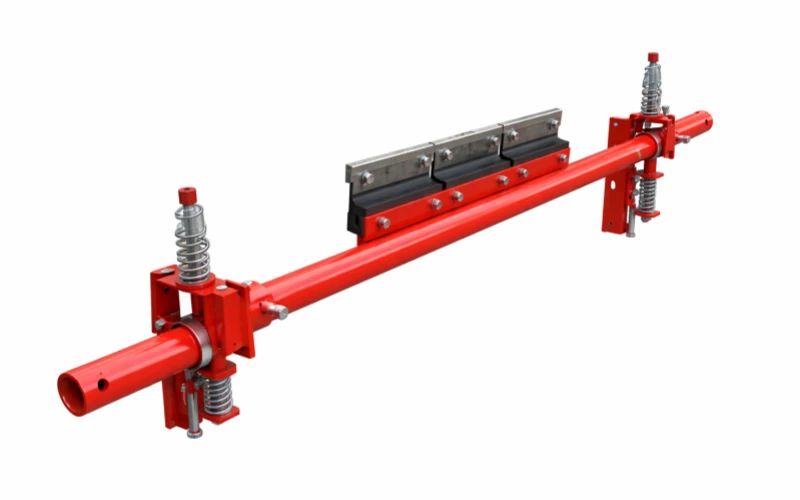
Angled Secondary Alloy Belt Cleaner

Angled Secondary Alloy Belt Cleaner

Features an angled blade design that enhances material removal efficiency across the belt width. Improves contact with uneven material distribution and reduces localized buildup. Ideal for conveyors where standard flat blades cannot achieve consistent cleaning results.
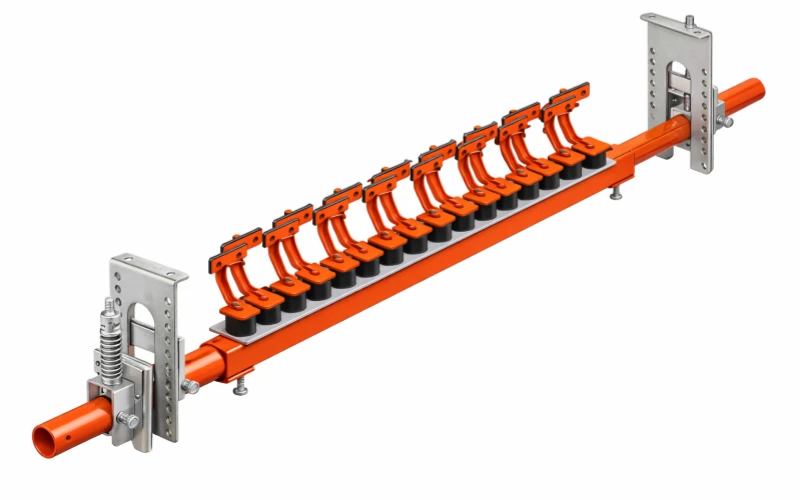
Cross-Arrangement Alloy Belt Cleaner

Cross-Arrangement Alloy Belt Cleaner

Cross-arranged blades increase contact points with the belt surface for enhanced cleaning coverage. Effectively removes sticky and fine materials that are difficult to scrape with standard designs. Suitable for high-load conveyors handling challenging material conditions.
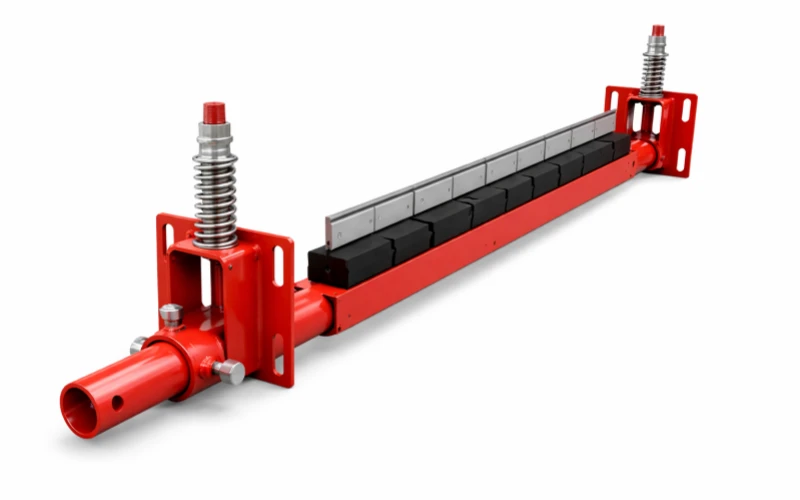
N-Type Secondary Alloy Belt Cleaner

Optimized blade geometry ensures stable and uniform pressure along the belt surface. Maintains consistent cleaning performance in continuous heavy-duty operations. Suitable for systems requiring reliable and balanced scraping force.
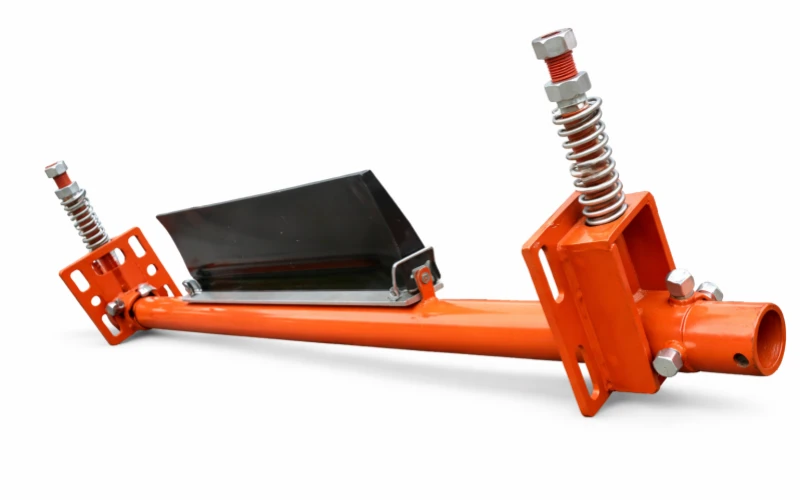
Secondary De-watering Belt Cleaner

Secondary De-watering Belt Cleaner

Designed for wet and sticky material conditions where moisture increases carryback. Helps remove water-laden fines and improves downstream cleaning performance. Reduces material buildup and improves overall belt cleanliness in high-moisture environments.
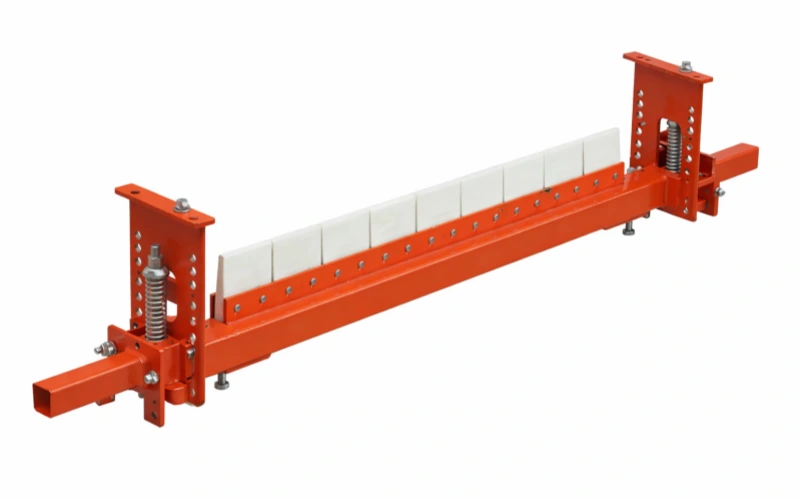
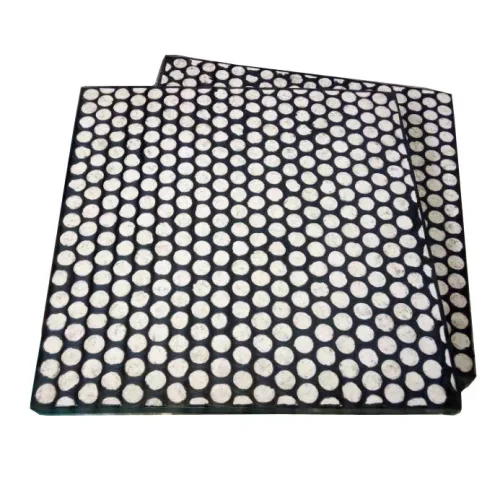
Secondary Ceramic Belt Cleaner

Secondary Ceramic Belt Cleaner

Designed for extremely abrasive material conditions where maximum wear resistance is required. Ceramic blades provide excellent hardness and maintain stable scraping performance over extended operation. Ideal for reducing blade wear and maintaining consistent cleaning efficiency in high-abrasion environments.
How Secondary Conveyor Belt Cleaners Remove Residual Material

After material discharge, fine particles and sticky residues often remain adhered to the conveyor belt surface. These materials travel along the return belt, causing carryback, contamination, and accumulation along the conveyor structure.

Secondary conveyor belt cleaners are installed after the head pulley to remove these remaining materials. By maintaining continuous contact with the belt surface, the cleaner blade effectively scrapes off residual fines before they enter the return side.

Without effective secondary cleaning, residual material will continue to circulate within the system, leading to equipment damage, belt misalignment, and increased maintenance costs.

Conveyor Problems Caused by Residual Material
— and How IDLERON Solves Them

Residual material on the belt is not just a cleaning issue. It is the starting point of carryback, idler buildup, belt damage, tracking instability, and unnecessary shutdowns.

Material Carryback on Return Belt

Problem

Residual material travels along the return belt after discharge, causing continuous spillage, dirty working conditions, and material loss around the conveyor line.

Solution

IDLERON secondary belt cleaners remove residual fines immediately after the head pulley, preventing material from entering the return side and eliminating carryback at the source.

Belt Damage and Corrosion

Problem

Material stuck on the belt causes continuous abrasion and long-term contact with corrosive fines, accelerating belt wear, damaging the belt surface, and shortening service life.

Solution

IDLERON secondary cleaners keep the belt surface cleaner during operation, reducing long-term material adhesion and minimizing wear, corrosion, and premature belt deterioration.

High Manual Cleaning and Downtime

Problem

Without effective cleaning, operators must repeatedly stop the system to remove accumulated material under the conveyor, increasing labor cost and reducing production efficiency.

Solution

Continuous automatic cleaning reduces manual cleanup frequency, minimizes shutdowns for housekeeping, and improves overall plant operating efficiency.

Material Buildup on Idlers and Conveyor Structure

Problem

Sticky and fine materials accumulate on return idlers and conveyor frames, leading to roller blockage, increased rotation resistance, and frequent component replacement.

Solution

By effectively removing adhered material from the belt surface, IDLERON cleaners keep residual material away from the idler zone, protect rollers from contamination, and extend service life.

Belt Misalignment and Tracking Instability

Problem

Material buildup on rollers or uneven residue on the belt path can trigger belt misalignment, increasing the risk of belt edge damage, unstable running, and unplanned stoppages.

Solution

By preventing material accumulation and maintaining a cleaner return path, IDLERON cleaners help stabilize belt tracking and reduce the risk of deviation caused by residual buildup.

Accelerated Wear of Downstream Components

Problem

Once residual fines circulate through the return section, they contaminate pulleys, idlers, and adjacent components, creating a chain reaction of wear and maintenance issues.

Solution

IDLERON secondary cleaners stop the problem before it spreads across the system, reducing downstream contamination and protecting key conveyor components from avoidable wear.

Residual material is not just a by-product — it is the starting point of conveyor system failure.

IDLERON secondary conveyor belt cleaners eliminate the problem before it spreads across the return belt, idlers, pulleys, and belt surface.

How to Choose the Right Secondary Conveyor Belt Cleaner

Choosing the right secondary belt cleaner depends on your material type, operating conditions, and conveyor system requirements. This guide helps you quickly identify the most suitable cleaner type for your application.

Step 1: Identify Your Material Type

The characteristics of the conveyed material directly determine the required blade material.

  • Sticky or wet materials (coal, clay, sludge)
    → Recommended: Polyurethane or De-watering cleaners
  • Abrasive materials (iron ore, cement, aggregates)
    → Recommended: Alloy or Tungsten Carbide cleaners
  • Fine powders or difficult residues
    → Recommended: Ceramic or precision alloy cleaners
Step 2: Evaluate Material Adhesion and Moisture

Material adhesion and moisture content significantly affect cleaning difficulty.

  • High moisture / slurry conditions
    → De-watering secondary cleaners help remove excess water and reduce sticking
  • High adhesion materials
    → Use polyurethane or flexible blade designs to maintain consistent contact
  • Dry but fine particles
    → Use high-pressure alloy or ceramic blades for effective scraping
Step 3: Consider Wear Conditions

Different environments require different wear resistance levels.

  • High wear / heavy-duty operations
    → Tungsten carbide or alloy blade cleaners
  • Medium wear conditions
    → Standard alloy or ceramic cleaners
  • Belt protection priority (avoid damage)
    → Polyurethane cleaners
Step 4: Check Conveyor Conditions

Your conveyor setup also affects cleaner selection.

  • High-speed conveyors
    → Stable structure with consistent pressure (H-type or reinforced designs)
  • Uneven material distribution
    → Cross-arrangement or angled cleaners
  • Belt misalignment risk
    → Flexible or segmented blade systems

Why Choose IDLERON Secondary Conveyor Belt Cleaners

IDLERON secondary belt cleaners are designed based on real conveyor system failures, focusing on material behavior, wear mechanisms, and long-term operational stability.

Configuration Based on Actual Conveyor Conditions

Cleaner selection is determined by operating conditions, not fixed product models.

Blade Material Selection Based on Material Behavior, Not Generic Use

Different conveyed materials require different blade properties, not a one-type-fits-all solution.

Focus on Preventing Idler Contamination, Not Just Cleaning the Belt

Carryback is not only a cleaning issue but a system contamination problem.

Consistent Blade Pressure to Maintain Cleaning Efficiency Over Time

Cleaning performance depends on whether blade pressure remains stable during operation.

Wear Performance Depends on Material Quality and Processing Control

Blade durability is not only about material type, but also manufacturing consistency.

Designed to Reduce System-Level Failures, Not Just Blade Replacement

Secondary cleaners are designed to interrupt the failure chain caused by carryback.

Frequently Asked Questions
-- Secondary Conveyor Belt Cleaners

Blade material directly determines the balance between cleaning efficiency and belt protection. Harder materials like tungsten carbide provide stronger scraping force and longer wear life but may increase belt surface stress if not properly configured. Softer materials such as polyurethane adapt better to the belt surface, reducing damage but may wear faster under abrasive conditions. The correct selection depends on material abrasiveness, adhesion, and belt sensitivity.

Uneven blade wear is usually caused by inconsistent pressure distribution, misalignment of the cleaner shaft, or uneven material loading on the belt. This leads to localized carryback and reduced cleaning efficiency. Using properly tensioned systems, segmented blades, or designs like angled and cross-arrangement cleaners can improve contact consistency and distribute wear more evenly across the blade surface.

If issues such as persistent carryback, repeated idler contamination, or localized buildup continue after installation, it usually indicates that the cleaner type or blade material is not properly matched. Standard designs may not perform well under high moisture, sticky materials, or uneven loading. In such cases, selecting specialized configurations like de-watering or angled cleaners becomes necessary.

Blade lifespan is affected by multiple factors including material abrasiveness, particle size, moisture content, belt speed, and pressure settings. High abrasion and sharp particles accelerate wear, while excessive pressure can also shorten blade life. Proper material selection combined with stable tension control is essential to achieve predictable and longer service intervals.

Structure design determines how effectively the blade maintains contact with the belt under varying conditions. For example, spring-tensioned systems maintain consistent pressure, while angled or cross-arrangement designs improve contact coverage across the belt width. In difficult conditions such as wet or uneven loading, these structural differences can significantly improve cleaning efficiency compared to flat or rigid designs.

Carryback may persist if the blade material is not suitable for the conveyed material, or if the pressure is insufficient or uneven. Incorrect installation angle, worn blades, or unsuitable cleaner type for specific conditions such as high moisture or sticky materials can also reduce effectiveness. Proper configuration and periodic inspection are required to maintain performance.

While belt width determines cleaner size, operating conditions define cleaner type and material. Factors such as moisture content, material stickiness, abrasiveness, and conveyor speed have a greater impact on performance. Two conveyors with the same belt width may require completely different cleaner configurations depending on these conditions.

Effective secondary cleaning reduces the amount of residual material entering the return system, which directly impacts downstream components. Lower carryback reduces contamination on idlers, minimizes roller resistance, and prevents buildup that can lead to belt misalignment. This improves overall system stability and reduces maintenance frequency across the entire conveyor line.

Get the Right Secondary Conveyor Belt Cleaner for Your System

Tell us your conveyor conditions — we will recommend the right solution.

Get Quotation Now