Steel Plant Conveyor Applications
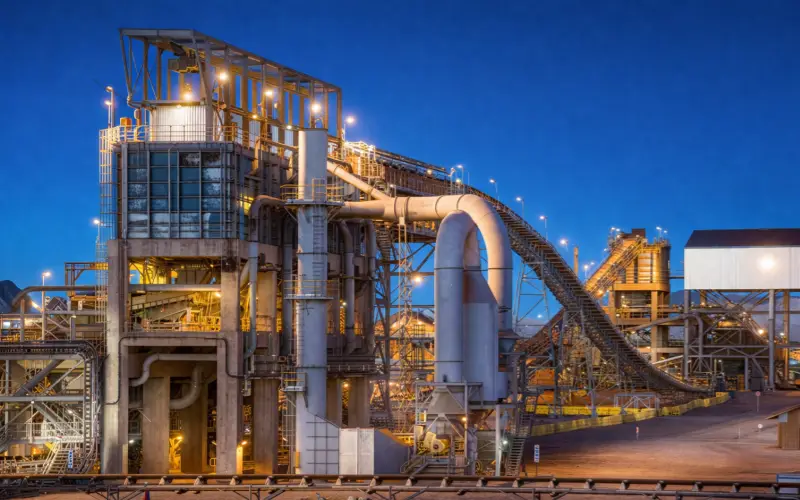
Steel plant conveyor systems handle materials such as sinter, coke, iron ore, and slag, often under high temperature and continuous production conditions.
Typical on-site situations include:
- Hot materials (sinter or coke) transferred directly after processing, affecting belt surface conditions
- Fine particles and dust creating material adhesion and buildup on the belt
- Heavy bulk materials generating high load across the conveying system
- Continuous operation where interruption can impact entire production processes
Key Components in Steel Plant
Conveyor Idlers
Support the belt when conveying hot sinter, coke, and ore materials, where high temperature and fine particles can affect sealing performance and long-term rotation stability; dust and residue can enter bearings and lead to increased resistance or premature failure.
- Sealed idlers are recommended in high dust and high-temperature zones
- Stable rotation is critical for continuous heavy-load conveying
Conveyor Pulleys
Drive the belt when transporting heavy materials such as coke and sinter, where continuous load and process stability require consistent traction and tension; unstable pulley performance can lead to belt slip or disruption in material flow within production lines.
- Stability is critical in continuous steel production systems
- Reliable performance supports uninterrupted material transfer
Pulley Lagging
Maintains traction when handling fine particles and high-temperature materials, where dust and residue can reduce friction between the belt and pulley surface; without lagging, this may result in belt slippage under heavy and continuous load conditions.
- Recommended in coke and sinter conveying systems
- Important where dust and residue accumulation is common
Impact Bed
Absorbs impact where hot sinter or bulk materials are transferred onto the belt, especially from chutes or feeders where material flow is uneven; repeated loading can create localized stress or deformation on the belt surface.
- Recommended for sinter and coke transfer points
- Necessary where material temperature and load are both high
Skirting Board
Controls material flow where hot materials and fines exit chutes and spread across the belt, especially when uneven loading causes particles to move toward the edges; without skirting, this leads to continuous spillage and dust leakage along the conveyor structure.
- Recommended at open transfer points handling coke or sinter
- Important where fine particles are mixed with bulk material
Belt Cleaners
Remove residual material when handling fine particles and adhesive residues, especially from coke or sinter fines that tend to stick after discharge; if not cleaned, carryback leads to material buildup and operational issues along return sections.
- Recommended in dust-heavy conveying systems
- Multi-stage cleaning for materials prone to adhesion
Selection Notes
- Hot materials (sinter, coke) → temperature resistance and stability are critical
- Fine particles and dust → adhesion and carryback become key issues
- Heavy bulk materials → load stability across the system is essential
- Continuous production lines → reliability is more important than peak capacity