IDLERON Brush Belt Cleaner Solutions for Conveyor Systems

-- Engineered for Effective Removal of Sticky, Wet and Fine Material Carryback While Protecting Belt Surface and Reducing Maintenance

IDLERON Brush Belt Cleaner Configurations

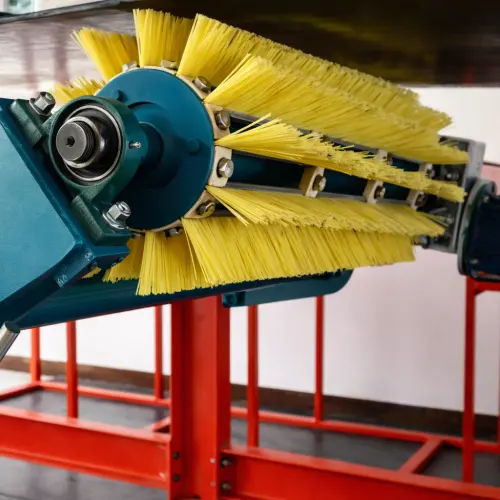
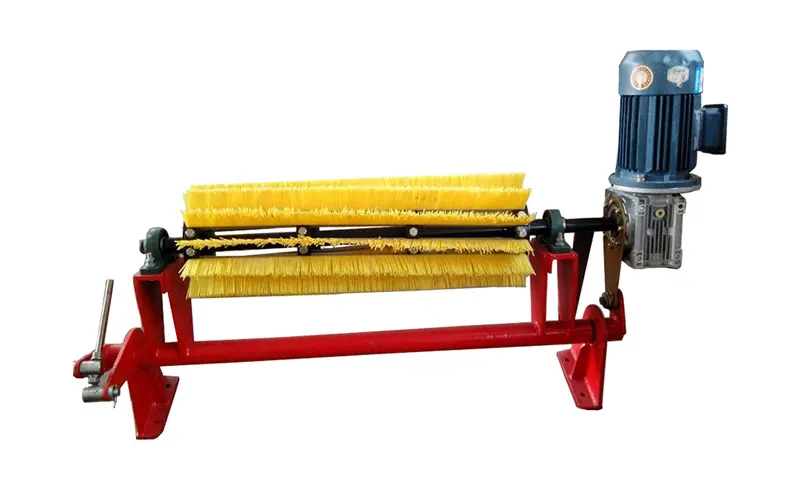
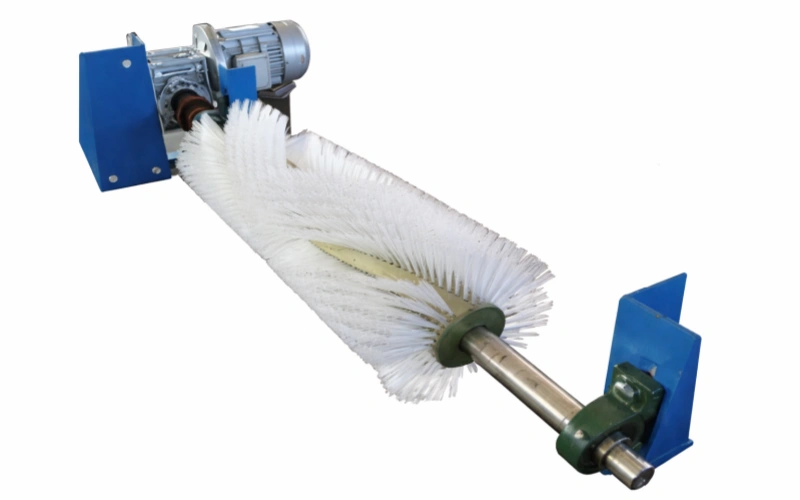
Motorized Rotary Brush Belt Cleaner

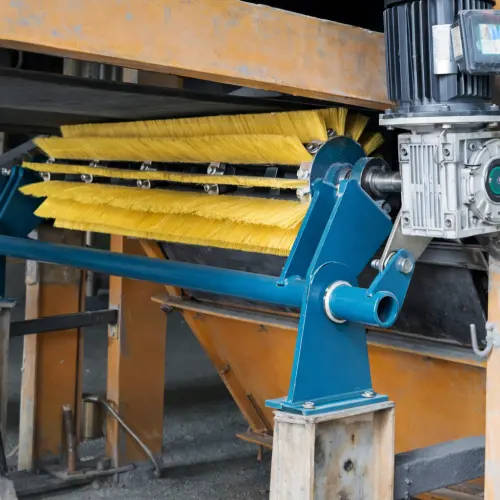
Motorized Brush Belt Cleaner

The motorized brush belt cleaner uses an independent drive system to maintain stable and continuous rotation, ensuring consistent removal of sticky and fine materials from the belt surface. Unlike passive systems, the brush actively discharges carryback and maintains cleaning performance even when conveyor speed or load conditions fluctuate.
Structural Highlights

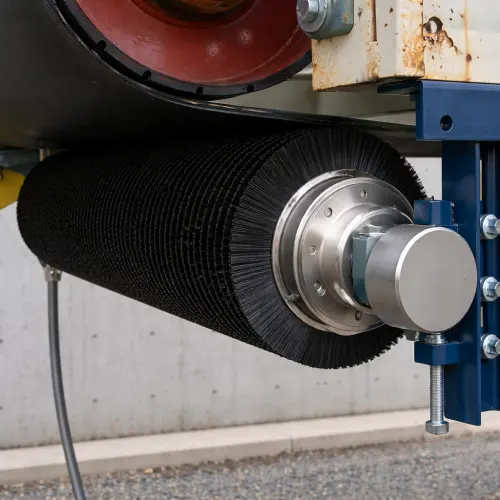
Non-Powered Rotary Brush Belt Cleaner

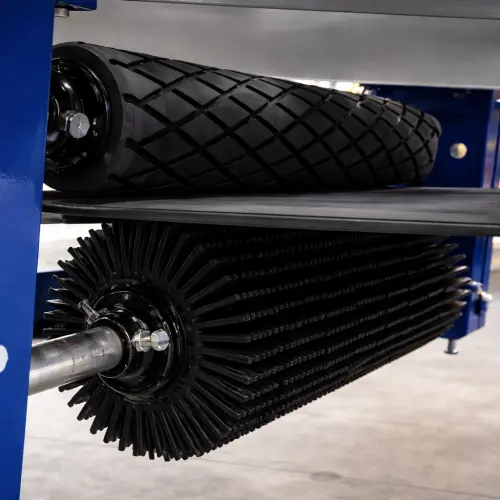
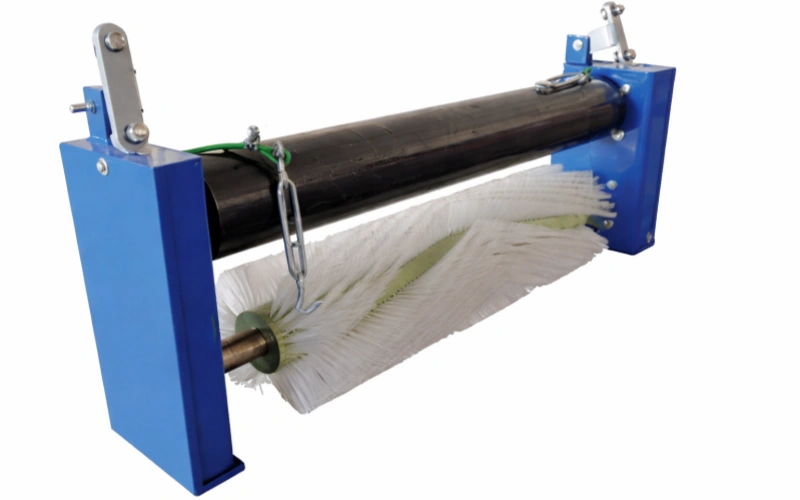
Non-Powered Brush Belt Cleaner

The non-powered brush belt cleaner utilizes belt-driven rotation combined with a return roller to form a controlled cleaning zone, where brush fibers continuously sweep material from the belt surface. The open brush structure allows material to pass through and be released, reducing the risk of clogging while keeping the system simple and energy-efficient.
Structural Highlights

Solve Conveyor Cleaning Problems with Brush Belt Cleaner

Sticky Carryback Remains on the Belt After Discharge

Problem

After discharge, wet and fine materials remain attached to the belt surface and travel along the return side, creating continuous contamination.

Solution

The rotating brush continuously sweeps and discharges residual material, preventing it from remaining on the belt and spreading through the system.

Material Builds Up on Return Rollers and Affects Tracking

Problem

Sticky carryback transfers onto return rollers, forming uneven layers that can lead to belt misalignment and unstable operation.

Solution

By removing more material directly from the belt, the brush cleaner helps limit contamination of rollers and improves overall conveyor stability.

Wet and Fine Materials Are Smeared and Hard to Remove

Problem

Moist and fine particles tend to spread into a thin layer instead of separating cleanly, making traditional cleaning methods less effective.

Solution

Brush fibers move through the material layer, loosening and lifting particles so they can be removed instead of being spread across the belt surface.

Cleaning Elements Become Packed with Sticky Material

Problem

Sticky material can accumulate on the cleaning element itself, causing clogging and reducing cleaning efficiency over time.

Solution

Continuous rotation prevents material from staying on the brush surface, allowing it to be released during operation and maintaining stable performance.

Typical Materials Suitable for Brush Belt Cleaner

IDLERON Brush belt cleaners are particularly effective in handling materials that tend to stick, smear or remain on the belt surface after discharge. These conditions are commonly found in the following types of bulk materials.

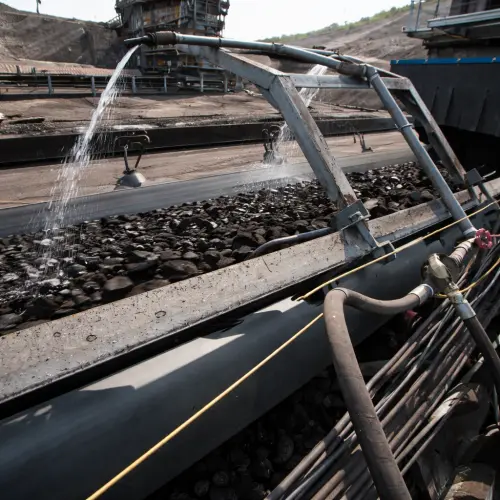
Wet Coal and Coal Fines

High-moisture coal and fine particles tend to adhere to the belt surface after discharge, forming a persistent carryback layer. Brush belt cleaners help sweep and release this material before it spreads along the return side.
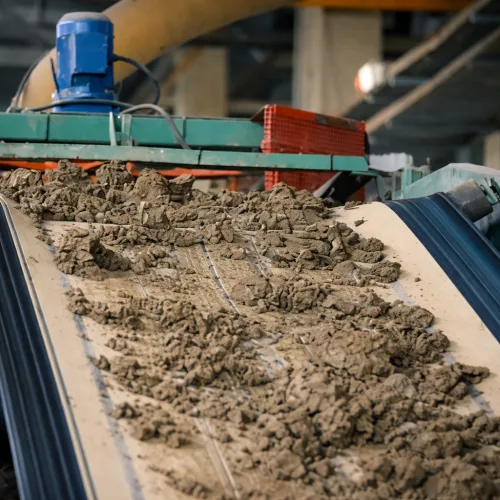
clay application

Clay, Mud and Sticky Overburden

Clay-based and muddy materials are highly cohesive and difficult to remove once they attach to the belt. The sweeping action of the brush helps break and lift these materials instead of spreading them.
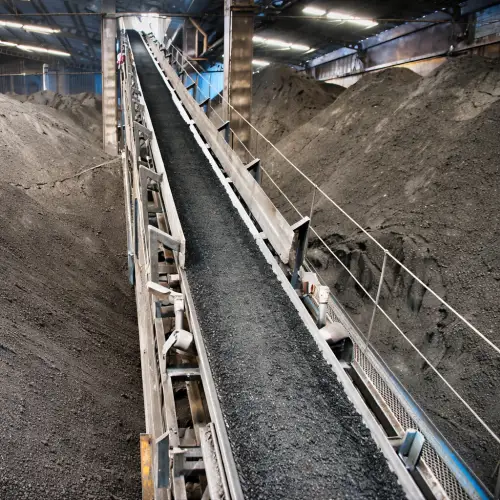
powder conveyor belt

Cement Raw Meal and Fine Powder Materials

Fine powder materials such as cement raw meal can easily form thin residual layers on the belt surface. Brush fibers can move through these layers and remove particles that are difficult to clean using rigid methods.

Fertilizer and Chemical Powders

Fertilizer and Chemical Powders

Certain fertilizers and chemical materials can become sticky under humidity, leading to carryback and buildup. Brush belt cleaners help reduce residue and keep the belt surface cleaner over time.
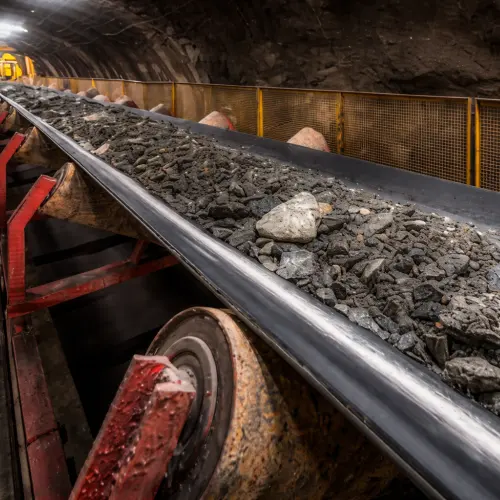
Mineral Fines and Concentrates

Mineral Fines and Concentrates

Fine mineral materials, especially those with moisture or adhesion, tend to remain on the belt after discharge. Rotary brush action helps continuously remove and discharge these particles.
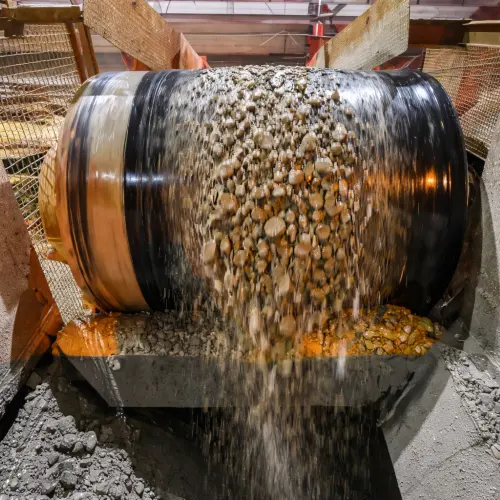
Slurry or Damp Bulk Materials

Slurry or Damp Bulk Materials

Materials with high moisture content or semi-fluid characteristics are prone to smearing and accumulation. Brush cleaning helps reduce this effect by sweeping material away rather than spreading it.
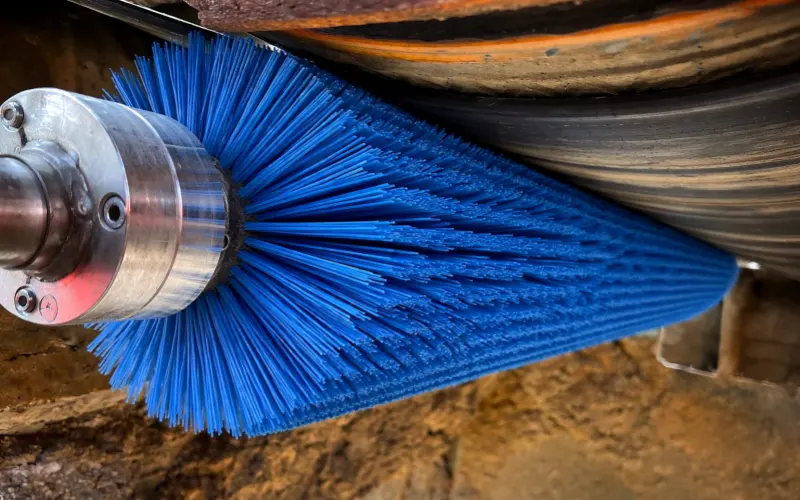

Brush Belt Cleaner vs Blade Scraper – Understanding the Difference

blue brush belt cleaner
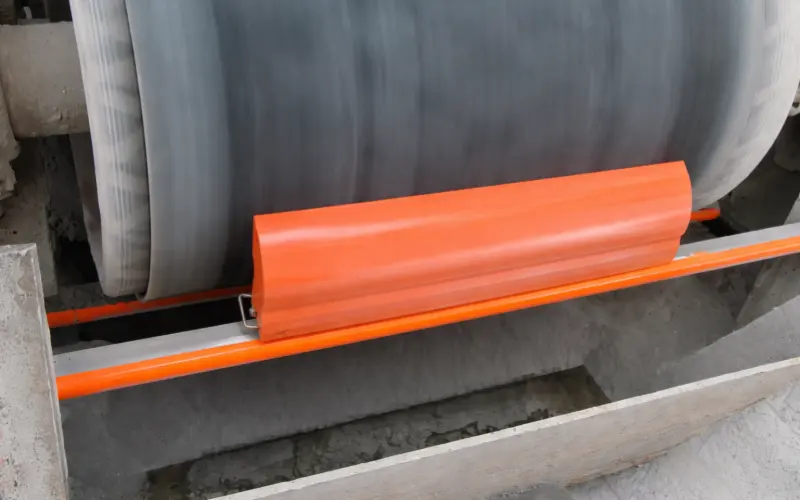
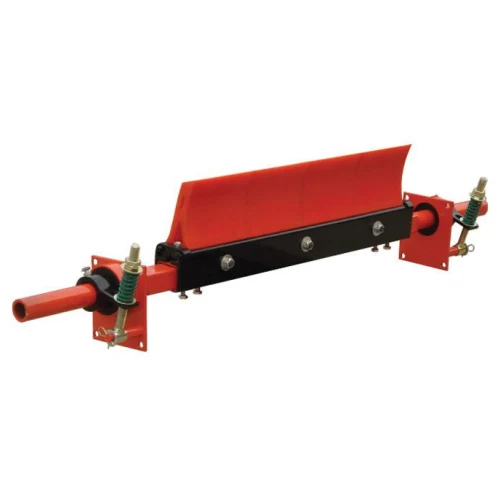
orange Conveyor belt scraper
AspectBrush Belt CleanerBlade Scraper
Cleaning MethodRotary sweeping action using brush fibersStatic scraping using polyurethane or metal blade
Material HandlingEffective for wet, sticky and fine materialsEffective for dry, coarse and non-adhesive materials
Behavior on Wet FinesSweeps and lifts materialMay spread or smear material
Build-Up on CleanerLow risk due to continuous rotationPossible under sticky conditions
Belt ImpactSoft contact, lower surface stressDepends on blade material and pressure
Typical InstallationSecondary cleaning or special applicationsPrimary and secondary cleaning

How to Choose the Right Brush Belt Cleaner

Choosing the right brush belt cleaner depends on material characteristics, conveyor conditions and system requirements. The following considerations can help guide your decision.

brush Conveyor belt cleaner

Material Behavior

If your material tends to stick, smear or remain on the belt after discharge, a brush belt cleaner provides a more suitable cleaning method through continuous sweeping action rather than rigid scraping.

brush conveyor belt cleaner -2

Cleaning Performance Requirement

For applications where higher cleaning efficiency is required and residual material must be minimized, motorized brush belt cleaners offer more consistent and controlled performance.

brush conveyor belt cleaner -3

System Simplicity and Energy Preference

If reducing system complexity and avoiding external power is a priority, non-powered brush belt cleaners provide a simpler solution driven directly by belt movement.

brush conveyor belt cleaner-4

Conveyor Operating Stability

When conveyor speed, load or material condition varies, motorized systems maintain more stable cleaning performance, while belt-driven systems depend on operating conditions.

brush conveyor belt cleaner -5

Installation Structure

Non-powered brush cleaners require an additional return roller to form the cleaning zone, while motorized versions can be installed without relying on belt-driven rotation.

Why Choose IDLERON Conveyor Pulleys

Our reliability comes from controlled manufacturing processes, strict inspection standards, and engineering-driven customization, rather than general claims of quality.

Why Choose IDLERON Brush Belt Cleaner

These engineered brush cleaner details are designed to improve cleaning consistency, reduce material packing and maintain more stable performance when handling sticky, wet and fine bulk materials on conveyor systems.

V-Shape Brush Arrangement Reduces Material Adhesion

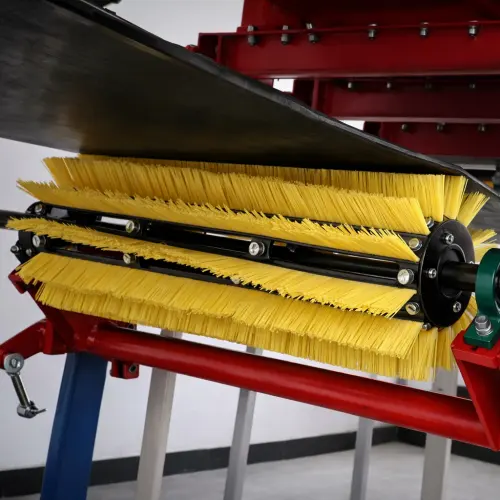
The brush adopts a V-shaped arrangement with high wear-resistant nylon filaments, allowing material to be guided and released instead of accumulating inside the brush. This improves sweeping efficiency and helps maintain stable cleaning performance when handling sticky and fine materials.

Open Brush Structure Prevents Internal Material Packing

The brush structure is designed with sufficient spacing between filaments, allowing material to pass through during rotation rather than being trapped. This reduces the risk of clogging and helps maintain cleaning effectiveness in wet and high-moisture conditions.

Through-Shaft Design Ensures Stable and Reliable Rotation

The integrated shaft design improves structural strength and keeps the brush rotating evenly during operation. This helps prevent deformation or imbalance, ensuring consistent cleaning performance over time and reducing the risk of uneven wear.

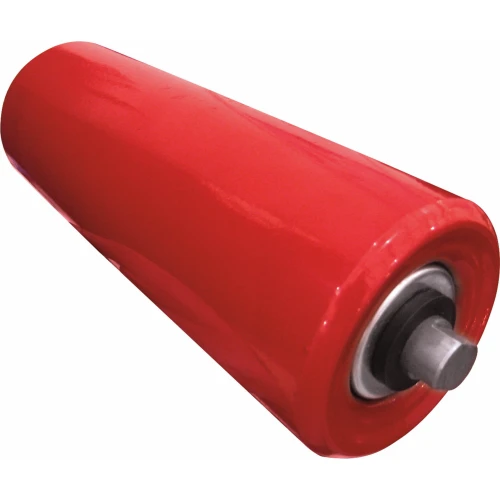
Return Roller Structure Forms a Stable Cleaning Zone

In non-powered models, an additional return roller supports the belt and forms a defined cleaning zone with the brush. This structure helps stabilize the cleaning process and improves consistency without requiring external power input.

Dual Bearing Support Enhances Rotational Stability

Motorized versions are equipped with a dual bearing system to support smooth and stable brush rotation. This design helps reduce vibration during operation and ensures reliable cleaning performance under continuous working conditions.

Frequently Asked Questions
-- Brush Belt Cleaner

In most applications, a brush belt cleaner is used as a secondary cleaner installed after the primary scraper near the head pulley. In some cases, especially when dealing with difficult materials, it can also be installed after the secondary cleaner as a final cleaning stage to remove remaining fines.

Primary cleaners are designed to remove the bulk of material directly at the head pulley. Brush belt cleaners are not intended for heavy load removal but for handling residual material. Their role is to remove remaining fines and sticky layers that cannot be effectively cleared by primary scrapers.

It is typically added when secondary cleaners cannot fully remove a thin layer of material, especially in cases involving moisture, fines or adhesion. The brush cleaner acts as a finishing stage to reduce carryback before the belt enters the return section.

Inconsistent performance is often linked to changes in material condition, such as moisture variation or particle size, as well as installation position relative to the discharge point. If the cleaner is installed too far downstream or does not match the material behavior, cleaning effectiveness can vary.

Inspection typically focuses on brush wear, rotation condition and overall stability of the assembly. Over time, brush filaments may wear or lose effectiveness depending on the material being handled. Monitoring rotation performance is also important to ensure the cleaner continues to function properly.

Selection requires details such as belt width, material type, moisture condition and current cleaning setup. It is also important to confirm whether the cleaner will function as a secondary stage or as an additional cleaning step after existing systems.

Get the Right Brush Belt Cleaner for Your Conveyor System

Tell us your application — we’ll suggest the right configuration.

Get Quotation Now