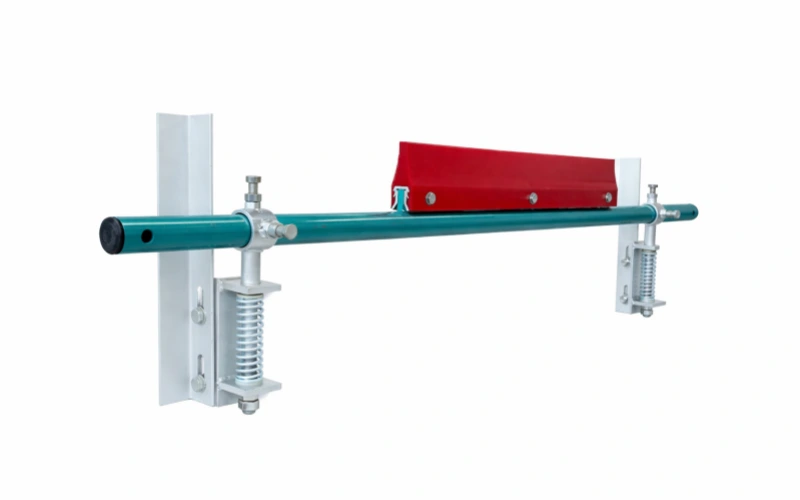
Idleron Secondary Polyurethane Belt Cleaner
Remove remaining carryback material after primary cleaning with durable polyurethane blades designed for reliable conveyor belt cleaning performance.Designed for bulk material handling conveyors in mining, cement, power plants, ports, and aggregate industries.
- High Wear-Resistant Polyurethane Blade
- Effective Removal of Fine Residual Material
- Spring Tension System for Consistent Cleaning Pressure
- Easy Installation and Quick Blade Replacement

Secondary Polyurethane Belt Cleaner Overview
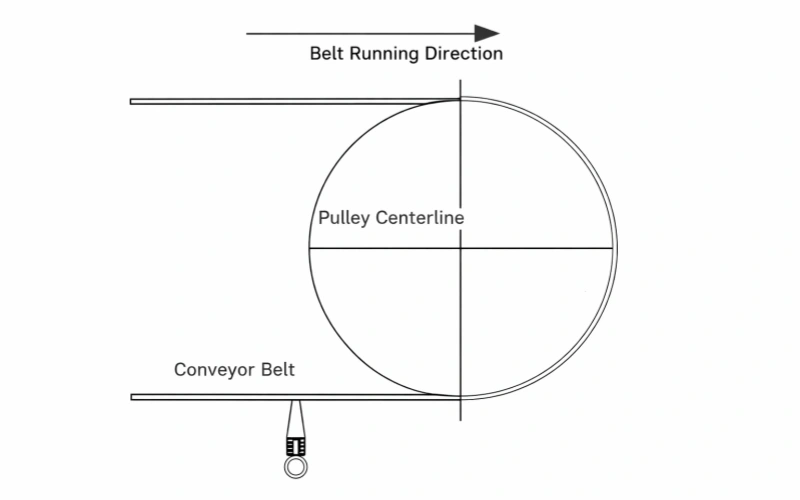
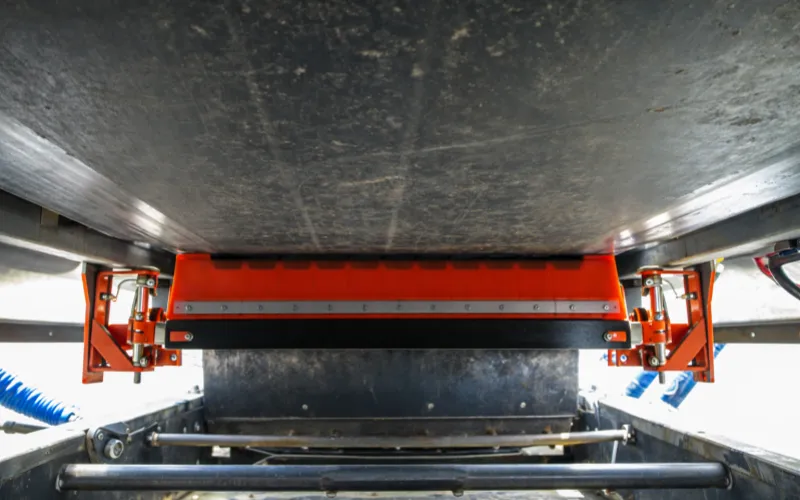
The secondary polyurethane belt cleaner is installed after the head pulley on the return side of the conveyor belt. It is used to remove residual material remaining on the belt after the primary cleaning stage, helping maintain a cleaner conveyor system and reduce material carryback.
This type of belt cleaner is widely used in bulk material handling conveyors where effective belt cleaning is required to maintain stable and efficient operation.
Working Principle of the Secondary Polyurethane Belt Cleaner
The secondary belt cleaner works by maintaining continuous contact between the polyurethane blade and the moving conveyor belt surface. As the belt passes the cleaner, residual material remaining after primary cleaning is scraped off and removed from the belt.
Step 1 — Belt Discharge
After bulk material is discharged from the head pulley, a primary belt cleaner removes most of the material attached to the belt surface.
Step 2 — Residual Material on Belt
Fine particles and sticky materials may remain attached to the belt after the primary cleaning stage. These materials can travel back along the return side of the conveyor and cause carryback problems.
Step 3 — Secondary Cleaning Action
The polyurethane blade of the secondary cleaner is positioned to contact the belt surface. As the belt moves, the blade scrapes off remaining material and directs it away from the belt.
Step 4 — Constant Contact Pressure
A spring tension system maintains consistent pressure between the blade and the belt. This ensures stable cleaning performance even as the blade gradually wears during operation.
Cleaning Result
Through this secondary cleaning stage, remaining material is effectively removed from the conveyor belt surface, helping keep the conveyor structure cleaner and reducing carryback along the return side of the belt.
The Conveyor Belt Carryback Problem
Material carryback is one of the most common problems in bulk material handling conveyors. It increases maintenance work, creates dust and spillage, and affects the overall cleanliness and efficiency of the conveyor system.
What Is Carryback ?
Carryback occurs when material remains attached to the conveyor belt after the discharge point. As the belt moves along the return side, the remaining material drops off and accumulates under the conveyor structure.
Why Does It Happen?
A primary belt cleaner can remove most of the discharged material, but fine particles, wet material, and sticky residue often remain on the belt surface. Without a secondary cleaning stage, these materials continue travelling with the belt and cause ongoing carryback problems.

Material Buildup
Residual material falls under the conveyor and builds up around the structure, creating extra cleanup work.
Higher Maintenance Workload
Frequent manual cleaning increases labor requirements and disrupts normal maintenance planning.
Dust and Contamination
Fine material and spillage can create dusty, dirty operating conditions and affect workplace cleanliness.
Component Wear
Carryback can accelerate wear on rollers, pulleys, and other conveyor components exposed to trapped material.
Reduced System Efficiency
Uncontrolled carryback can lead to unstable operation, extra downtime, and reduced conveyor performance.
Why Secondary Belt Cleaning Is Required
Secondary belt cleaners are installed after the head pulley to remove the remaining material that primary cleaners cannot fully eliminate. This additional cleaning stage helps keep the return belt cleaner and reduces the operational impact of carryback on the conveyor system.
Key Features of Secondary Polyurethane Belt Cleaner

High-Molecular Polyurethane Blade
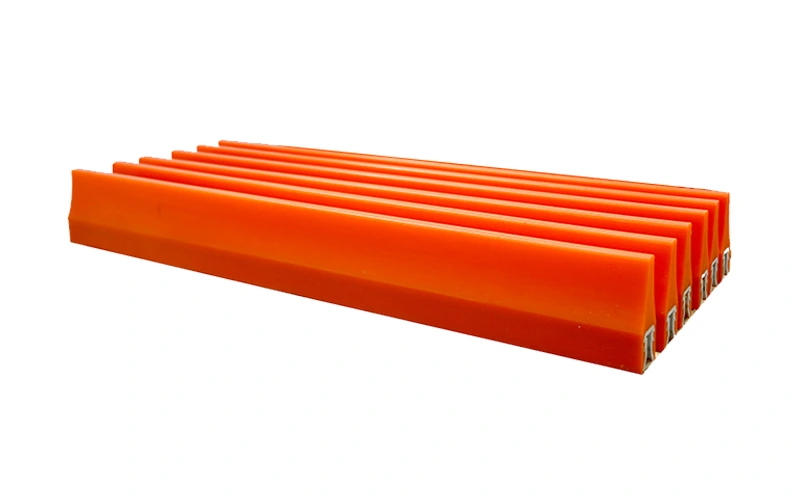
The cleaner uses high molecular polyurethane blades manufactured through vulcanization, providing excellent abrasion resistance, strong elasticity, and high friction characteristics that maintain stable contact with the conveyor belt surface.
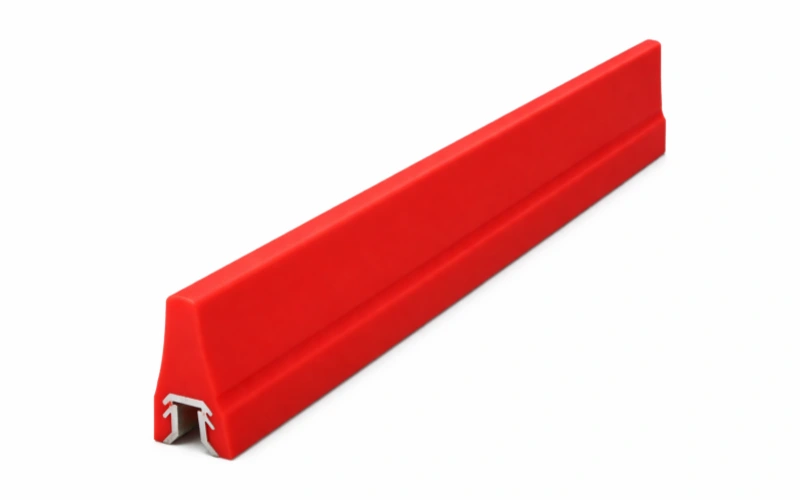
Reinforced Integrated Blade Structure
The polyurethane blade is vulcanized with an aluminum alloy base to form a reinforced structure that increases blade strength, improves impact resistance, and ensures stable performance in demanding bulk material applications.
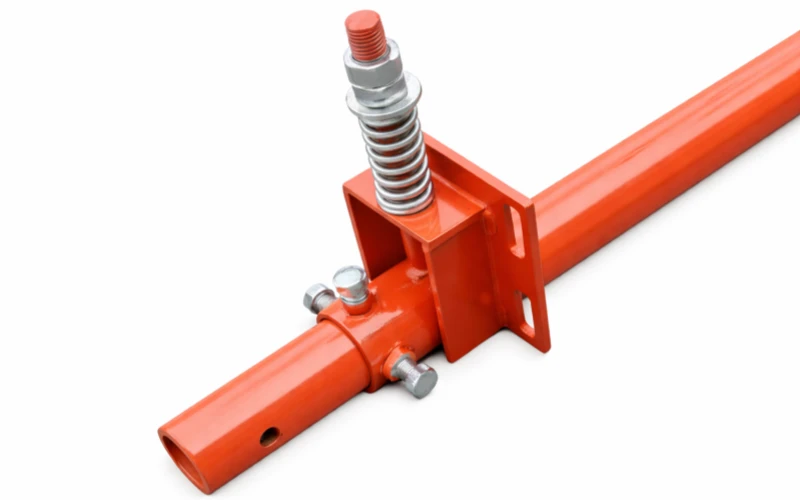
Dual Spring Tension Mechanism
Spring tension devices installed at both ends maintain consistent contact pressure between the blade and conveyor belt, automatically compensating for blade wear while ensuring stable cleaning performance throughout long term operation.
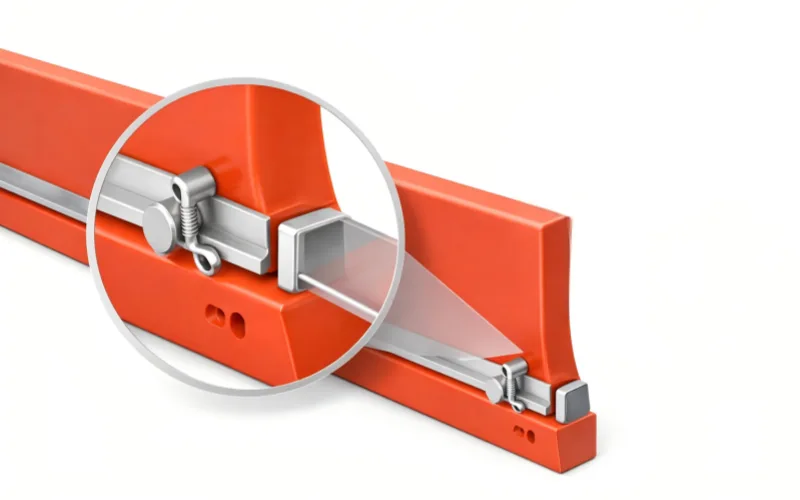
Quick Blade Replacement Design
The cleaner structure allows fast blade removal and installation, enabling maintenance personnel to replace worn blades quickly while reducing downtime and simplifying routine maintenance tasks within conveyor belt cleaning systems.
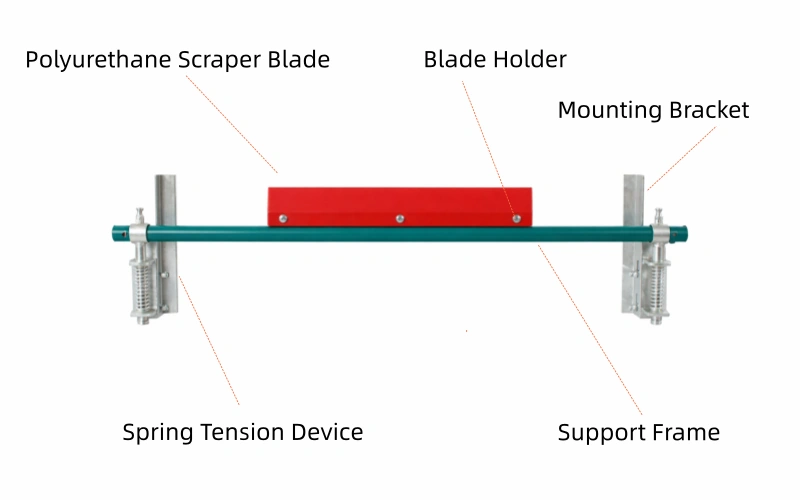
Secondary Polyurethane Belt Cleaner Components
The secondary belt cleaner consists of several main components designed to ensure stable and effective cleaning performance.
Main Components
Polyurethane Scraper Blade
Blade Holder
Spring Tension Device
Support Frame
Mounting Bracket
Secondary Polyurethane Belt Cleaner Technical Specifications
The secondary polyurethane belt cleaner is designed for a wide range of conveyor belt systems used in bulk material handling operations. Specifications can be customized according to conveyor belt width and operating conditions.
Technical Parameters
| Parameter | Specification |
|---|---|
| Cleaner Type | Secondary Belt Cleaner |
| Blade Material | Polyurethane |
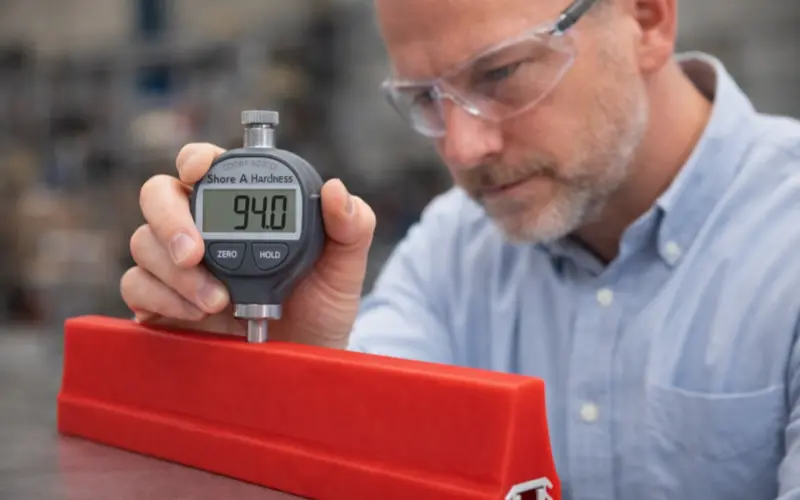
| Blade Hardness | 85–90 Shore A |
| Applicable Belt Width | 500–2200 mm |
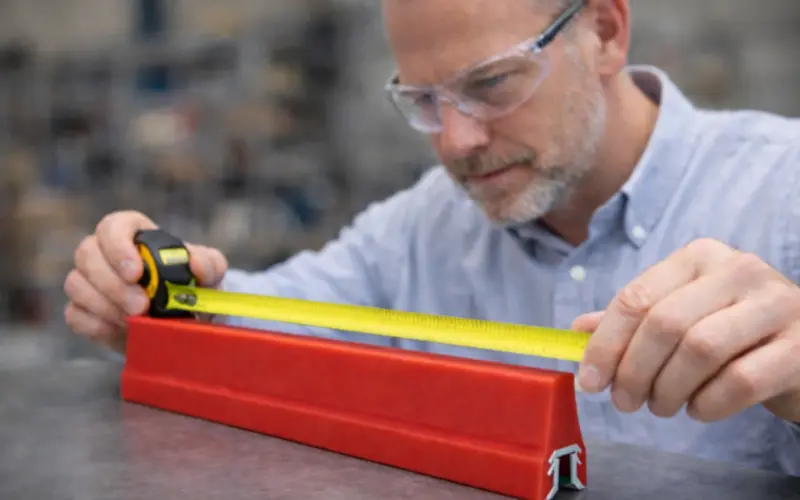
| Blade Thickness | 15–25 mm |
| Frame Material | Carbon Steel |
| Tension Type | Spring Tension |
| Operating Temperature | -30°C to +80°C |
| Installation Position | After Head Pulley |
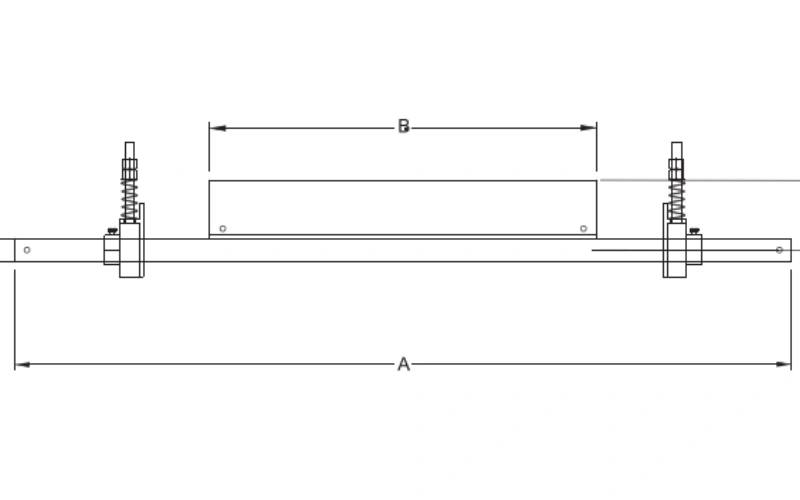
Secondary Polyurethane Belt Cleaner Dimensions
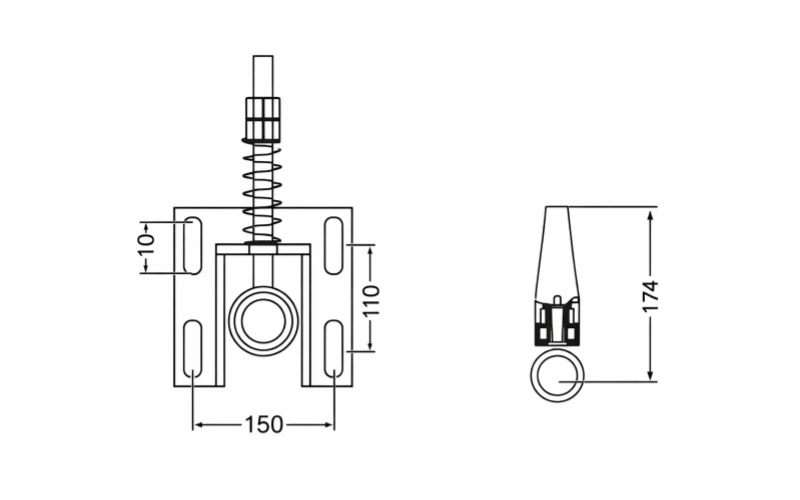
| Belt Width | B=500 | B=650 | B=800 | B=1000 | B=1200 | B=1400 | B=1600 | B=1800 | B=2000 | B=2200 |
|---|---|---|---|---|---|---|---|---|---|---|
| A | 1500 | 1600 | 1800 | 2000 | 2200 | 2400 | 2600 | 2800 | 3000 | 3200 |
| B | 500 | 600 | 800 | 1000 | 1200 | 1400 | 1600 | 1800 | 2000 | 2200 |
Product Structure Diagram


Additional Notes
- Dimensions can be customized according to conveyor belt width and installation requirements.
When Secondary Belt Cleaners Are Required
Secondary belt cleaners are used when primary cleaners cannot completely remove residual material from the conveyor belt surface. They are particularly important in conveyor systems where fine particles remain attached to the belt after discharge.
Typical Conveyor Conditions
Fine Residual Materials
Conveyors transporting fine particles often leave residual material on the belt surface after primary cleaning.
Wet or Sticky Materials
Moist or adhesive materials tend to stick to the belt surface, making secondary cleaning necessary.
Long Return Conveyors
In conveyors with long return sections, even small amounts of carryback can accumulate along the structure.
High Capacity Conveyors
Large capacity conveyors handling high material volumes require multi-stage belt cleaning systems.
Send your belt width, head pulley area photos, and material type. We’ll recommend the right Secondary Belt Cleaner configuration and provide a quote.
Advantages of Using a Secondary Belt Cleaner
Secondary belt cleaners provide an additional cleaning stage after primary cleaning, helping remove remaining fine materials that stay on the conveyor belt surface and reducing carryback along the return belt.
Reduced Conveyor Carryback
By removing residual materials left after primary cleaning, the secondary cleaner significantly reduces carryback along the return side of the conveyor, helping keep the conveyor structure cleaner.
Lower Maintenance Requirements
Less material falling from the return belt reduces the need for manual cleaning around the conveyor structure, lowering maintenance workload and improving overall operational efficiency.
Cleaner Conveyor Operation
Removing remaining material from the belt surface helps maintain cleaner conveyor components, reducing material buildup on rollers, pulleys, and supporting structures.
Improved Conveyor System Reliability
A cleaner conveyor belt reduces material accumulation along the system, helping maintain stable operation and reducing the risk of operational interruptions.
Quality Control Procedures
Quality control is implemented through defined inspection procedures during blade manufacturing, structural fabrication, and final assembly to ensure stable performance and dimensional accuracy of the belt cleaner components.
Vulcanization Bond Integrity Verification
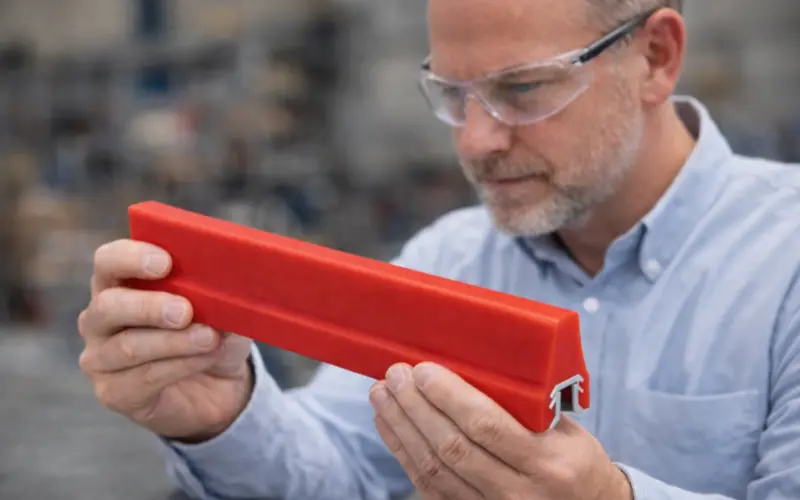
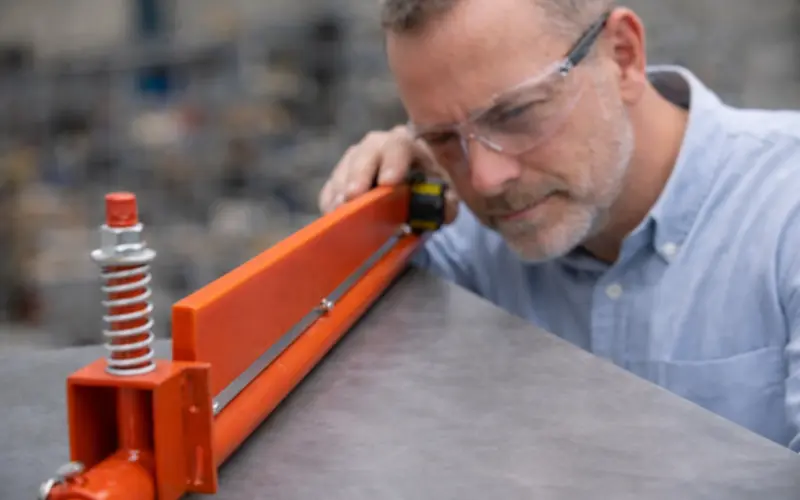
After vulcanization bonding between the polyurethane blade and the aluminum alloy base, the bonded interface is visually examined and manually checked to confirm uniform adhesion and structural integrity of the blade assembly.
Frequently Asked Questions
-- Secondary Polyurethane Belt Cleaner
The cleaning angle determines how effectively the polyurethane blade contacts the belt surface. In most installations, the blade should maintain a stable trailing contact angle relative to the belt movement. Excessive angle increases blade wear, while insufficient angle reduces cleaning efficiency. Proper adjustment ensures the blade maintains continuous contact without excessive pressure. During installation, the tension mechanism and mounting position should be adjusted so the blade contacts the belt evenly across the full belt width.
Blade life is mainly influenced by material abrasiveness, belt speed, conveyor load, and operating environment. Conveyors transporting abrasive materials such as ores or crushed aggregates typically cause faster blade wear. High belt speeds also increase friction between the blade and belt surface. Proper tension adjustment plays an important role in extending blade life, since excessive pressure accelerates wear while insufficient pressure reduces cleaning efficiency and may cause uneven blade wear.
The tension system controls the contact pressure between the scraper blade and the moving conveyor belt. Stable and balanced tension ensures consistent cleaning performance along the entire belt width. If the pressure is too low, residual material may remain on the belt surface. If the pressure is too high, blade wear will increase and unnecessary friction may occur. A properly adjusted spring tension system automatically compensates for blade wear and maintains stable contact during operation.
Incorrect installation can reduce cleaning efficiency and increase blade wear. If the cleaner is installed too far from the head pulley, residual material may fall before reaching the blade. Misalignment between the blade and belt surface can also cause uneven contact across the belt width. Proper installation requires correct positioning relative to the head pulley, stable mounting of the support frame, and accurate adjustment of the tension system to ensure uniform blade contact.
Blade replacement should be considered when the blade edge becomes significantly worn and can no longer maintain effective contact with the belt surface. Uneven wear across the blade width may also indicate improper tension adjustment or misalignment. Regular inspection of the blade edge and contact condition helps determine the appropriate replacement time. Replacing the blade before excessive wear occurs helps maintain stable cleaning performance and prevents carryback from increasing.
Request a Quote for Secondary Polyurethane Belt Cleaner
Selecting the correct secondary belt cleaner depends on conveyor belt width, material characteristics, belt speed, and operating conditions. Providing basic conveyor parameters helps determine the appropriate cleaner configuration and blade specifications.