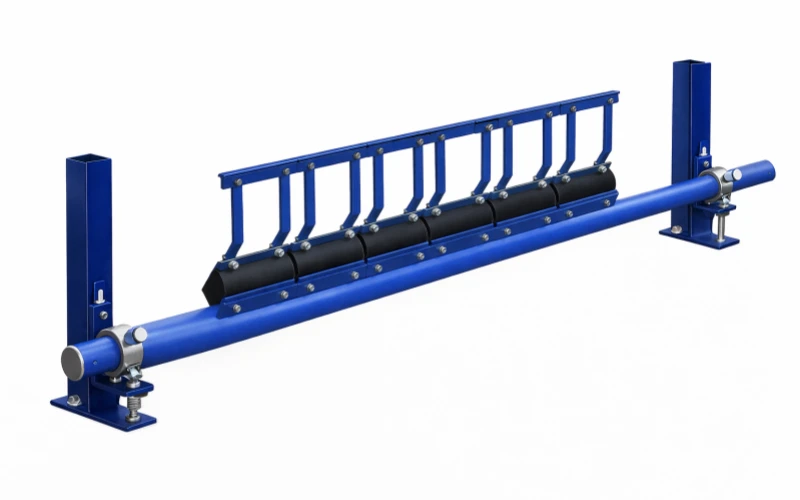
Primary Alloy Blade Belt Cleaner
--Efficient Conveyor Belt Cleaning at the Head Pulley
Designed for head pulley installation, the primary alloy blade belt cleaner removes residual material from the conveyor belt surface before it enters the return line.
The wear-resistant alloy blade and spring tension system provide stable cleaning performance in abrasive bulk material handling environments.
- Alloy blade design provides high abrasion resistance in abrasive material handling
- Spring tension system keeps consistent pressure for stable belt cleaning
- Heavy-duty frame structure ensures reliable operation in harsh environments
Product Overview
The primary alloy blade belt cleaner is installed at the head discharge pulley to remove residual material remaining on the conveyor belt surface after material discharge. Cleaning at this position prevents material from entering the return belt and spreading along the conveyor structure.
This cleaner is suitable for conveying materials with higher moisture content or strong adhesion characteristics, where material tends to remain attached to the belt surface after discharge. By removing these residues early, the system helps control carryback and reduce material accumulation along the conveyor line.
Effective belt cleaning also helps prevent material from sticking to return rollers and conveyor components. Maintaining cleaner belt surfaces supports more stable conveyor operation and reduces maintenance work across the conveying system.
When Conveyor Carryback Becomes an Operational Problem
Residual material remaining on the conveyor belt after discharge continues traveling with the return belt when it is not removed at the head pulley. Over time, this carryback spreads through the conveyor structure and begins affecting multiple parts of the system.
Carryback Travels Through the Entire Conveyor
Small particles remaining on the belt surface move along the return side of the conveyor. This allows residual material to spread far beyond the discharge point.
Material Drops Along the Return Line
As the belt passes over rollers and frames, residual material gradually falls from the belt. This creates scattered material along the conveyor structure.
Conveyor Components Are Affected
Falling material can interfere with return rollers, frames, and surrounding equipment. Continuous exposure may disrupt normal conveyor operation.
Dust and Material Cleanup Issues
Scattered material creates dust and spillage around the conveyor structure, making the surrounding working area increasingly difficult to maintain.
Maintenance Pressure Builds Across the System
As carryback continues, cleaning and inspection work becomes more frequent. Maintenance teams must intervene regularly to keep the conveyor operational.
Uncontrolled Carryback Can Lead to Shutdown
If material continues spreading through the system, equipment may become obstructed or damaged. In severe cases the conveyor must be stopped to restore normal operation.
Key Design Features of the Alloy Blade Belt Cleaner
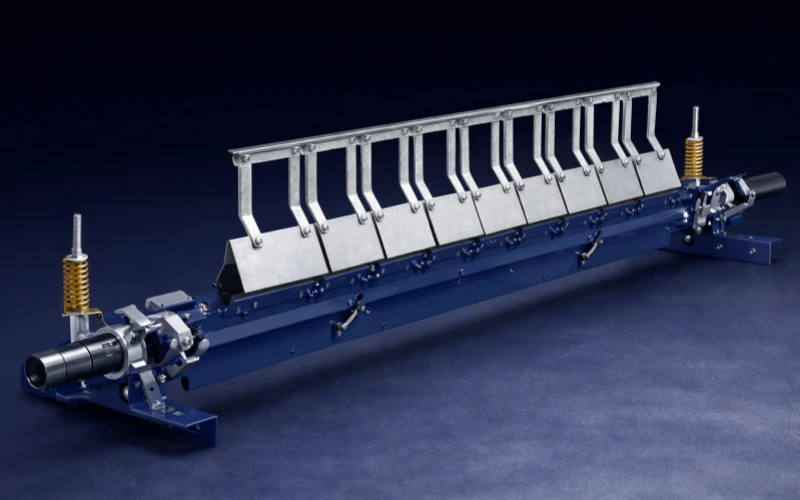
This primary alloy blade belt cleaner is designed to maintain consistent cleaning performance at the head pulley. Its blade material, tension system, and buffering structure work together to keep stable contact with the conveyor belt surface.
Tungsten Carbide Blade Cleaning Edge
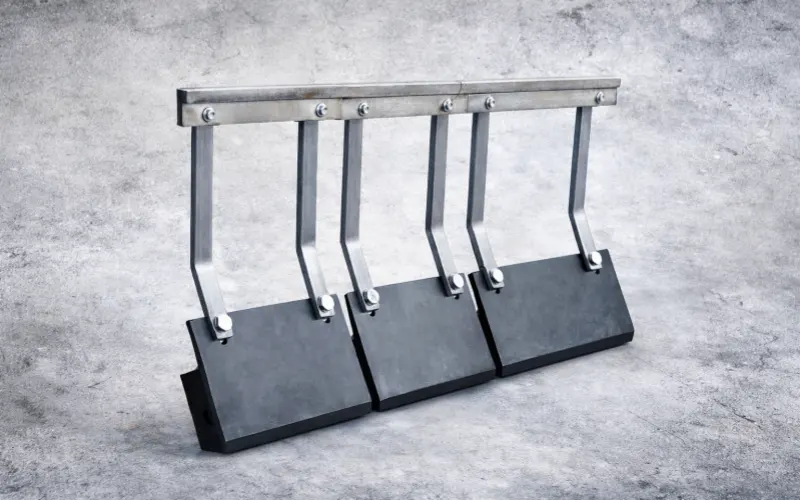
Tungsten carbide blade edges provide high hardness and strong abrasion resistance. The rigid scraping edge allows effective removal of sticky or compacted material remaining on the conveyor belt surface after discharge.
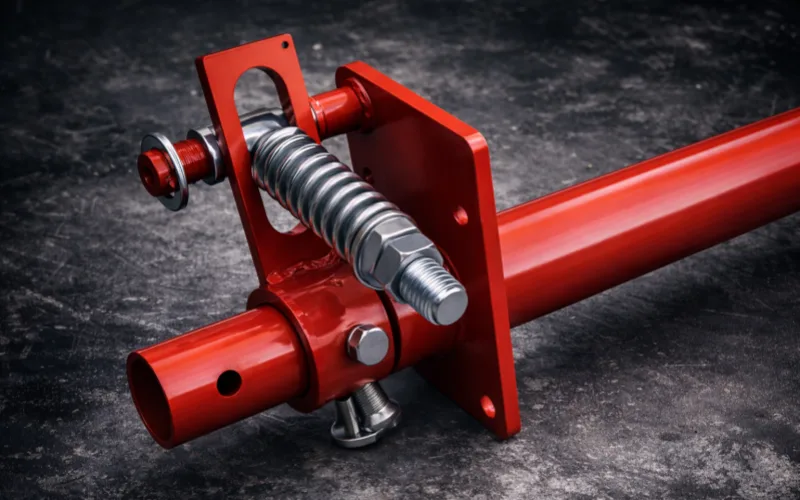
Dual Spring Tension Pressure System
Spring tension assemblies installed on both sides maintain constant blade pressure against the belt surface. As the blade gradually wears, the springs automatically compensate to keep stable cleaning contact.
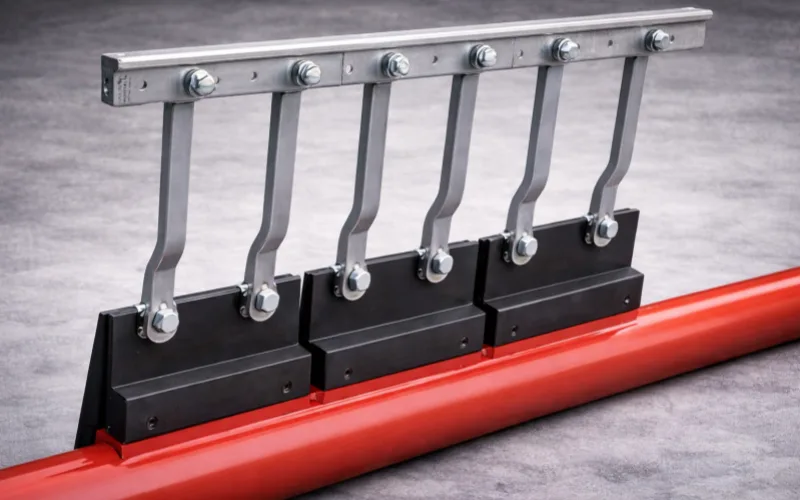
Rubber Cushion Impact Buffer Structure
Rubber cushioning works together with the spring tension system to absorb vibration and impact from the moving belt. This buffering structure helps stabilize the scraper blade and protect the belt surface.
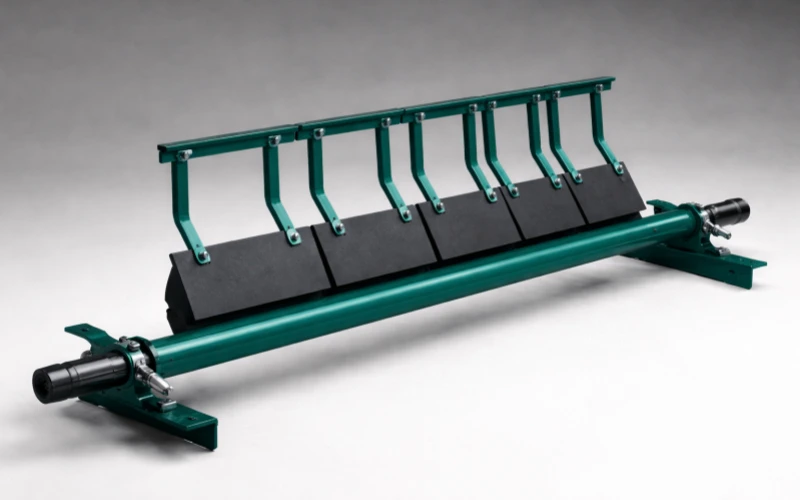
Segmented or Integrated Blade Design
The scraper blade can be supplied as a single-piece structure or segmented blade sections. Segmented blades allow individual replacement, reducing maintenance time and simplifying routine servicing work.
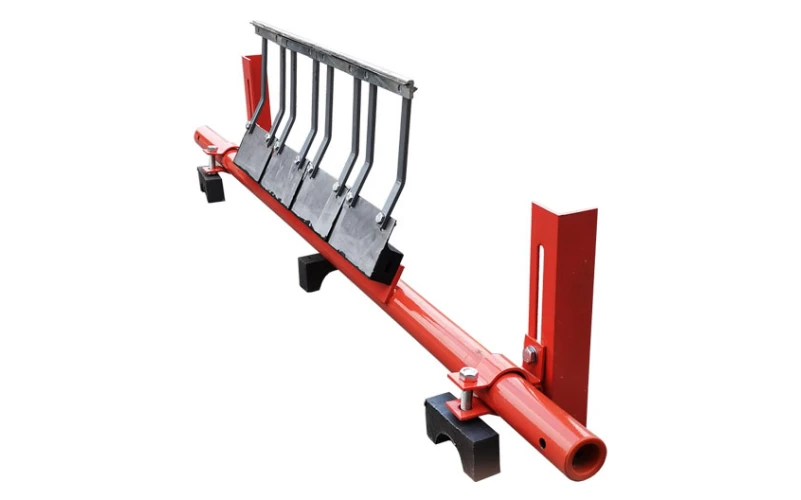
Head Pulley Primary Cleaning Installation
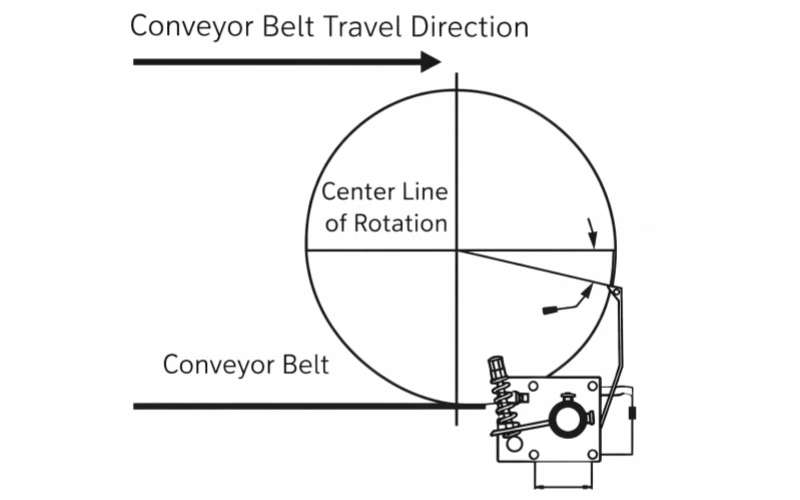
Installed at the discharge pulley, the cleaner removes residual material before it enters the return belt. Early-stage cleaning helps reduce carryback and limits material spreading along the conveyor structure.
Primary Alloy Blade Belt Cleaner Specifications
The following specifications provide general configuration details and dimensional references for selecting the appropriate cleaner based on conveyor belt width.
General Specifications
| Parameter | Specification |
|---|---|
| Cleaner Type | Primary Alloy Blade Belt Cleaner |
| Installation Position | Head Discharge Pulley |
| Blade Material | Tungsten Carbide |
| Blade Type | Integrated Blade or Segmented Blade |
| Tension System | Dual Spring Tension Assemblies |
| Buffer Structure | Rubber Cushion Buffer |
| Applicable Belt Type | Vulcanized Splice Conveyor Belt |
| Suitable Material Condition | High moisture or adhesive materials |
Dimensional Specifications
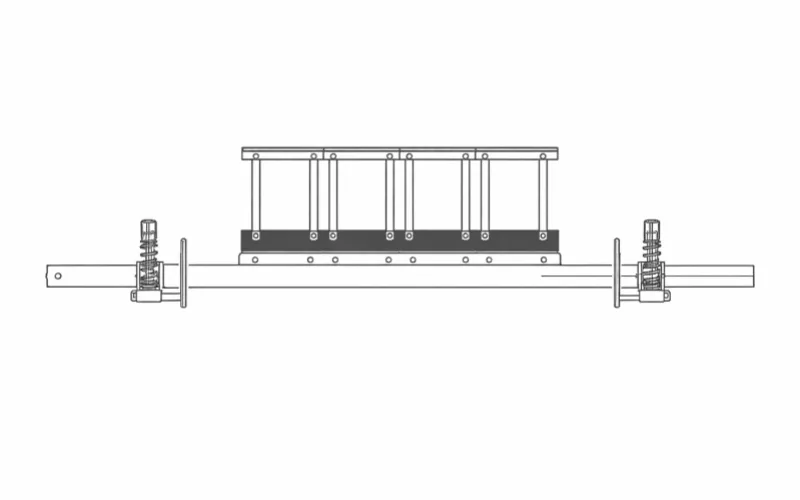
| Belt Width | B=500 | B=650 | B=800 | B=1000 | B=1200 | B=1400 | B=1600 | B=1800 | B=2000 | B=2200 |
|---|---|---|---|---|---|---|---|---|---|---|
| A | 1400 | 1600 | 1800 | 2000 | 2200 | 2400 | 2600 | 2800 | 3000 | 3200 |
| B | 400 | 600 | 800 | 1000 | 1200 | 1400 | 1600 | 1800 | 2000 | 2200 |
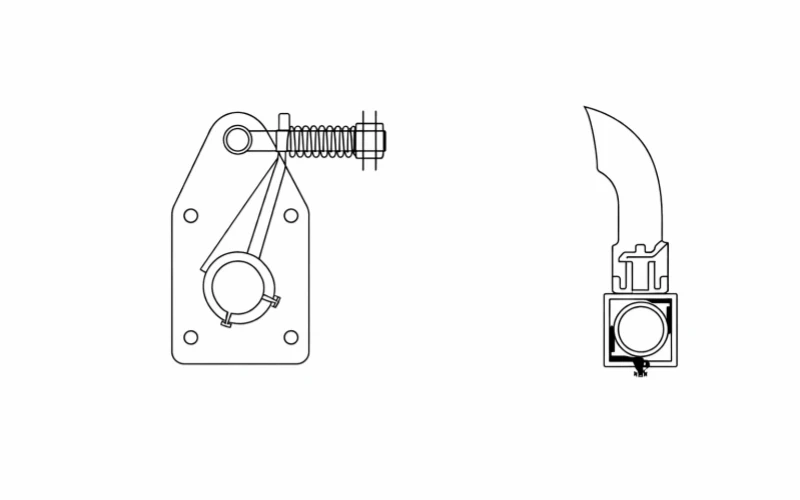
Structure Diagram
Typical Applications for Primary Alloy Blade Belt Cleaners
The following applications illustrate typical conveyor conditions where primary alloy blade belt cleaners are used to remove residual material and control carryback at the head pulley.
High-Adhesion Material Conveying
When conveyed materials contain moisture or fine particles that strongly adhere to the belt surface, residue often remains after discharge. In these conditions, the primary alloy blade belt cleaner provides firm scraping contact to remove material before it travels along the return belt.
Persistent Carryback Conveyor Systems
In conveyors where residual material repeatedly returns along the belt, carryback can gradually spread along the conveyor structure. The primary alloy blade belt cleaner removes remaining material at the head pulley to limit carryback across the system.
Long-Distance Conveyor Operation
For conveyor systems operating continuously over long distances, residual material can travel far along the return belt if not removed early. The primary alloy blade belt cleaner performs cleaning at the discharge point to prevent material spreading along the conveyor line.
Coarse Bulk Material Conveying
When conveyors transport coarse or irregular bulk materials, particles may remain on the belt surface after unloading. The primary alloy blade belt cleaner provides stable scraping contact to remove these residues during operation.
Send your belt width, head pulley area photos, and material type. We’ll recommend the right primary belt cleaner configuration and provide a quote.
Quality Control in Belt Cleaner Manufacturing Step
Primary alloy blade belt cleaners are manufactured under controlled production procedures to ensure stable structure, reliable blade installation, and consistent performance during conveyor operation.
Tungsten Carbide Blade Inspection
Each tungsten carbide blade segment is inspected before assembly to ensure consistent edge quality and secure mounting within the blade holder.
Spring Tension Assembly Verification
Spring tension components are checked during assembly to confirm correct installation and stable tension force for maintaining blade contact with the belt.
Structural Frame Alignment Check
The main beam and mounting components are inspected to ensure proper alignment and dimensional accuracy during assembly.
Final Assembly Inspection
After assembly, the complete cleaner unit is visually inspected to verify blade installation, tension structure positioning, and overall assembly condition.
Pre-Shipment Quality Check
Before packaging and shipment, each cleaner undergoes a final inspection to confirm structural integrity and installation readiness.
Frequently Asked Questions
-- Primary Polyurethane Belt Cleaners
This primary alloy blade cleaner uses a rigid tungsten carbide scraping edge together with spring tension assemblies that maintain firm contact with the belt surface. Mechanical fasteners create raised joints on the belt, which can repeatedly strike the blade edge and tension structure, potentially affecting stable operation.
To avoid interference with the conveyor belt edge, the effective scraper width is typically chosen to be slightly narrower than the conveyor belt width. In most installations, the working blade width is usually 0-200 mm narrower than the conveyor belt width, while still covering the material path on the conveyor belt surface. However, this is not an absolute value; many of our users also choose scrapers that are the same width as the conveyor belt.
The cleaner should be installed directly below the head discharge pulley with sufficient clearance for the main beam, blade holder, and spring tension assemblies. Installation space should also allow access for blade inspection and tension adjustment during maintenance.
Segmented blades are often preferred in conveyors that operate continuously or where maintenance access is limited. Individual blade sections can be replaced without removing the entire blade assembly, which can reduce maintenance time during servicing.
Spring tension assemblies should be inspected during routine conveyor maintenance to ensure the blade maintains consistent contact with the belt surface. In most conveyor systems, inspection every week of operation helps maintain stable cleaning performance.
Get a Quote for Primary Conveyor Belt Cleaners
Submit your belt width and application details to receive the recommended scraper model and quotation.