Product Capacity
Manufacturing Scale and Facility
Our manufacturing operations are carried out within a production facility covering more than 55,000 m², supported by a workforce of over 630 employees across machining, fabrication, assembly, inspection, and logistics.
The factory is equipped with large lathes, CNC turning machines, double pressing systems, double welding units, double boring machines, milling machines, and cutting equipment, forming a complete mechanical processing chain for conveyor components.
Daily production capacity reaches:
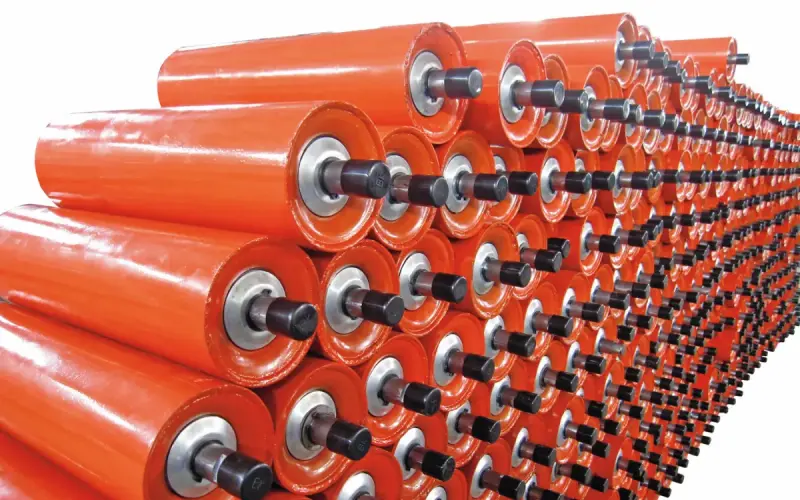
2,500+ rollers
25 pulleys
600 structural frame sets
Annual roller production exceeds 750,000 units.
The facility operates on volume stability rather than intermittent workshop output, ensuring consistent dimensional control across batches.

Rollers
Pulleys

Structural Frame
Idler Manufacturing Capacity
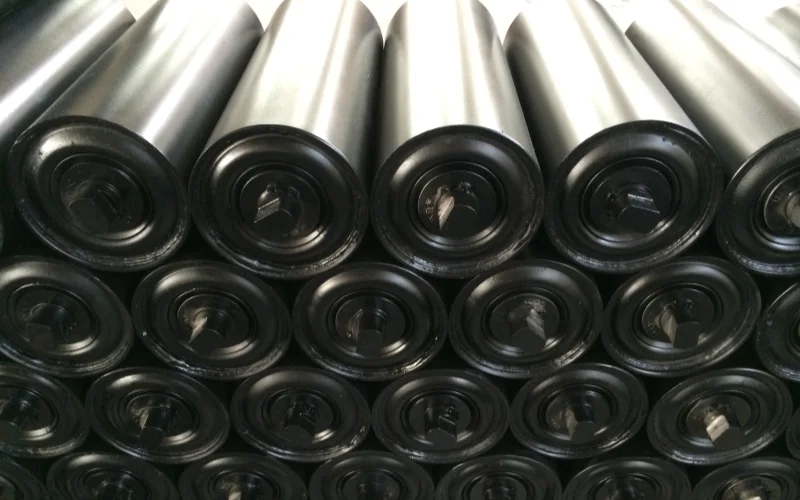
Idlers are manufactured with a focus on dimensional stability, rotational balance, and long-term operating reliability.
Shaft processing achieves surface roughness up to Ra 0.8 μm, with bearing seat tolerance controlled within +0.005 mm to +0.01 mm to ensure concentric alignment. Tube wall thickness ranges from 2.5 mm to 5 mm, depending on load classification, with radial runout typically maintained within 0.5–1.0 mm.
Standard models operate within -20°C to +120°C, while extended-performance configurations support temperatures from -40°C to +180°C. Double-sealed bearing structures and long-life lubrication systems are applied based on application requirements.
Operating noise is generally controlled between 33 dB and 45 dB, and service life commonly exceeds 30,000 hours, with selected configurations rated up to 50,000 hours. Bearing design life under correct installation conditions may reach 10 years.
All units undergo rotation testing before release.
Pulley Manufacturing Capacity
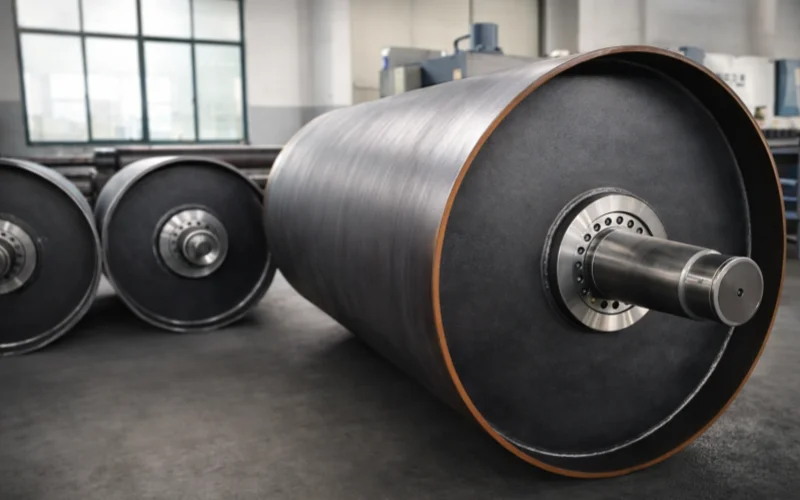
Pulley production focuses on heavy-duty rotating structures designed to operate under high belt tension and continuous industrial load.
Compared with idlers, pulleys require thicker shell construction, reinforced internal structures, and higher concentricity control to maintain stability during long-term operation. Manufacturing supports customized shaft integration and structural reinforcement based on load classification and application requirements.
Daily output averages 25 pulleys, with dimensional verification and rotational balance checks performed prior to final release to ensure stable performance under operating tension.
Structural and System Components
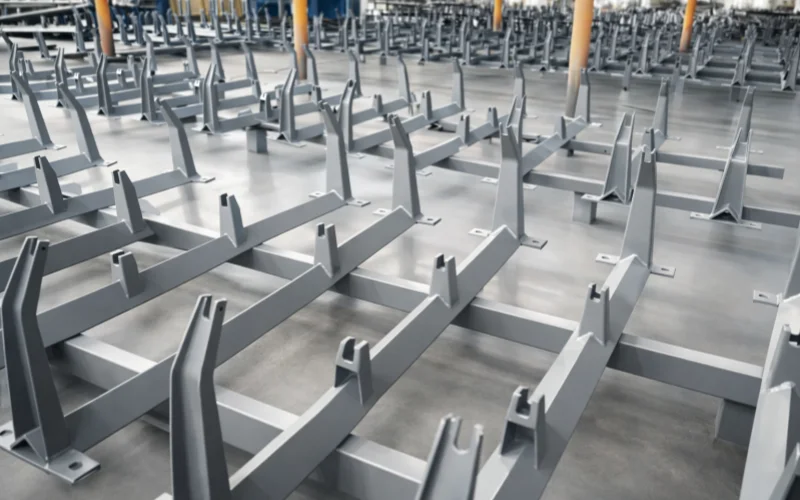
Structural fabrication includes idler frames, mounting brackets, and related load-bearing components manufactured for industrial material handling applications. Daily structural output reaches 600 sets, enabling coordinated production alongside idlers and pulleys while maintaining dimensional consistency across batches.
In addition to steel structural parts, production also covers polyurethane scraper blades and related cleaning components. Manufacturing capacity supports standardized sizes as well as drawing-based customization, with material hardness and wear resistance adjusted according to operating conditions.
All structural components undergo dimensional verification and welding stability inspection prior to surface treatment to ensure alignment accuracy and long-term structural reliability.
Surface Protection and Durability
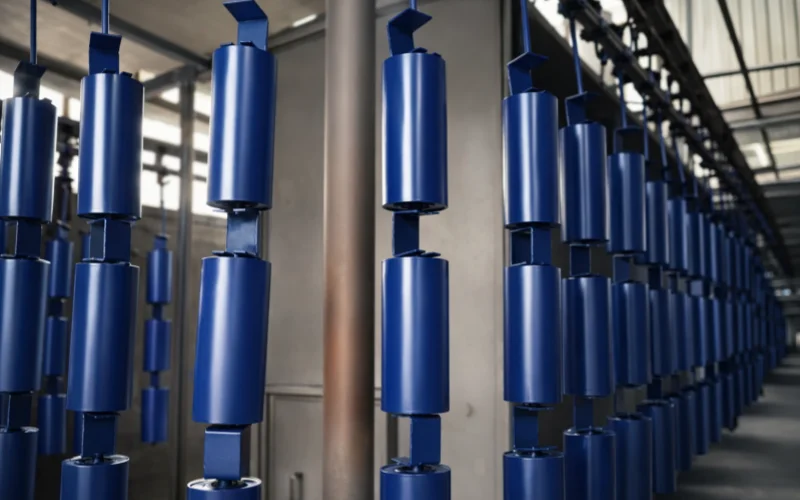
Surface protection is applied according to operating environment and load classification to ensure structural stability over extended service cycles. Treatment processes include coating preparation, powder coating, and corrosion-resistant finishes suitable for dust-intensive, high-humidity, or marine conditions.
Durability performance is integrated into production planning rather than treated as a secondary step. Components are engineered for continuous heavy-load operation, with typical service life exceeding 30,000 hours under standard industrial conditions.
Testing and Quality Verification
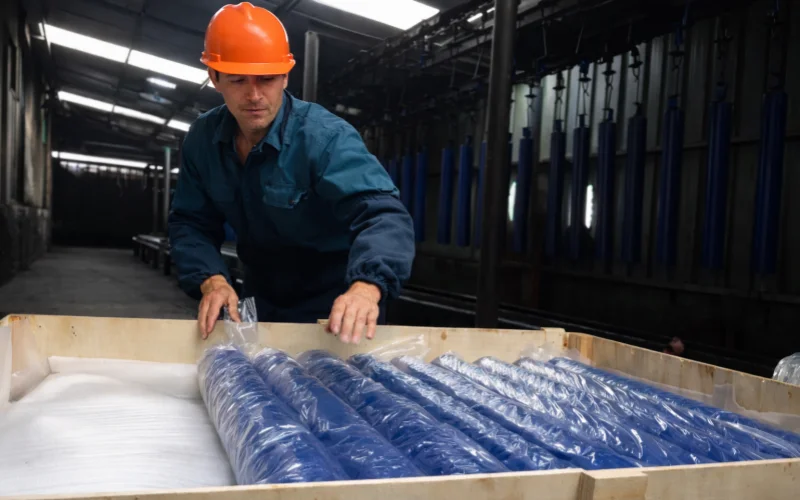
Quality verification is integrated into the production workflow to maintain dimensional consistency and operational stability across batches.
Testing procedures include waterproof performance, dust resistance, anti-static verification, axial displacement measurement, radial runout measurement, rotation resistance testing, inertia testing, and drop testing.
Batch inspection ensures controlled tolerances before shipment, with an overall qualification rate maintained above 98%.
Ready to Discuss Your Production Requirements
If your project requires stable output capacity, controlled tolerances, and coordinated production across idlers, pulleys, and structural components, our manufacturing team is prepared to support specification review and supply planning.