Industrial Idler Frames for Conveyor Systems
We manufacture troughing, return, and impact idler frames engineered for heavy-load conveyor systems in mining, cement, quarry, port, and power plant applications.
- Trough angles: 20° / 35° / 45° (consistent geometry control)
- Reinforced structure for loading & impact zones
- Tight hole positioning for fast, accurate installation
- Hot-dip galvanized or powder-coated protection
Idler Frame Types for Different Conveyor Applications
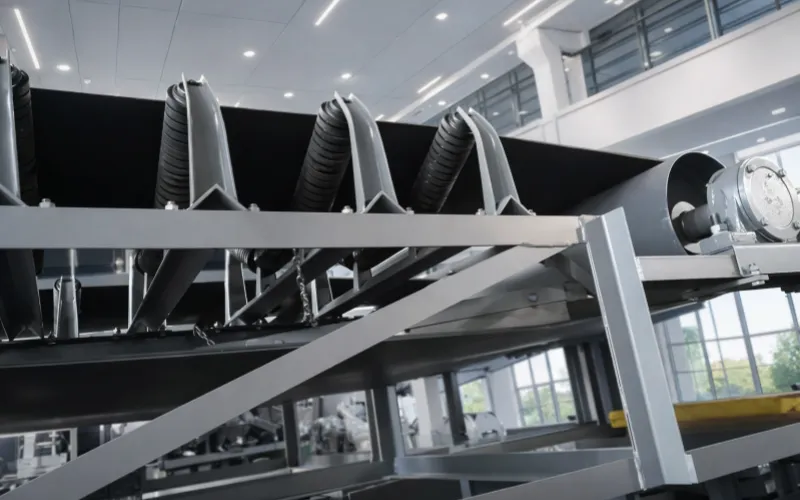
Different conveyor zones impose different mechanical demands. A well-designed idler frame keeps roller axes aligned, maintains trough geometry, and resists deformation under long-term static load and repeated dynamic loading. Below are the core idler frame configurations buyers typically specify when sourcing industrial conveyor components.
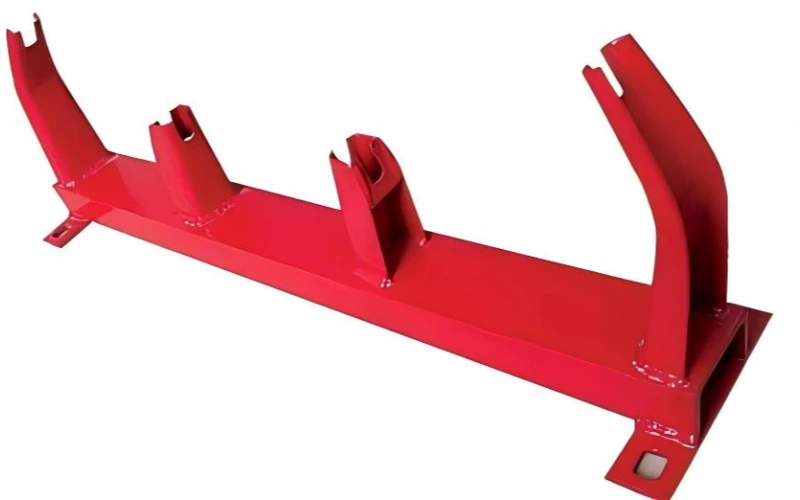
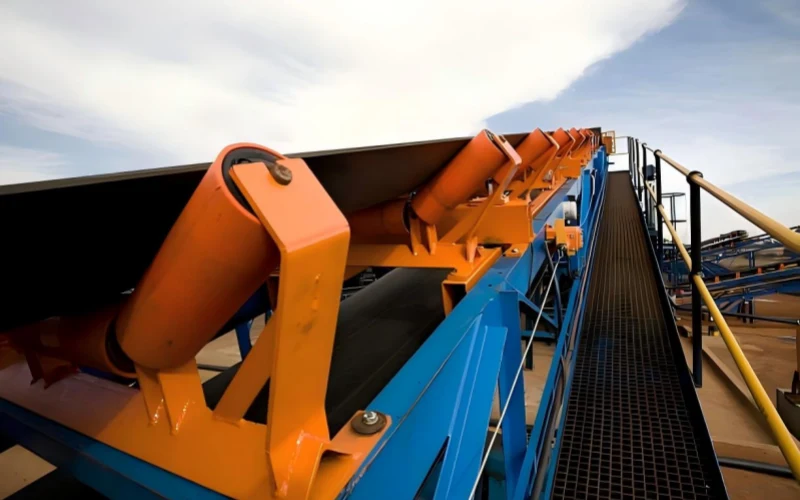
Troughing Idler Frames (Carrying Side)
Used on the carrying strand to support bulk material load and maintain a stable trough profile.
Common configurations
Trough angles: 20° / 35° / 45°
Setups: 3-roll (standard) and 5-roll (better edge support / higher stability)
What buyers check first
Angle geometry consistency: left/right wing symmetry and stable center roller height
Cross-member stiffness: prevents “opening up” of the trough under load
Mounting geometry repeatability: stable roller axis positioning across batches
Why it matters in the field
If trough geometry drifts or the frame deflects, load distribution becomes uneven. That typically shows up as belt mistracking, edge stress, vibration, and faster roller wear—especially when the belt is heavily loaded or speed is high.
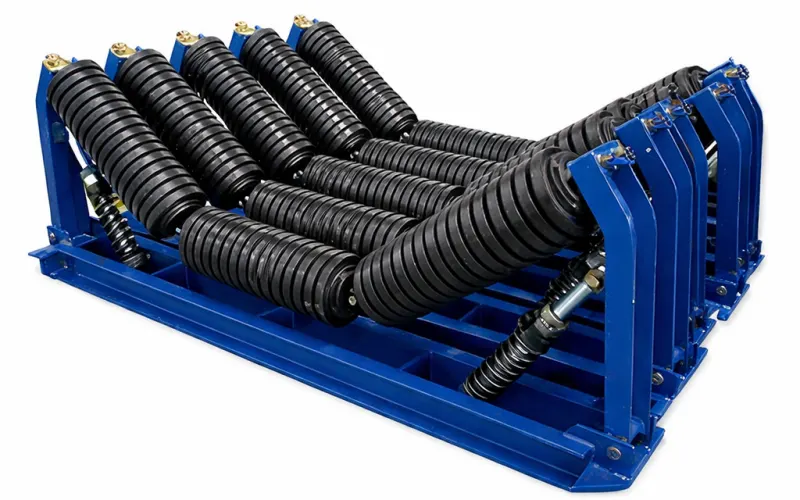
Impact Idler Frames (Loading Zone)
Installed under loading points where the belt receives material impact and short-duration peak forces.
Typical structural features
Thickened side plates and reinforced cross members
Stronger weld zones in high-stress joints
Designed to support impact idlers / impact roller arrangements
What buyers check first
Anti-deformation capability under repeated shock loads
Structural bracing strategy: load spreads into the conveyor structure instead of concentrating at one joint
Weld integrity at reinforcement transitions (common crack initiation locations)
Why it matters in the field
Impact zones are where “small structural weakness becomes a big maintenance problem.” If the frame yields or twists, roller alignment shifts and the belt takes the punishment—often causing belt damage, abnormal noise, and recurring idler failures.
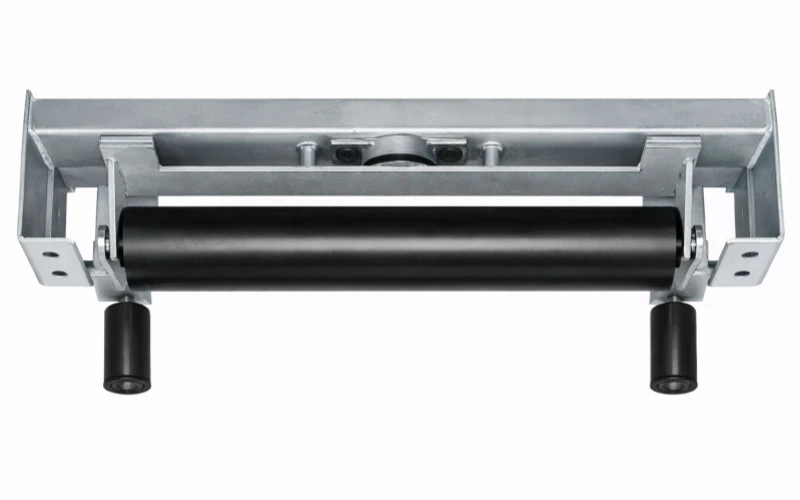
Return Idler Frames (Return Side)
Support the empty belt on the return run and help maintain stable tracking and low vibration.
Common configurations
Single return frame (most common)
V-return frame (improves centering stability on certain systems)
What buyers check first
Axis alignment and spacing: prevents belt wandering and edge contact
Structural balance: reduces oscillation and vibration on longer return spans
Corrosion exposure resistance: return side is often more exposed to water, fines, and carryback
Why it matters in the field
Even without material load, an unstable return frame can trigger belt tracking issues, increase noise, and cause belt edge wear—especially when there’s carryback, moisture, or long unsupported spans.
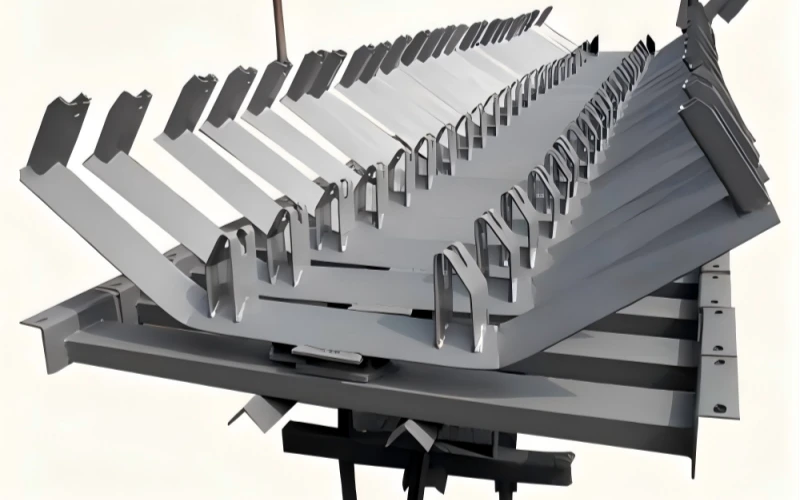
Reinforced Idler Frames (High Capacity)
Used when belt width, bulk density, belt tension, or system duty cycle requires higher structural stiffness and fatigue resistance.
Typical reinforcement approaches
Increased steel thickness in key load paths
Additional bracing at cross members and load transfer points
Reinforced weld zones for fatigue-sensitive joints
What buyers check first
Deflection control: stiffness under sustained load
Fatigue resistance: structural stability over long service cycles
Consistency across batches: identical geometry for large-volume projects
Why it matters in the field
Heavy-duty systems punish weak frames slowly but relentlessly. Stiffness and consistency determine whether you get stable tracking and predictable roller life—or chronic vibration, alignment drift, and frequent corrective maintenance.
Structural Specifications & Capacity Parameters
Belt Width Range
Idler frames are available for belt widths typically ranging from 500 mm to 2000 mm, with custom sizes available for wider industrial systems.
Frame geometry and structural thickness are adjusted according to belt width classification to maintain proportional strength and mounting compatibility.
Providing defined width coverage ensures that frame selection aligns directly with conveyor design specifications rather than relying on generalized sizing.
Structural Thickness Range
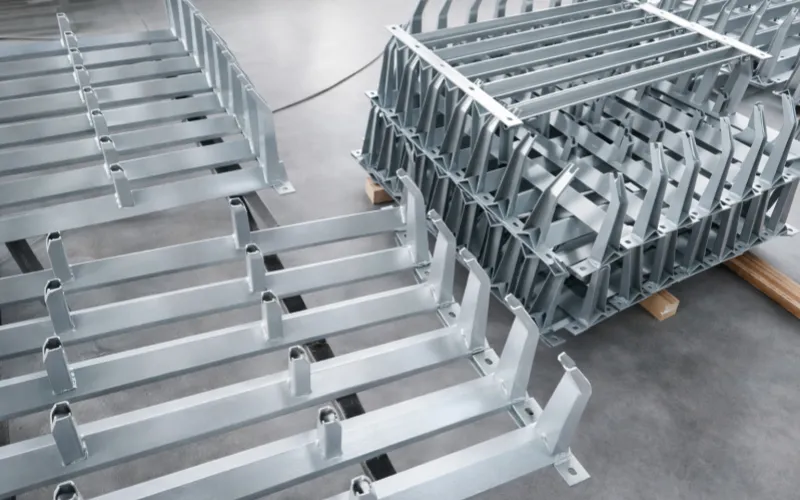
Standard structural plate thickness options typically range from 4 mm to 10 mm, depending on load classification and system capacity.
For heavy-duty or high-tension systems, increased thickness configurations are available to meet higher structural stiffness requirements.
Thickness selection is matched to belt width, idler spacing, and material bulk density to ensure adequate load-bearing performance.
Load Classification Levels
Idler frames are categorized into structural load levels to simplify project specification.
Typical classifications include:
Standard Duty – medium throughput systems
Heavy Duty – industrial bulk handling lines
Reinforced Duty – high-capacity or high-tension conveyors
Each level corresponds to defined reinforcement strategy and material thickness range, allowing clear differentiation during procurement comparison.
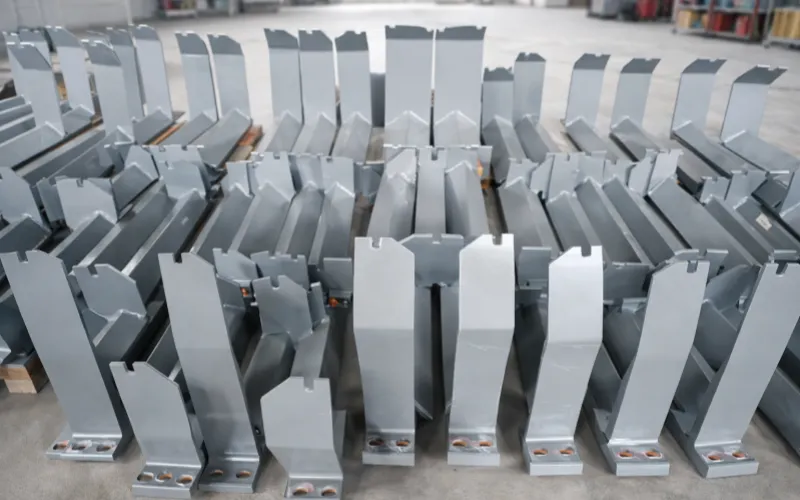
Surface Protection Thickness
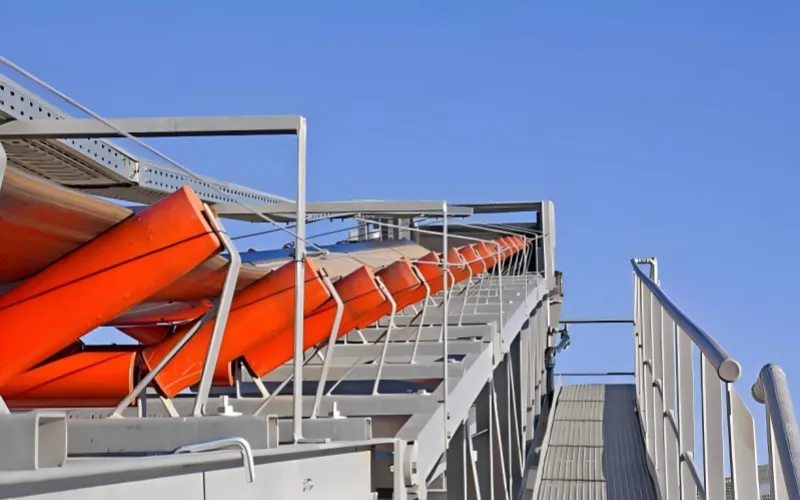
Surface protection options are available with controlled coating thickness.
Powder coating thickness typically ranges from 60–120 microns
Hot-dip galvanizing thickness is selected according to environmental exposure requirements
Protection level selection is aligned with installation environment, including outdoor exposure, humidity, and abrasive conditions.
Production Dimensional Control
Dimensional repeatability is maintained across production batches to ensure installation consistency.
Controlled parameters include:
Mounting hole spacing tolerance
Structural width consistency
Cross-member alignment stability
Standardized fabrication procedures ensure that frames within the same project maintain uniform structural configuration.
Selection Considerations & Reliability Factors
Matching Frame Strength to Conveyor Capacity
Selecting the correct idler frame requires matching structural strength to actual conveyor capacity rather than relying on nominal belt width alone.
Factors influencing frame selection include:
Material bulk density
Conveyor throughput rate
Idler spacing design
Belt tension level
Choosing a frame with insufficient structural rating can lead to premature deformation, while overspecification increases project cost unnecessarily.
Clear structural classification helps align performance with operational demand.
Environmental Exposure Considerations
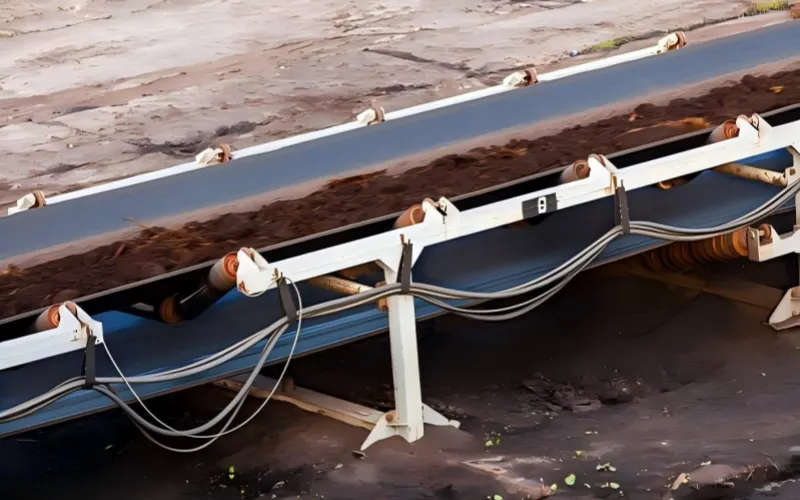
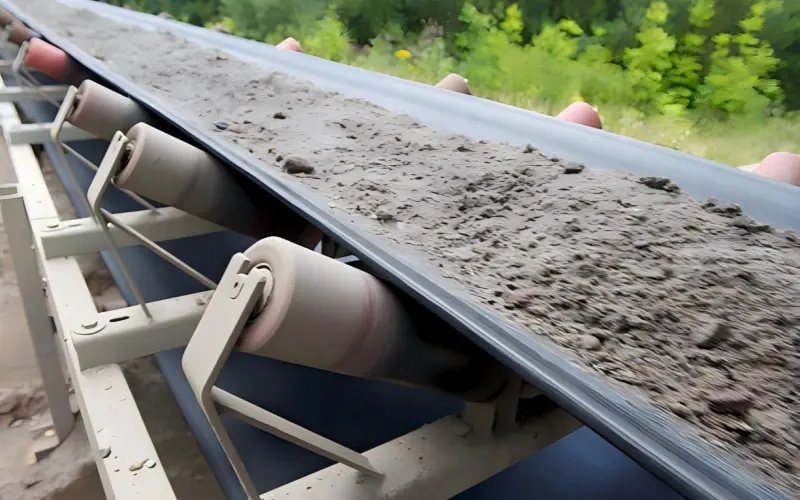
Installation environment significantly affects frame durability.
Selection should consider:
Outdoor exposure versus indoor installation
Humidity level and rainfall frequency
Dust and abrasive particle concentration
Chemical or corrosive atmosphere
Surface treatment and structural grade should be selected according to real operating conditions to ensure long-term reliability.
Procurement Consistency for Large Projects
For projects involving multiple conveyor lines, maintaining consistency across supply batches is essential.
Key procurement considerations include:
Uniform structural configuration across orders
Repeatable coating standards
Stable dimensional accuracy
Reliable delivery scheduling
Consistent supply supports phased installation and long-term operational stability.
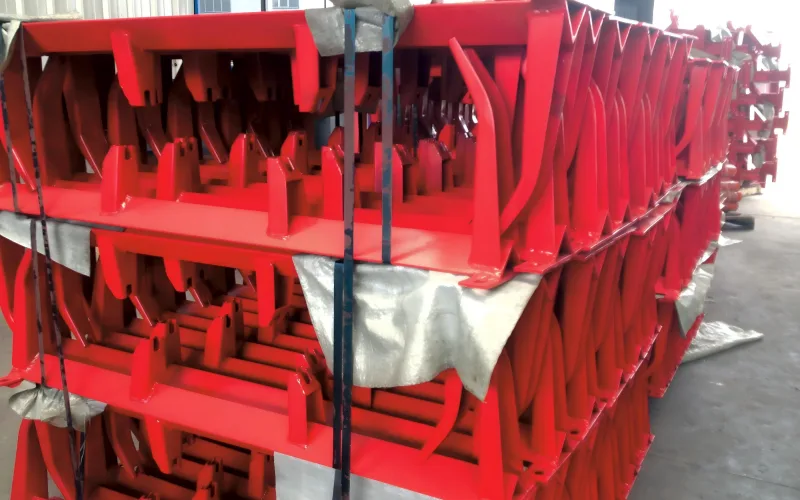
Why Choose Our Idler Frames for Your Conveyor Project
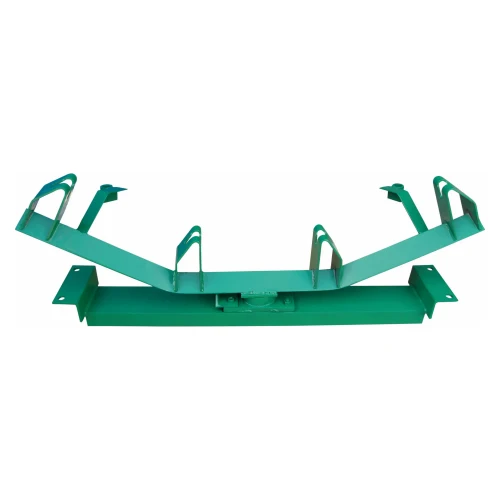
Structural Precision for Stable Conveyor Operation
We manufacture idler frames with controlled dimensional accuracy to ensure consistent installation and long-term alignment performance.
Verified mounting hole spacing
Stable structural geometry across batches
Reinforced cross members for load resistance
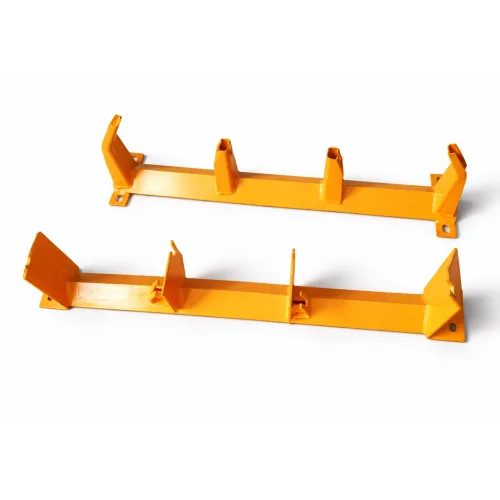
Reinforced Design for Heavy-Duty Applications
Our idler frames are engineered to withstand demanding bulk material handling environments including mining, quarry, and cement systems.
Multiple structural thickness options
Heavy-duty reinforcement levels available
Designed for high-capacity conveyor systems
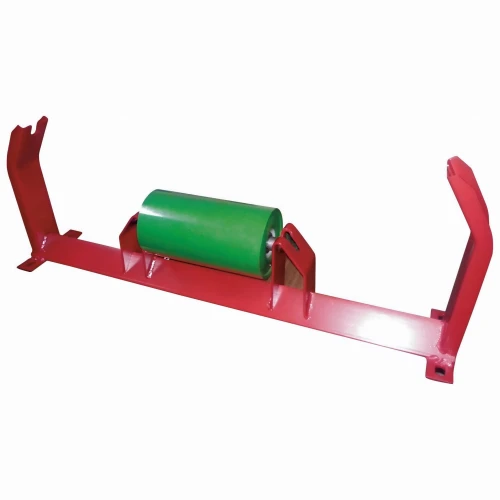
Reliable Manufacturing & Delivery Stability
Consistent production control ensures uniform structural configuration and predictable delivery timelines.
Standardized fabrication workflow
Batch consistency across large orders
Flexible production scheduling for projects
Ready to Discuss Your Production Requirements
If your project requires stable output capacity, controlled tolerances, and coordinated production across idlers, pulleys, and structural components, our manufacturing team is prepared to support specification review and supply planning.