Cement Conveyor Applications
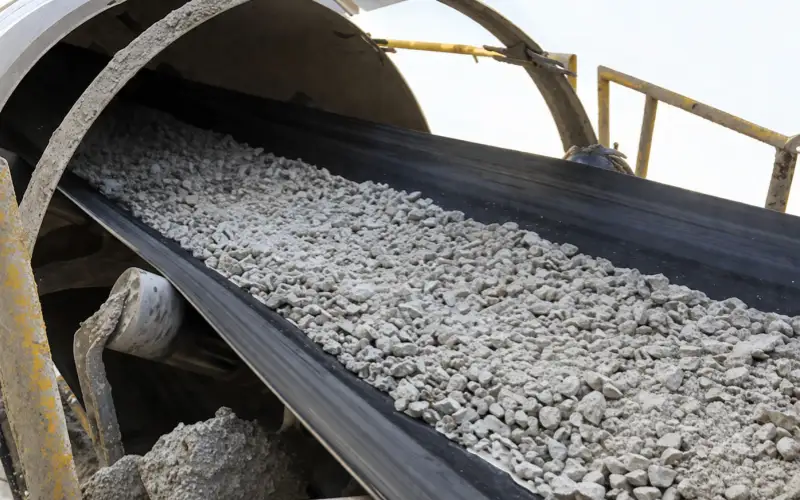
Cement plants typically handle limestone, clinker, gypsum, and cement powder, with very different characteristics across each stage.
Typical on-site situations include:
- Crushed limestone with sharp edges causing continuous abrasion
- Hot clinker (often 120–200°C) directly loaded onto belts
- Fine cement powder escaping easily and creating severe dust leakage
- Sticky material buildup in humid environments, especially around transfer points
Key Components in Cement
Conveyor Idlers
Support the belt under continuous conveying of abrasive limestone and hot clinker, where sharp particles and high temperatures accelerate surface wear; in cement dust-heavy areas, fine powder easily enters bearings and causes rotation resistance or idler seizure.
- Sealed idlers are recommended in cement grinding and transfer zones
- Stable rotation reduces additional wear caused by clinker and fine particles
Conveyor Pulleys
Drive the belt when conveying dense clinker and crushed limestone, where continuous load and material weight can create unstable tension if pulley structure is insufficient; in long cement production lines, this may lead to belt slip or uneven load distribution.
- Higher structural strength is recommended for clinker conveying sections
- In long kiln or raw material lines, stability becomes more critical
Pulley Lagging
Improves traction when handling cement powder or slightly moist raw materials, where fine particles accumulate on pulley surfaces and reduce friction; without lagging, this can result in belt slippage under dusty or humid conditions.
- Recommended in raw mill and cement grinding sections
- Especially important where fine powder buildup is unavoidable
Impact Bed
Absorbs impact where crushed limestone or hot clinker drops onto the belt, especially below crushers or clinker discharge points; repeated impact from large or high-temperature material can cause localized belt damage or deformation.
- Necessary for crusher discharge and clinker transfer points
- Can be omitted in finished cement (powder) conveying areas
Skirting Board
Seals loading zones where fine cement powder or crushed limestone escapes during transfer, especially under unstable material flow; without proper sealing, leakage leads to dust spread and material accumulation along the structure.
- Essential in cement powder conveying systems
- Important in enclosed plant areas with dust control requirements
Belt Cleaners
Remove residual material when handling clinker fines or slightly sticky raw mix, which tend to adhere to the belt surface after discharge; if not cleaned, carryback leads to powder buildup under return idlers and maintenance issues.
- Recommended in clinker and raw material conveying systems
- Multi-stage cleaning for sticky or mixed materials
Selection Notes
- Clinker (high temperature) → focus on impact resistance and thermal stability
- Limestone (abrasive) → prioritize wear resistance and stable idler rotation
- Cement powder (fine dust) → sealing and cleaning are critical
- Humid/raw mix conditions → higher risk of buildup and slippage