Power Plant Conveyor Applications
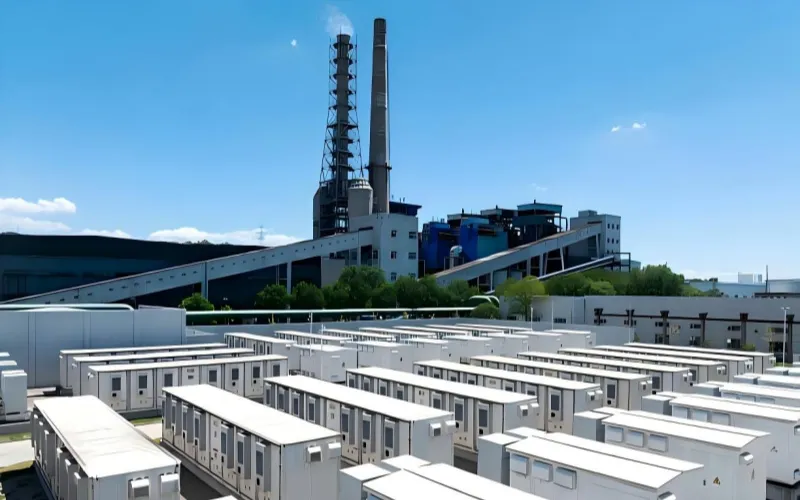
Power plant conveyor systems are mainly used for coal feeding to boilers and ash removal after combustion, operating continuously under stable load conditions.
Typical on-site situations include:
- Coal with varying moisture content sticking to the belt and causing carryback
- Continuous feeding to boilers requiring stable and uninterrupted material flow
- Fine coal particles generating dust and residue along transfer points
- Ash and slag with abrasive particles causing surface wear during discharge
Key Components in Power Plant
Conveyor Idlers
Support the belt when conveying coal and ash materials, where fine particles and continuous operation can gradually increase resistance if sealing is insufficient; in coal handling systems, dust and fines can enter bearings and lead to idler drag or seizure over time.
- Sealed idlers are recommended in coal transfer and return sections
- Stable rotation is critical for continuous conveying to the boiler
Conveyor Pulleys
Drive the belt when transporting coal to the boiler and ash away from discharge points, where continuous feeding requires stable traction and tension; unstable pulley performance can lead to belt slip and inconsistent coal supply into the combustion system.
- Stability is critical in boiler feeding lines
- Consistent performance avoids interruption in fuel delivery
Pulley Lagging
Maintains traction when handling wet coal and coal fines, where moisture and dust reduce friction between the belt and pulley surface; without lagging, this can result in belt slippage under continuous load conditions.
- Recommended in coal conveying systems with moisture variation
- Important where coal dust accumulates on pulley surfaces
Impact Bed
Absorbs impact where coal drops from feeders or hoppers onto the belt, especially when material flow is uneven or includes larger lumps; repeated loading can cause localized belt deformation or internal damage.
- Recommended for coal loading and transfer points
- Can be omitted in low-impact or controlled feed systems
Belt Cleaners
Remove residual material when handling coal fines and moist coal, which tend to adhere to the belt after discharge; if not cleaned, carryback leads to material buildup under return idlers and increased maintenance issues.
- Recommended in all coal conveying systems
- Multi-stage cleaning for wet or sticky coal conditions
Skirting Board
Controls material flow where coal exits the chute and spreads across the belt, especially when uneven loading causes coal and fines to move toward the edges; without skirting, this leads to continuous side spillage and dust leakage along the conveyor.
- Recommended at all open coal transfer points
- Especially important where fine coal and dust are present
Selection Notes
- Coal (moisture + fines) → focus on cleaning, sealing, and anti-slip performance
- Coal loading zones → impact control and flow control are both critical
- Ash and slag (abrasive) → prioritize wear resistance
- Continuous operation systems → stability is more important than peak load