Conveyor Pulleys for Heavy-Duty Applications
Prevent bearing failure, belt slippage, and unplanned downtime caused by heavy loads, abrasive materials, and harsh working conditions in bulk material handling systems.
- Reduce bearing failure and extend service life
- Prevent belt slippage with reliable lagging options
- Stable performance under heavy load conditions
- Custom-built to match your conveyor system
Types of Primary Conveyor Belt Scrapers
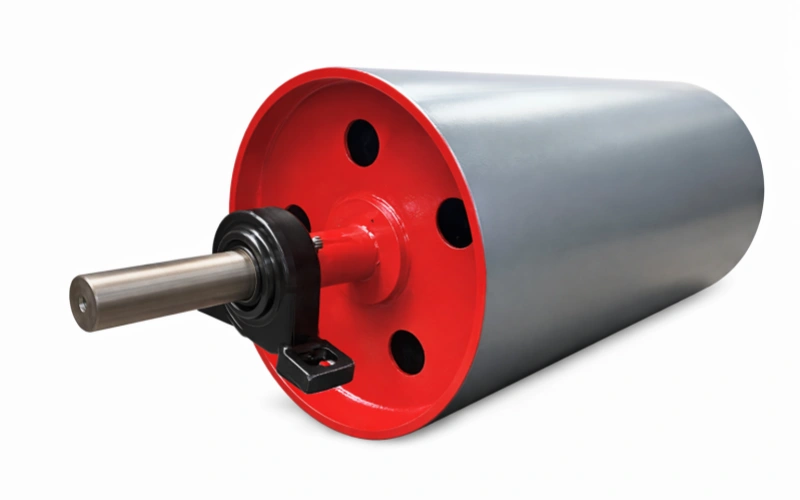
Drive Pulley
– Power Transmission for Conveyor Systems
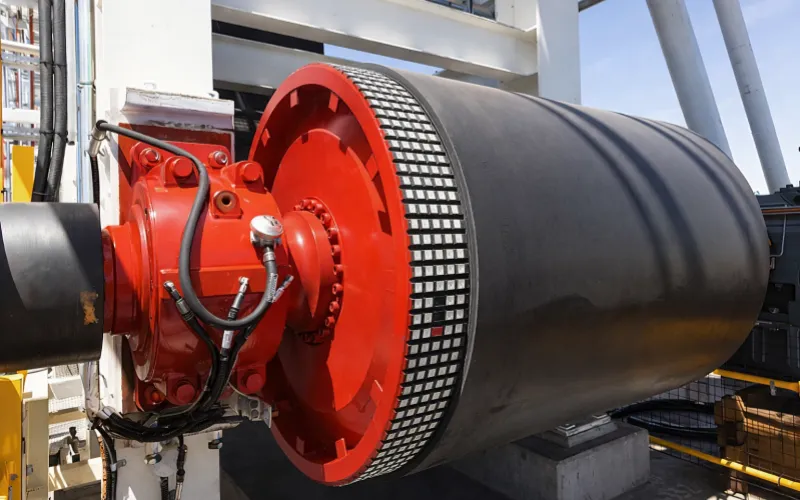
The drive pulley transfers motor power to the conveyor belt and drives the entire system. It is designed to improve traction, reduce belt slippage, and ensure stable operation under heavy loads in demanding bulk material handling environments.
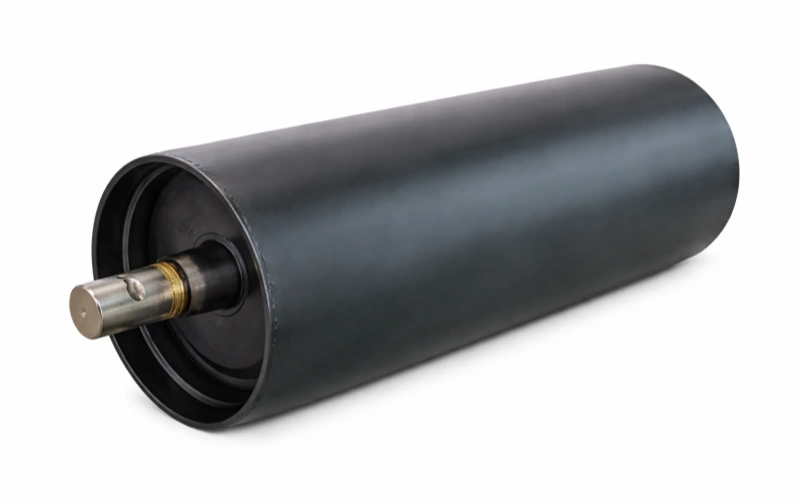
Tail Pulley
– Reliable Belt Return Support
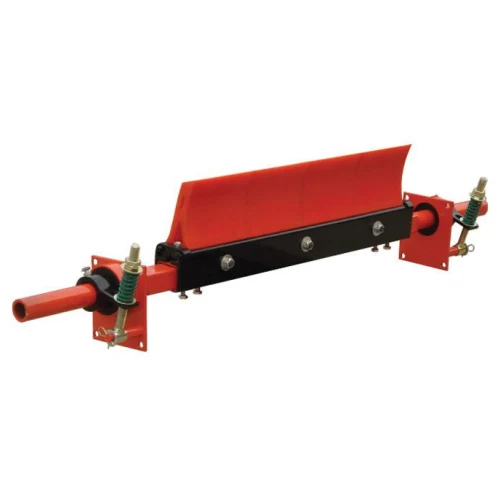
This heavy-duty polyurethane belt cleaner provides stronger cleaning force and improved durability for conveyors handling large material volumes. Its reinforced structure ensures stable cleaning performance and extended blade service life in demanding operating conditions.
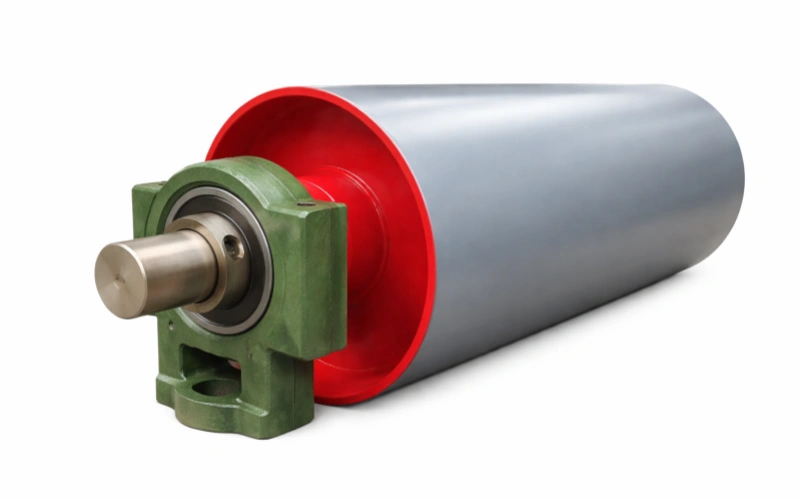
Bend Pulley
– Efficient Direction Change
The bend pulley is used to change the direction of the conveyor belt while maintaining proper tension. It helps reduce belt stress, minimize wear, and ensure efficient operation in complex conveyor systems with multiple direction changes.
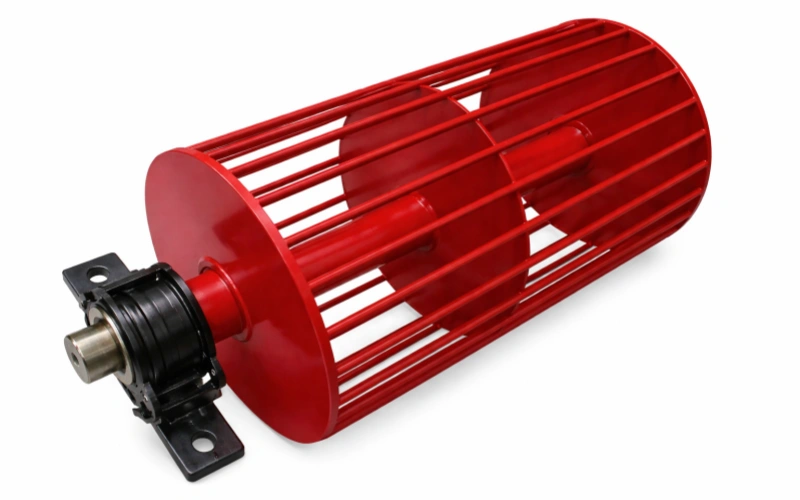
Cage Pulley
– Self-Cleaning Solution for Sticky Materials
The H-type ceramic belt cleaner features a modular blade structure that improves cleaning efficiency while simplifying maintenance and blade replacement. Its robust design ensures reliable carryback removal and stable conveyor belt cleaning performance.
How to Choose the Right Conveyor Pulley
Selecting the correct conveyor pulley depends on its function, working conditions, and system requirements. The guide below helps you quickly identify the most suitable pulley type for your application.
For Power Transmission
If your pulley is responsible for driving the conveyor belt, a drive pulley is required to transmit motor power efficiently while maintaining sufficient friction and reducing the risk of belt slippage under load.
For Belt Return Support
If the pulley is positioned at the loading end to support and guide the return belt, a tail pulley is typically used to maintain alignment and ensure smooth belt movement under varying material loads.
For Direction Change
If your conveyor system requires the belt to change direction, a bend pulley is used to redirect the belt path while minimizing stress and reducing wear caused by angle transitions.
For Tension Adjustment
If maintaining proper belt tension is critical, a take-up pulley is used in gravity or screw systems to compensate for belt elongation and ensure stable, efficient conveyor operation.
For Easy Maintenance in Heavy-Duty
If your application requires frequent maintenance or operates under heavy loads, a plummer block pulley allows easier bearing access, reducing maintenance time and minimizing system downtime.
For Sticky or Wet Materials
If your conveyor handles wet, sticky, or muddy materials, a cage pulley helps prevent material buildup on the surface, improving performance and reducing cleaning and maintenance requirements.
Key Design Considerations for IDLERON Conveyor Pulleys
Conveyor pulleys are critical components in any conveyor system. Their design must be adapted to specific operating conditions to ensure reliability, safety, and long service life.
1. Load & Tension Requirements
Pulley design must account for belt tension, load capacity, and operational stress. Insufficient shaft or shell strength can lead to deformation, fatigue failure, and reduced system reliability under continuous heavy-duty operation.
2. Material Characteristics
The type of material being conveyed, such as abrasive, wet, or sticky materials, directly affects lagging selection and surface design. Improper configuration can result in excessive wear, buildup, and reduced traction.
3. Environmental Conditions
Dust, moisture, and temperature variations impact sealing performance and bearing life. Without proper protection, contaminants can enter the bearing system, leading to premature failure and increased maintenance frequency.
4. Conveyor Configuration
Pulley function within the system, such as drive, bend, or take-up, determines structural requirements and positioning. Incorrect selection can affect belt alignment, tension distribution, and overall system efficiency.
5. Maintenance Requirements
In heavy-duty or high-maintenance environments, pulley design should allow easy access to bearings and components. This reduces downtime and improves service efficiency during routine inspection and replacement.
6. Service Life Expectations
Different applications require varying service life and reliability levels. Proper material selection, welding quality, and design standards are essential to ensure long-term performance and reduce lifecycle costs.
Common Conveyor Pulley Problems & Solutions
Conveyor pulleys operating in harsh environments often face recurring issues that lead to downtime, increased maintenance, and reduced system efficiency. Proper design and engineering can effectively prevent these problems.
Bearing Failure
Problem
Dust, moisture, and contaminants entering the bearing housing can lead to lubrication failure, overheating, and premature bearing damage, causing frequent shutdowns and costly maintenance.
Solution
A multi-stage sealing system combined with high-quality bearings effectively prevents contamination, ensuring stable operation, extended service life, and reduced maintenance requirements.
Belt Slippage
Problem
Insufficient friction between the pulley surface and the conveyor belt can result in slippage, reduced conveying efficiency, and increased wear on both the belt and pulley.
Solution
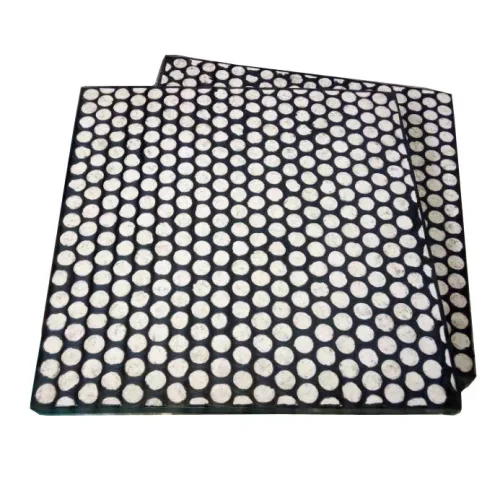
High-performance rubber or ceramic lagging increases surface friction, improves traction, and ensures reliable power transmission even under heavy loads and wet conditions.
Lagging Peeling or Damage
Problem
Poor bonding quality or low-grade materials can cause lagging to peel off or wear quickly, leading to reduced friction, frequent replacement, and increased operational costs.
Solution
Advanced bonding processes and high-quality lagging materials ensure strong adhesion, improved wear resistance, and longer service life in abrasive and demanding environments.
Shaft Deformation or Failure
Problem
Inadequate shaft design or material selection can result in bending, fatigue cracking, or structural failure under heavy load conditions, affecting system safety and performance.
Solution
Optimized shaft design with proper material selection and stress analysis ensures sufficient strength, durability, and reliable performance in high-load applications.
Pulley Misalignment & Vibration
Problem
Poor manufacturing precision or improper installation can cause pulley misalignment and vibration, leading to uneven wear, belt tracking issues, and reduced equipment lifespan.
Solution
Precision machining, dynamic balancing, and strict quality control ensure accurate alignment, smooth rotation, and stable long-term operation.
Material Buildup on Pulley Surface
Problem
Sticky or wet materials can accumulate on pulley surfaces, causing imbalance, belt misalignment, and increased maintenance requirements.
Solution
Special designs such as cage pulleys or appropriate surface treatments help prevent buildup, improving system stability and reducing cleaning frequency.
Why Choose IDLERON Conveyor Pulleys
Our reliability comes from controlled manufacturing processes, strict inspection standards, and engineering-driven customization, rather than general claims of quality.
Built for long-term industrial reliability
We do not position our pulleys as generic conveyor components. We position them as engineered products designed to deliver stable performance, reduce lifecycle cost, and support demanding operations in mining, cement, ports, and bulk material handling systems.
- Consistent quality across standard and custom orders
- Engineering support for real operating conditions
- Stable delivery for project-based procurement
Consistent Manufacturing Quality
We ensure consistent quality by standardizing critical production processes such as shell rolling, shaft machining, and welding procedures. Key dimensions are controlled using CNC machining, and welding deformation is minimized through process control and post-weld correction to maintain concentricity and alignment.
Strict Quality Control System
Each pulley undergoes step-by-step inspection, including raw material verification, shaft dimensional tolerance checks, weld seam inspection, and dynamic balancing testing. Only products that pass all checkpoints are approved, ensuring stable performance and reducing installation risks.
Customization with Engineering Support
Instead of only following drawings, we evaluate working conditions such as load, material type, and environment to optimize pulley design. This includes selecting suitable shaft diameter, lagging type, and sealing structure to improve reliability and service life.
Focus on Long-Term Performance
We prioritize long-term performance by selecting appropriate materials, controlling welding quality, and ensuring proper balancing. This approach reduces vibration, minimizes wear on bearings and components, and helps lower maintenance frequency over the lifecycle of the conveyor system.
Technical Specifications & Customization Options
Conveyor pulleys are non-standard components, and their dimensions and configurations are determined based on specific conveyor system requirements, including load, belt width, and operating conditions.
| Parameter | Specification Details |
|---|---|
| Pulley Diameter | Typically 114 mm – 2400 mm (customizable) |
| Face Width | Typically 260 mm – 3400 mm (customizable) |
| Shaft Diameter | Designed based on load, belt tension, and span |
| Shaft Material | Q235 / 45# Steel / Alloy Steel |
| Bearing Type | Selected based on load and operating conditions |
| Lagging Type | Rubber / Ceramic / Plain (depending on application) |
| Pulley Type | Drive / Tail / Bend / Take-Up / Cage / Plummer, etc. |
| Balancing | Static or Dynamic (based on speed and requirement) |
| Surface Treatment | Selected according to environment and corrosion risk |
IDLERON Conveyor Pulley Manufacturing Capability & Process Control
The performance and reliability of conveyor pulleys depend not only on design, but also on controlled manufacturing processes. Each step is managed to ensure dimensional accuracy, structural strength, and consistent quality.
Shell Rolling & Forming
Pulley shells are formed using controlled rolling processes to ensure roundness and dimensional consistency. Proper forming reduces deformation during operation and provides a stable base for subsequent machining and welding processes.
Shaft Machining
Shafts are machined using CNC equipment to achieve precise dimensional tolerances and proper fit with bearings and hubs. This ensures accurate alignment and reduces vibration or misalignment during operation.
Welding Process Control
Welding is performed following defined procedures to ensure structural strength and minimize deformation. Critical weld areas are controlled to avoid stress concentration, improving the durability and reliability of the pulley under load.
Assembly & Alignment
During assembly, components such as shaft, shell, and hubs are aligned to maintain concentricity. Proper alignment ensures smooth rotation, reduces vibration, and improves overall system stability.
Dynamic Balancing
Each pulley is tested and corrected through dynamic balancing to ensure even mass distribution. This process reduces vibration during operation and protects bearings and other components from
Surface Treatment & Finishing
Surface treatment is applied based on application requirements, including painting, rubber lagging, or anti-corrosion coating. This protects the pulley from wear, corrosion, and environmental impact.
Advantages of IDLERON Primary Conveyor Belt Scrapers
Raw Material Inspection
All raw materials are verified before production to ensure they meet required mechanical properties and specifications. This helps prevent potential structural issues caused by substandard materials.
Dimensional Inspection
Key dimensions such as shaft diameter, pulley shell size, and assembly tolerances are checked during machining and assembly. This ensures proper fit, alignment, and compatibility with the conveyor system.
Welding Quality Inspection
Weld seams are inspected to ensure structural integrity and avoid defects such as cracks or incomplete fusion. Proper welding quality is essential for maintaining strength under heavy load conditions.
Dynamic Balancing Test
Each pulley is tested for dynamic balancing to ensure smooth rotation. This reduces vibration, protects bearings, and improves overall system stability during operation.
Final Inspection Before Delivery
Finished pulleys undergo a final inspection to verify overall quality, dimensions, and configuration before shipment. Only qualified products are approved for delivery.
Frequently Asked Questions
-- Conveyor Pulley
Pulley diameter is determined based on belt tension, belt type, and operating conditions. Higher tension systems typically require larger diameters to reduce bending stress on the belt and improve service life. We also consider wrap angle, drive requirements, and system layout to ensure proper power transmission and long-term reliability.
Shaft diameter is calculated based on load conditions, belt tension, pulley width, and bearing configuration. Improper sizing can lead to shaft deflection or fatigue failure. We perform basic load evaluation and consider safety factors to ensure the shaft can handle long-term operational stress without deformation.
Alignment is controlled through precision machining of shaft and hubs, combined with controlled assembly procedures. Concentricity is checked during machining and assembly stages, and final balancing ensures uniform rotation. This process helps prevent vibration, uneven wear, and belt tracking issues in operation.
Standard pulleys follow common dimension ranges, but application-specific designs are adjusted based on working conditions such as load, material type, and environment. Customized designs improve reliability by addressing real operational challenges rather than relying on general-purpose configurations.
Lagging selection depends on friction requirements, material characteristics, and environmental conditions. For example, ceramic lagging is typically used in high-wear or wet conditions to improve grip, while rubber lagging is suitable for general applications where stable friction is sufficient.
Dynamic balancing ensures even mass distribution during rotation, reducing vibration and stress on bearings. This is especially important for larger or high-speed pulleys. Proper balancing improves system stability, reduces maintenance frequency, and extends the lifespan of both the pulley and surrounding components.
In high-dust environments, sealing configuration and bearing protection become critical. We adjust sealing structures and select appropriate bearing arrangements to minimize contamination risk. This helps maintain lubrication effectiveness and prevents premature failure caused by dust ingress.
To ensure proper design, key information includes pulley type, diameter or range, belt width, load conditions, material characteristics, and working environment. Drawings or conveyor layout details further improve accuracy and help optimize structural and functional design.
Get the Right Conveyor Pulleys for Your Conveyor System
Send us your requirements or drawings to get a suitable pulley design for your application.